Anti-clogging Performance of Self-cleaning Screens under Moist and Sticky Operating Conditions
Moist and sticky feeds have a special talent for exposing every lazy assumption buried in a screening circuit, because the moment material carries surface moisture, clay slime, fine dust, or weathered ore, a ordinary deck stops sorting and starts baking—fines plate onto the wires, near-size granules bridge the openings, and the plant gradually loses tonnage while nobody can quite see the hole sizes shrinking in real time. A properly designed Self-Cleaning Screen is built to fight exactly that failure mode, not by pretending the stickiness goes away, but by making the deck move in a way that denies material the calm contact time it needs to glue itself in place. The flexing strands, bouncing polyurethane fingers, or vibrating wire groups create micro-movement at every aperture, so a sticky granule gets nudged, lifted, and rejected instead of settling into a permanent plug. Understanding this performance under wet, clay-rich, or humid duty is less about marketing claims and more about physics: surface energy, deck motion, aperture geometry, strand stiffness, and how the whole screen assembly agrees with the vibrator instead of fighting it.
Why Moisture Turns a Normal Screen Into a Paste Board
Dry sand screens easily; moist bauxite, washed coal, phosphate with clay seams, recycled concrete fines, and weathered iron ore do not, because water acts as a silent adhesive that turns inert powder into a coherent slime. On a rigid deck, a Self-Cleaning Screen alternative would still suffer if the openings were static—fines land, moisture pulls them to the wire, capillary suction holds them there, and the next granule lands on top of the first one until a bridge forms across several holes. The difference with a self-cleaning design is that the aperture is never truly static: polyurethane strands flex, crimped wires jitter, and the local opening expands and contracts many times per second, which breaks the capillary seal before the slime gets comfortable. Sticky feeds also hate sudden changes in deck angle and stroke, so a screen that looks self-cleaning on paper can still blind if the machine throws material back onto the same row of openings. In practice, anti-clogging performance is the sum of three things—material formulation, aperture dynamics, and machine tuning—and moisture simply magnifies whichever one you neglected.
Strand Flex, Polyurethane Rebound, and the Small Physics
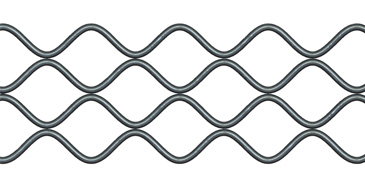
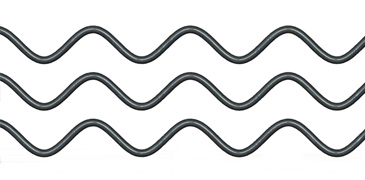
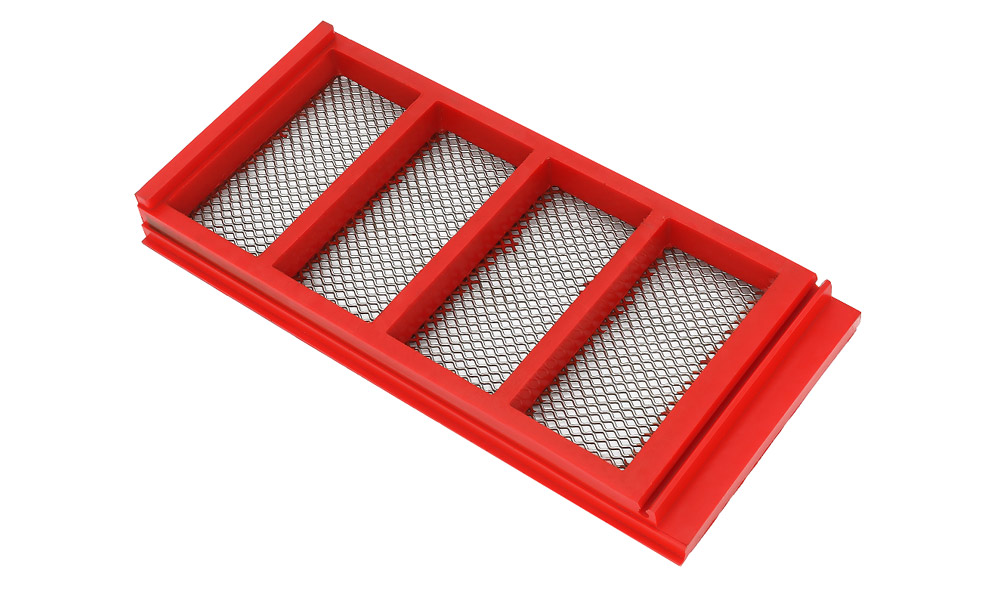
The soul of a Self-Cleaning Screen lives in the way each opening behaves under load, because a square hole in steel is dumb and obedient while a flex-strand opening is mildly disobedient in exactly the right way. Polyurethane self-cleaning panels use tapered slots and resilient fingers that store vibration energy and kick near-size particles upward, so a damp granule that would normally wedge in a rigid mesh gets bounced forward and either passes or reports back to the oversize stream. Wire-based self-cleaning constructions rely on independently moving crimps or paired wires that rub against each other at the crossing, producing a tiny scrubbing action that dislodges fines and prevents pegging. The trick is calibration: too soft a strand and the aperture breathes so much that product size drifts, too stiff a strand and you have quietly rebuilt a rigid screen with extra steps. A good Self-Cleaning Screen for sticky duty is tuned so the deck flexes locally at the aperture but stays dimensionally honest globally, which is why two panels with the same slot size can perform like day and night in the same moist feed.
Why the Frame Shares the Blame
A common myth is that buying a Self-Cleaning Screen automatically solves blinding, but the panel is only one actor on a stage that includes deck angle, stroke orbit, amplitude, feed rate, support-bar spacing, and tensioning hardware. If the support bars are too far apart, the polyurethane panel drums like a trampoline and the apertures flex unpredictably, giving sticky fines quiet pockets where slurry can pool and set. If the deck is too flat, the moist bed rides instead of stratifying; too steep, and fines bounce over the deck entirely, ruining recovery. Tensioning is another quiet culprit—under-tensioned strands slide and fret at the edges, building a curled lip that traps clay, while correct tension lets the Self-Cleaning Screen sing with the vibrator instead of fighting it. The plants that get heroic anti-clogging results usually pair the right panel with a deck angle tuned for moisture, a stroke that carries sticky fraction forward, and a support layout that lets each strand do its small, repetitive, anti-stick dance without interference.
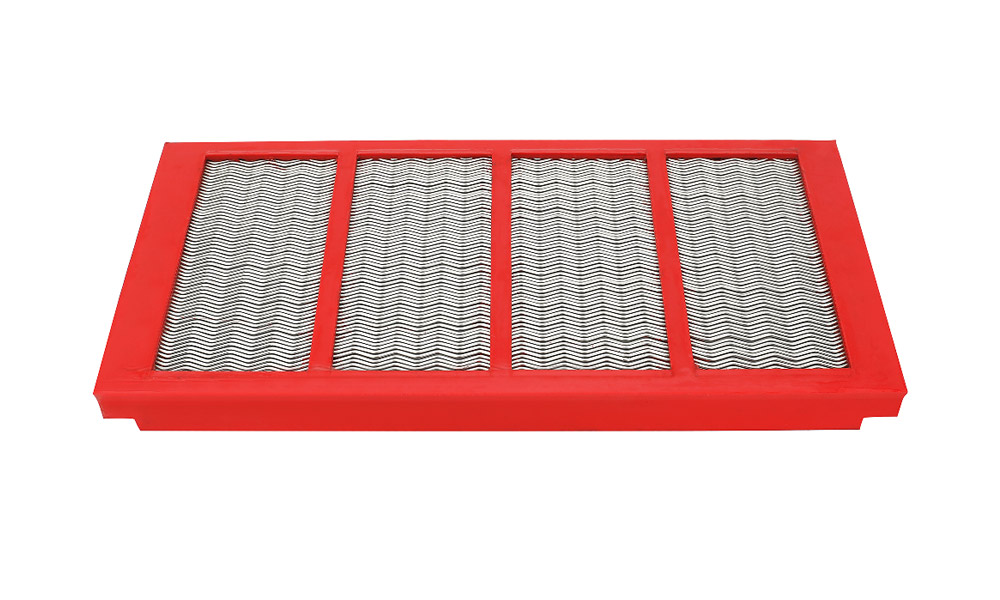
If your crew reaches for the mallet every shift, the problem is not “the ore is just sticky today”—it is that the screening system was specified for a drier, kinder feed than your plant actually runs, and a Self-Cleaning Screen chosen from a brochure is not the same as one engineered for your slurry. Pull the moisture range, clay mineral type, minus-200-mesh content, PSD curve, and photos of where blinding starts, then talk to a screen specialist who asks about strand durometer, slot taper, support pitch, stroke orbit, and deck angle instead of quoting a generic flex-panel by the square meter. Often the win is unglamorous: a slightly softer finger zone on the feed end, a tapered slot instead of a square hole, a support bar moved two inches, or a stroke change that carries the sticky fraction off the deck instead of recycling it. Trial the Self-Cleaning Screen on the wettest, most annoying deck rather than the easy scalper, and score it on bar-whack frequency, blinded area after eight hours, on-spec recovery, and changeout labor—not on how clever the catalog sounds. Done properly, the screen stops being the bottleneck everyone complains about at shift change and becomes the quiet reason the plant keeps shipping grade while the sky opens and the feed turns to paste.