Strategy for Preventing Screen Blinding and Improving Screening Efficiency in the Fine Screening of Iron Ore Using Self-Cleaning Screens
The fine screening of iron ore is notoriously difficult, primarily due to the material's tendency to blind screens. Moisture, ultra-fines, and clay bind together, clogging apertures and crippling throughput. To combat this, a focused strategy built around self-cleaning screens is essential. This approach integrates specialized panel design, precise operational tuning, and supportive practices to prevent blinding and unlock consistent, high-efficiency separation.
Core Tactic: Deploying Engineered Self-Cleaning Screens
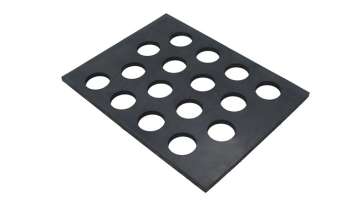
The first line of defense is selecting self-cleaning screens designed for iron ore's challenges. Look for panels with tapered, funnel-shaped apertures that are wider at the bottom than the top. This design prevents near-size particles from jamming, allowing vibration to pop them free. The screen surface should be made from a specially formulated, non-stick polyurethane that resists the adhesion of damp fines. For very sticky ores, screens with a slightly crowned or textured surface can help break up material layers and promote movement.
Why Fine Iron Ore Blinds Where Coarser Circuits Never Notice
The trouble with iron ore fines is that the particles are dense, angular, and often accompanied by clay or oxidized slime that behaves nothing like the clean lump the feasibility study promised, so the screen is not just separating size, it is fighting surface tension and particle adhesion at the same time. On a static deck, a 3 mm near-size granule does not need to be smaller than the hole to cause trouble; it only needs to touch two wires, pick up a film of moisture and fine magnetite, and invite the next particle to nest on top of it. Once that first crust forms, airflow through the bed drops, the material rides instead of stratifying, and the Self-Cleaning Screen advantage becomes obvious: the flexing strand or moving crimp breaks that first contact before the crust matures. Iron ore also punishes false economies—plants that drop screen open area to “stop pegging” often end up with a thick bed, poor fines extraction, and a mill that eats more energy for less grade. The strategic insight is that blinding in fine iron ore is rarely a single cause; it is the marriage of moisture, PSD shoulder, deck stiffness, and vibration stroke, and a Self-Cleaning Screen only delivers if the rest of that marriage is managed.
Deck Construction Choices: the Right Kind of Movement
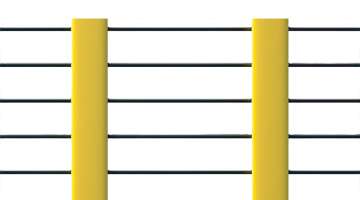
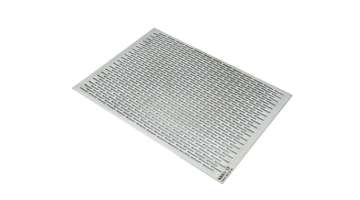
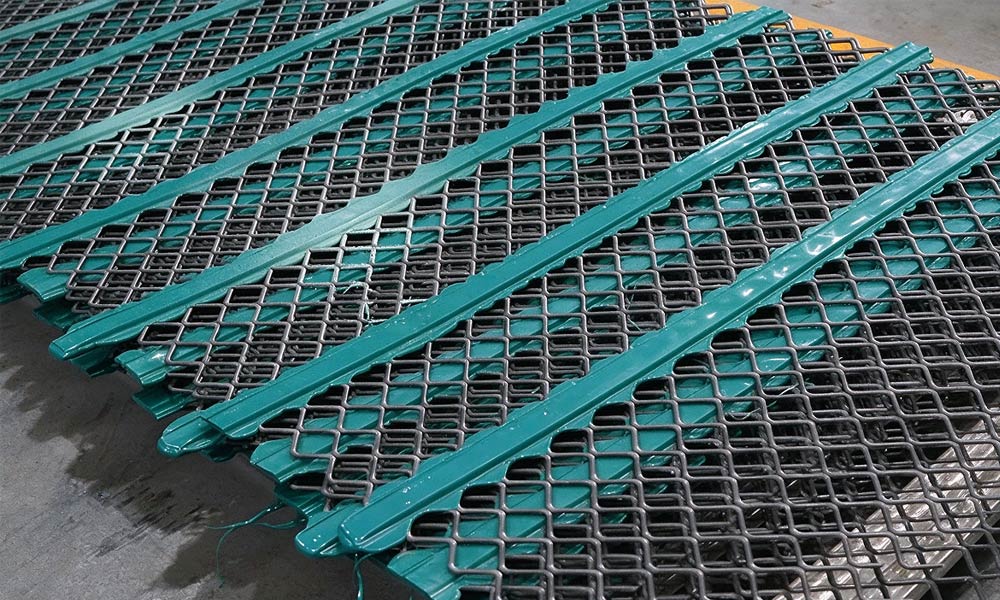
Not every Self-Cleaning Screen is the right answer for fine iron ore, because the category covers polyurethane flex-strand panels, crimped-wire self-cleaning meshes, hybrid wire-and-elastomer decks, and cassette systems with completely different behaviors under heavy, dense feed. In fine sizing, the slot geometry has to match the particle shape: elongated slots help near-size slivers align and reject instead of bridge, while tapered polyurethane fingers keep the aperture “breathing” without letting the opening wander so much that product size drifts. Wire-based self-cleaning constructions add a scrubbing action at the crossing, which can be excellent for dried crushed ore but risky if the feed is abrasive and the wire temper is wrong, because iron ore will happily abrade a poorly specified strand into failure. The strategic move is to separate the deck into zones: a robust impact/scalp zone that protects the fine panel, then a self-cleaning fine section whose strand stiffness is tuned for 1–6 mm material rather than copied from a coal or aggregate project. A Self-Cleaning Screen that flexes locally at the aperture but stays dimensionally honest globally is what keeps blinding low without sacrificing the cut point the metallurgist cares about.
Deck Angle and the Hidden Levers Behind Screening Efficiency
The screen gets blamed for blinding, but half the crime scene is upstream, because fine iron ore that arrives as a compacted, over-fed pancake off the conveyor will blind even a perfect Self-Cleaning Screen if the bed never stratifies. Pre-conditioning matters: modest desliming, controlled moisture, avoiding excessive recirculated fines from the thickener underflow, and presenting the feed as a stratified stream instead of a wet boulder of magnetite slurry changes everything. Deck angle and stroke orbit are the next hidden levers—too flat and the fine bed thickens, too steep and fines bounce over the deck and vanish into oversize, while the wrong vibration ellipse makes near-size particles recirculate instead of reporting correctly. Support-bar spacing also quietly decides efficiency: wide spans let the panel drum, the aperture flex becomes unpredictable, and blinding returns even with premium polyurethane; tight spans protect the deck but steal open area if overdone.
Operational Synergy: Tuning the Machine to the Screen
A self-cleaning screen cannot work in isolation; the vibrating screen itself must be tuned to activate the cleaning mechanism. This involves carefully adjusting the vibration intensity—enough amplitude to keep the material bed fluid and dislodge sticky particles, but not so much that it causes excessive wear or compromises sizing accuracy. The deck angle also plays a role; a slightly steeper angle can increase material travel speed, helping to carry potential blinding material off the screen. Most importantly, maintain a consistent and controlled feed rate. Overloading the screen is a guaranteed way to overwhelm any self-cleaning feature and cause rapid blinding.
Supporting the System: Auxiliary Measures
A robust strategy includes auxiliary measures that support the primary system. For ores with high surface moisture, consider installing low-temperature deck heaters at the feed point. Gentle warmth can evaporate just enough moisture to prevent a pasty layer from forming. Additionally, ball tray systems—where rubber balls bounce against the underside of the screen—provide continuous, mechanical cleaning action to knock stubborn particles loose. Even with the best technology, establish a routine for visual inspections and light, scheduled cleanings with compressed air to manage any residual buildup.
Successfully preventing screen blinding in iron ore fine screening requires a unified strategy, not just a product swap. It's the synergy between purpose-built self-cleaning screens, optimally tuned screen operation, and smart supporting practices. By implementing this integrated approach, operations can transform a persistent bottleneck into a reliable, high-efficiency process. The result is maximized throughput, consistent product quality, and significantly reduced downtime for manual cleaning, delivering a strong return on investment.