Anti-adhesion and Wear-resistant Solution Using Self-cleaning Screens for Zinc Ore
For zinc ore beneficiation operations processing sharp, high-hardness sulfide and oxidized zinc ore mixed with fine clay fractions, standard rigid screening decks constantly struggle with two overlapping pain points: coarse abrasive particles wear through the mesh in just a few weeks, while sticky fine ore cakes over apertures and drags down classification efficiency by 30% or more within hours of startup. Many operations that tested generic self-cleaning panels designed for general minerals found these units failed quickly, with flexible elements tearing apart or caking building up between the strips, forcing frequent unplanned shutdowns for replacement and cleaning. The purpose-built, field-validated system built around self-cleaning screens for Zinc Ore solves both anti-adhesion and wear-resistance challenges at the same time, no constant maintenance work required.
Reinforced High-Wear Polyurethane Panel Matrix
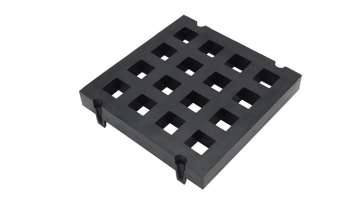
The first core part of the solution uses a custom-formulated, mineral-filled high-hardness polyurethane matrix that is engineered specifically to resist the continuous scouring of sharp, angular zinc ore particles, delivering 3.5 times longer surface service life than standard generic polyurethane screening panels. This heavy-duty base structure for self-cleaning screens for Zinc Ore prevents the rapid surface pitting and abrasion that creates rough spots where fine sticky ore particles easily adhere and build up thick compacted layers across the deck.
Why Zinc Ore Fouls Ordinary Media
The first thing to understand is that zinc beneficiation stacks the worst screening conditions on top of each other. Oxidized or weathered ore carries fine clay that turns into a lubricated paste the moment spray water hits it, and that paste does not fall through an opening—it bridges the aperture, dries a little under deck heat, and forms a crust that ordinary poking will not remove. At the same time, the “clean” fraction is anything but gentle: sphalerite, pyrite, silica gangue, and crushed country rock are angular, hard, and happy to scratch steel, round off rubber apertures, and migrate the cut size wider until oversize rides into the cyclone or the flotation cell. Self-cleaning Screens for Zinc Ore answer this double attack with elasticity plus engineered wear resistance: the panel flexes under vibration, the aperture briefly dilates, the near-size particle that was about to peg gets ejected, and the hard particle that was about to score the surface meets a compound tuned to absorb micro-cutting instead of yielding to it. Steel wire fights abrasion but loses the adhesion war; plain rubber fights impact but can tear and erode; the self-cleaning concept is the middle path where the surface is resilient enough to reject slime and tough enough to outlive the ore.
Compound and Aperture Work as One Part
A self-cleaning panel is not “rubber with holes.” The compound and the geometry are the same component, and separating them is how buyers end up with a panel that cleans well for two weeks and then disintegrates. Polyether-based polyurethane tends to handle wet, recycled process water better than some polyester systems because it resists hydrolysis, while the Shore A window—often 80–95 A in mining duties—has to be traded like a budget: softer gives better rebound and anti-pegging, harder gives better cut resistance and longer wear life at the ligament. Aperture shape does the quiet work: tapered slots widen toward the discharge side so a near-size zinc crystal gets pushed out instead of wedged, diamond or stepped openings break the flat contact patch that slime loves to grip, and ridged or corrugated surfaces stop a thin drainage film from turning into a sticky mattress. Self-cleaning Screens for Zinc Ore earn their name only when the molded skin is low-surface-energy enough that oxidized fines slide, the ligament is shaped so particles cannot settle into a stable plug, and the panel keeps flexing uniformly instead of hardening at the feed nose while the rest of the deck stays soft.
Zoning the Deck Instead of One Panel Everywhere
The mistake most plants make is specifying one panel for the whole deck and calling it a day. Zinc screening is violent at the feed end, messy in the middle, and precision-hungry at the discharge lip, so a single compound and aperture rarely survive all three jobs. A better layout puts a reinforced, thicker, possibly steel-cable-backed module at the feed point where slabby ROM and crusher chunks land, shifts to a high-open-area tapered-slot polyurethane in the main sizing zone where near-size sphalerite and gangue try to peg, and uses a finer, more elastic aperture at the tail where moisture and slime concentrate and the cut point decides whether the flotation bank sees mud or mineral. Self-cleaning Screens for Zinc Ore also pair well with flip-flow frames, ball trays, or polyurethane-coated independent wires when the ore is genuinely nasty: the deck stretches and relaxes hundreds of times a minute, the opening changes shape continuously, and trapped particles never get the stable seat they need to blind the panel. Add correctly placed wash bars—low pressure, wide fan pattern, aimed at the sticky zone rather than flooding the whole deck—and the slime stays suspended long enough to leave with the slurry instead of baking into the ligament.
Low-Surface-Tension Polished Anti-Adhesion Surface
The second key design feature adds a precision polished, low-surface-tension top layer that eliminates the micro-porous, rough texture common on standard screening panels, drastically reducing the adhesive force between fine clay-rich oxidized zinc particles and the screen surface. This treatment ensures sticky fine fractions slide smoothly across the deck instead of sticking in place, keeping the effective open area of self-cleaning screens for Zinc Ore consistently above 90% even after weeks of continuous high-moisture feed operation.
Thickened Independent Flexible Self-Cleaning Elements
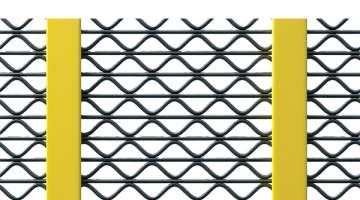
The third critical upgrade uses thickened, tear-resistant independent flexible strips mounted on a reinforced steel support frame, each moving at a slightly different independent vibration frequency to shake loose any particles that do get trapped in apertures, without the synchronized uniform motion that lets fine ore pack into gaps. This structure eliminates the premature tearing and element breakage that plagues thin generic self-cleaning designs, keeping both anti-clogging and wear-resistance performance fully consistent across the entire extended service life of the unit.
This integrated dual-function solution has helped our zinc processing clients cut annual screening media costs by over 60%, eliminate nearly all manual deck cleaning labor, and keep classification accuracy stable at target levels across months of non-stop operation. If you share details of your exact zinc ore properties, feed size distribution and existing deck dimensions, our engineering team can put together a fully customized retrofit plan that fits seamlessly into your existing beneficiation workflow.