Self-Cleaning Screen: Stop Vibrating Screen Blinding and Restore Throughput
If your vibrating screen keeps clogging and your throughput keeps dropping, you're not alone. Clogging which is a kind of material wedging into the mesh is the number one silent killer of vibrating screen productivity. The fix isn't more maintenance. It's swapping to a self-cleaning screen. Here's why that one change does more than a dozen manual cleanings ever could.
Why Your Vibrating Screen Keeps Blinding
It's not bad luck. Wet, sticky, or fine-grained material finds every gap in a standard mesh and locks in place. Once a few holes clog, the load shifts to the remaining open area ,which clogs faster. You end up running the screen at half capacity without even realizing it. Operators keep scraping, keep adjusting amplitude, keep hoping it gets better. It doesn't.
Why the Deck Turns Into Paste
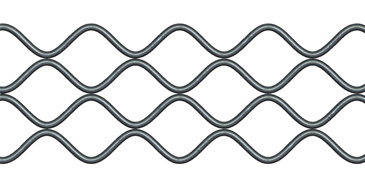
Blinding is adhesion plus stagnation. Moisture, clay, slimes, and recirculated fines coat the wire crowns, capillary tension glues a near-size grain across the opening, and a rigid woven panel offers no way out—every vibration just taps the clog deeper. Pegging joins in when angular rock jams a square hole at four contact points, and the deck stops screening and starts conveying a wet cake forward. A Self-Cleaning Screen refuses that stillness: the strands flex, the slot dilates and relaxes, the sticky bridge gets interrupted dozens of times a second, and the particle either falls through or gets thrown back into the bed. The paste never gets the quiet half-second it needs to cure.

How the Flex Actually Works
Not all self-cleaning media behave the same, and buying "the flexible one" is how plants waste money. PU strip screens flex locally and suit sticky fine ore at moderate tonnage; harp or piano wires vibrate independently so near-size grains cantilever and drop instead of wedging; flip-flow panels snap the whole elastomer mat several millimetres per cycle, hitting 30–50 G at the surface for the nastiest clay-bound feeds. A Self-Cleaning Screen earns its name through tapered slots—narrow on top, wider underneath—so the aperture relieves itself instead of trapping the grain. The deck is not "softer mesh," it is a surface engineered to disagree with the clog every single cycle.
Where It Pays Back First
The win is rarely just "less blinding." A cleared deck restores effective open area, so the cut point holds, oversize stops leaking into the mill, fines stop riding into the coarse stockpile, spray-water volume drops because the panel no longer needs rescuing, and changeout labour shrinks from a shift-firefight to a planned module swap. On wet iron ore, gypsum, coal fines, potash brine, or weathered lithium clay, a Self-Cleaning Screen often turns a deck that blinded by mid-morning into one that runs the campaign. The savings hide in throughput, reagent dose, crusher recirculation, and dryer fuel—not in the mesh price.
What a Self-Cleaning Screen Actually Does Differently
A self-cleaning screen uses polyurethane or rubber panels that flex under vibration instead of sitting rigid. Every bounce throws trapped material off the surface before it embeds. No manual scraping. No stopping the line. The self-cleaning action happens continuously while the vibrating screen runs ,which means your capacity stays close to rated output, not 50% of it.
The Capacity Jump of self-cleaning screen Is Bigger Than You Think
Plants that switched from standard mesh to a self-cleaning screen on their vibrating screen report 20–35% higher effective throughput. That's not because the screen is "better" — it's because it actually stays open. Less blinding means less recirculation, less load on your crusher, and fewer bottlenecks downstream. The self-cleaning screen pays for itself in weeks, not months.
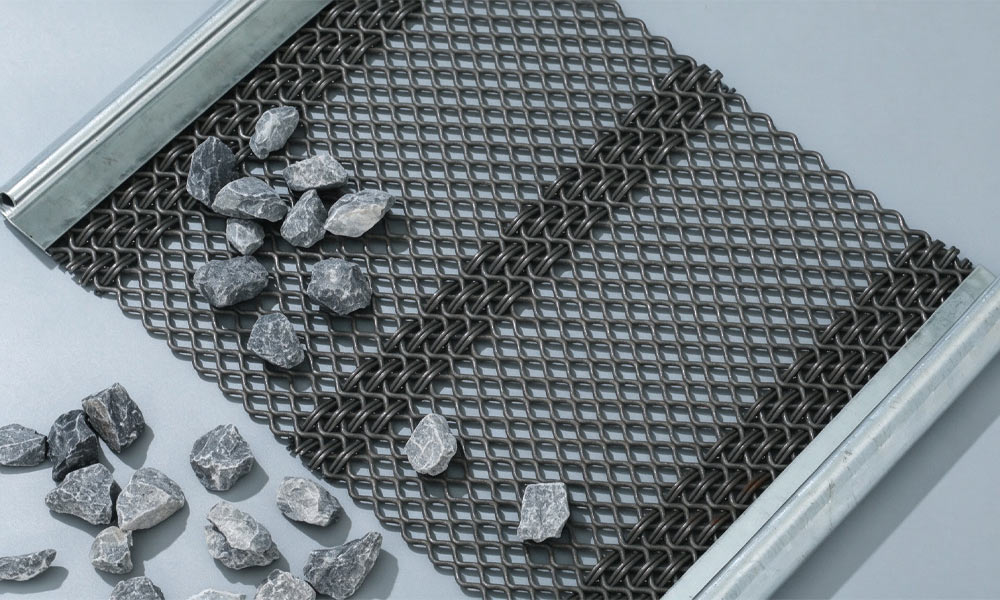
Here's the hard truth: if your vibrating screen clogs more than twice a shift, you're fighting the wrong battle. Extra cleaning labor, higher water usage, more downtime — it all adds up. A self-cleaning screen eliminates the root cause. Install and set it so as to let the vibration do the work it was supposed to do in the first place.