Evaluating Self-Cleaning Performance of Self-Cleaning Screens for High-Moisture Coal Screening
Screening high-moisture, sticky coal is a constant battle against blinding.Self-cleaning screens promise a solution, but not all live up to the claim under real, wet conditions. A proper evaluation of their anti-blinding and self-cleaning performance goes beyond marketing terms; it requires testing how the screen's specific geometry and motion physically interact with sticky coal fines. The right screen can double your throughput, while the wrong one becomes an expensive, clogged filter.
The Core Mechanism: How Self-Cleaning Actually Works
The self-cleaning performance in this context is not magic—it's physics. Effective self-cleaning screens use a combination of aggressive vibration and specialized deck design to prevent material adhesion. The key is generating high-G, linear or elliptical motion that imparts sufficient acceleration to dislodge clinging particles. Simultaneously, the deck surface or aperture shape is designed to minimize flat areas where material can stick. Polyurethane panels with tapered, funnel-shaped openings or screens with a secondary "jump" motion are common designs that promote particle ejection rather than packing.
What Self-Cleaning Actually Has to Fight in Wet Coal
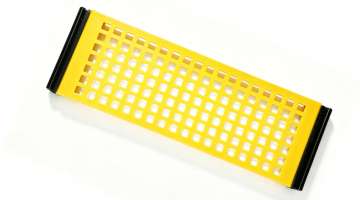
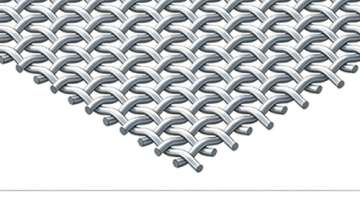
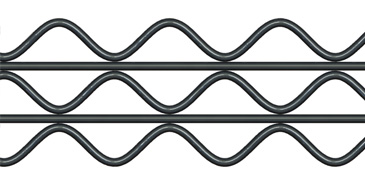
The failure mode in high-moisture coal is boring to describe and expensive to ignore: fine coal and clay slime stick to the wire, a thin adhesive film forms across the deck, near-size particles wedge into the openings, and the screen quietly changes from a separator into a clogged tray that lets oversize leak into clean coal and fines ride out with the reject. A Self-Cleaning Screen answers this with independent wire motion, polyurethane-bound longitudinal strands, wave or diamond openings, and sometimes a dual-frequency arrangement where the box shakes at one rhythm while the wires ring at their own natural frequency. That micro-movement breaks the surface tension film, pops pegged particles, and keeps the aperture “breathing” instead of frozen. But the coal fights back with moisture, clay content, elongated fragments, and seasonal rain, so a panel that looks brilliant at 6% surface moisture can still struggle at 12–15% if the deck angle, feed depth, and vibration settings are wrong. The first rule of evaluation is therefore simple: never trust a dry-coal trial for a wet-coal problem, because damp fine coal forms a cohesive bed that ordinary stratification charts do not predict.
The Metrics That Actually Separate a Good Panel From a Pretty One
When plants evaluate a Self-Cleaning Screen for coal, they usually make the mistake of weighing initial throughput and ignoring the curve over the shift. The metrics that matter are sustained effective open area, cut-point stability, blinding/pegging rate per hour, manual cleaning stops, oversize-in-clean-coal, fines-carryover, motor amperage drift, and service life under actual slurry rather than under a sales demo. A credible panel in wet fine coal should hold the large majority of its effective open area through a full production cycle instead of blinding hard inside the first hour, and the product size distribution should not creep finer just because the deck secretly closed up. Field practice in coal preparation shows that wash-plant feeds in the 8–12% moisture band can run eight-hour cycles with low manual cleaning when the media, deck angle, and spray system are matched, while a rigid woven cloth in the same duty may need deck scraping every couple of hours and still ship contaminated product.A Self-Cleaning Screen should also be scored on “recovery without drama”: not necessarily the highest peak tonnage, but the ability to keep shipping in-spec coal when the feed turns muddy, the roof leaks, and the fines content spikes after the washer.
Trial Design: Replicate the Worst Tuesday, Not the Best Hour
A proper evaluation of a Self-Cleaning Screen is closer to a controlled plant experiment than a warehouse inspection, because the panel has to be punished with the same PSD, clay load, wash-water chemistry, deck angle, vibration frequency, and feed rate the real circuit sees at its worst. Run the candidate media on the dirtiest deck—fine coal after washing, not the dry scalp nobody audits—and log bed depth, travel speed, blinding map, undersize grade, oversize contamination, spray-bar effect, amperage, and changeout minutes. Compare it side by side with the existing woven or PU panel using the same tonnage target, because the question is not “does it screen,” it is “does it keep screening when the coal is wet, sticky, and rude.” A good trial also separates blinding from pegging: blinding is fines plastering the opening, pegging is near-size coal wedging in the hole, and the remedy is different—diamond/wave geometry and independent wires help blinding, slotted elongated apertures and correct cut size help pegging, while too-high bed depth or wrong amplitude can defeat both.
Key Metrics for Anti-Blinding Performance Evaluation
When evaluating anti-blinding performance, look beyond initial throughput. The critical metrics are sustained open area and maintenance of cut point over an 8-hour shift. A good self-cleaning screen will maintain over 85% of its open area after hours of processing wet coal, while a poor one may blind over 50% within the first hour. Monitor the product size distribution; a blinding screen will show a gradual shift towards a finer product as effective aperture size decreases.
Field and Lab: Why Real-World Testing is Non-Negotiable
Laboratory tests with dry coal are almost useless for evaluating self-cleaning performance with high-moisture feed. Real-world evaluation must replicate your plant's conditions: the same moisture content, similar clay percentage, and equivalent feed rate. The most telling test is to run the self-cleaning screen for a full production cycle, then immediately inspect it after shutdown. Minimal material buildup on the deck underside and in the apertures is the true indicator of success.
The Trade-Off: Efficiency and Wear
High-energy vibration for self-cleaning mesh increases wear on the screen and the vibrator bearings. The evaluation must balance blinding resistance against the total cost of ownership, including maintenance. Sometimes, a slightly less aggressive but more robust screen design proves more economical over its lifespan than a high-maintenance perfect cleaner.
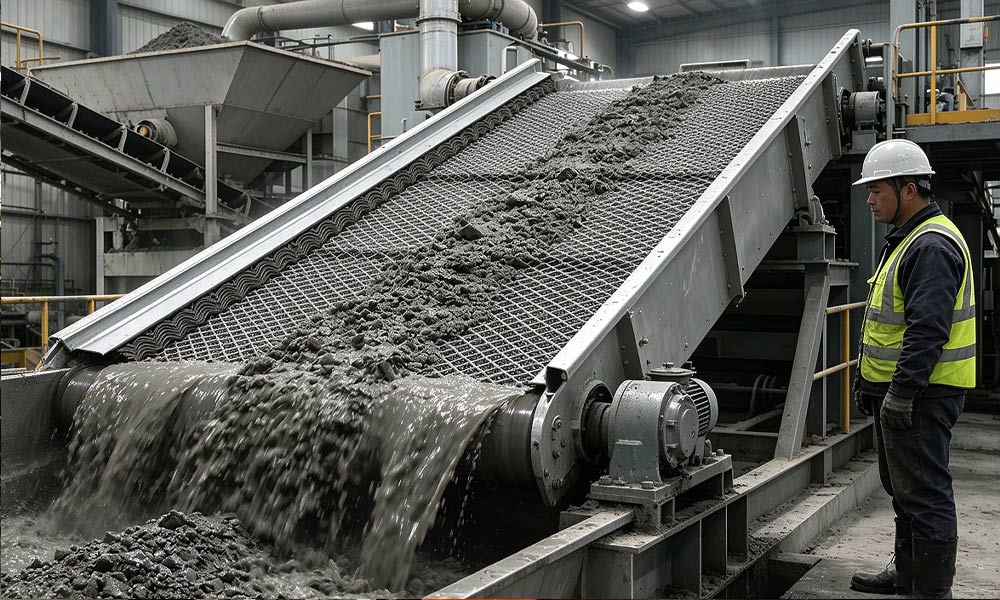
The anti-blinding and self-cleaning performance of any screen is entirely dependent on your specific coal's properties. Before committing, insist on a field trial with a panel or small deck section. Run your high-moisture coal through it and measure the sustained open area and product consistency. This real-world data is the only reliable evaluation for preventing costly, chronic blinding issues.