Principle of Independent Vibration Frequency and On-Site Commissioning for Self-Cleaning Screens
The promise of a self-cleaning screen lies in its ability to generate the precise motion needed to shed sticky material. The core of this capability is the principle of independent vibration frequency, where the vibration of the screen deck is not a fixed function of the motor speed but can be finely tuned. However, this advanced feature is only as good as the on-site commissioning adjustment that dials it in for your specific material. Getting this tuning wrong means the screen runs, but doesn't clean itself effectively.
How Independent Frequency Works: Decoupling Motion from Motor Speed
The principle of independent vibration frequency for self-cleaning screen is achieved through a system of unbalanced masses and often an adjustable counterweight or eccentric mechanism. Unlike a standard direct-drive screen where deck frequency equals motor RPM, these systems use rotating eccentric weights to generate the vibratory force. By adjusting the position of these weights relative to each other or by using variable-frequency drives, the frequency and amplitude of the deck's motion can be controlled independently. This allows operators to set a high frequency for dislodging fines while keeping the amplitude optimal for material conveyance.
Why the Wires Do Not March Together: Natural Frequency
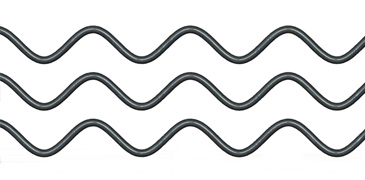
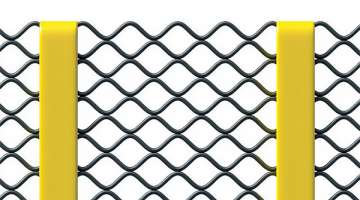
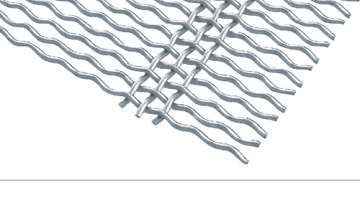
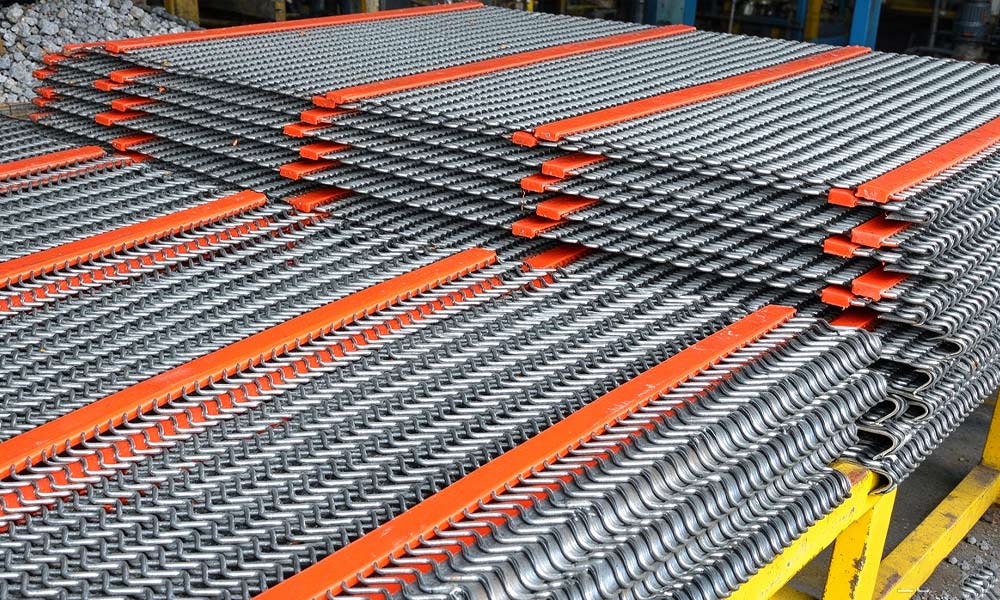
The physics is easier to feel than to memorize: the vibrator gives the whole screen box a strong, low-frequency throw, and the individual wires riding inside polyurethane strips or between support bars have their own spring constants, so they lag, lead, and wobble relative to the frame.A harp or piano-wire Self-Cleaning Screen is basically a row of tuned strings under tension; the machine says “shake left-right at 800–1,200 rpm,” and each string replies “I’ll also ring at my own frequency depending on how long I am, how tight I sit, and what just hit me.” Adjacent wires therefore reach peak displacement at different moments, the gap between them opens and closes dynamically, and a near-size particle that would happily wedge in a fixed square hole gets kicked, rotated, and either dropped through or flipped back into the bed. Polyurethane-strip constructions add another layer, because the elastomer stores energy and releases it locally, giving 360° micro-movement rather than a single-axis jiggle.
Commissioning Step One: Tension the Panel So the Wires Can Sing
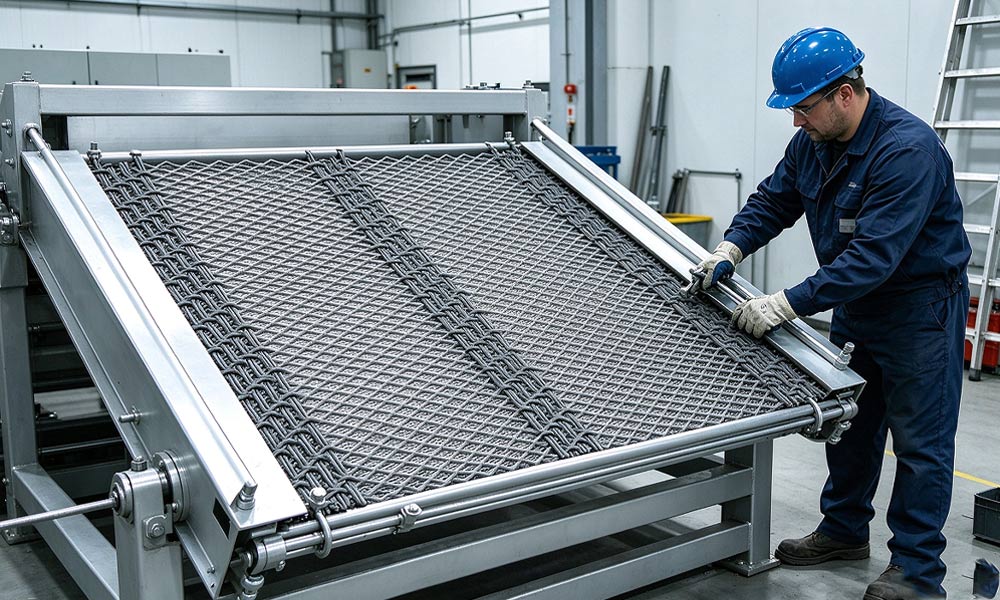
On-site setup starts with tension, but tension is a permission slip, not a horsepower rating: too loose and the wires flap between support bars, the bed rides up and down instead of stratifying, pegging comes back, and the hooks start hammering the clamp rail; too tight and the longitudinal wires lose their freedom, the polyurethane strips shear, the aperture geometry distorts, and edge tear becomes the failure mode instead of blinding.A proper Self-Cleaning Screen commissioning sheet lists the supplier’s line tension or hook-bolt torque, a staged tensioning sequence from center outward, a re-tension after 4–8 hours of run-in, and a second check at 24 hours once the PU strips compress and the wires settle. Crews should use a calibrated torque wrench or tension meter, never an impact gun with attitude; they should also tap the deck with a rubber mallet and listen for a consistent tone across the width, because dull corners mean poor seating and uneven pull. Support-bar pitch has to match the wire length and aperture: if the spans are too long the wires drum, if too short the open area drops and the wires are over-constrained.
Commissioning Step Two: Tune Amplitude, Frequency and Deck Angle
Once tension is right, the screen box parameters decide whether the wire-level cleaning action is amplified or wasted, and the golden rule in the field is change one variable at a time. A Self-Cleaning Screen loves a fluid bed, so slightly higher amplitude can help lift damp clumps and improve stratification in sticky aggregate, coal, or iron-ore fines, but crank it too far and you accelerate wire fatigue, throw the material off the deck too fast, and lose the chance for near-size particles to find the opening.Frequency matters in the other direction: finer, wetter feed often benefits from a higher machine frequency because particles get less time to settle and stick, while coarse, bulky feed needs more throw than buzz. Deck angle is the quiet lever—steeper angle thins the bed and rushes material to discharge, which helps avoid blinding but can pull oversize into the undersize; flatter angle gives more screening time but invites a muddy mattress of fines if the feed is wet. Feed rate is where many commissioning reports fall apart: operators dump the hopper to “see if it copes,” the bed depth doubles, the wires can no longer move the mass, and the self-cleaning feature is buried under tonnage.
Why On-Site Adjustment is Non-Negotiable
No two materials behave the same. The ideal vibration profile for sticky iron ore fines is different from that for damp coal or plastic pellets. The on-site commissioning adjustment is the process of finding this "sweet spot." It involves running the self-cleaning screen with the actual material and iteratively adjusting the frequency and amplitude while observing the blinding condition, throughput, and particle stratification. A screen running at its factory default setting is almost never optimized for the local application.
The Adjustment Process: A Methodical Approach
A proper on-site commissioning adjustment follows a logical sequence. First, the self-cleaning screen mesh is run at a baseline setting with a representative feed. The operator observes material flow and checks for dead spots or excessive blinding. Then, one parameter—typically frequency—is adjusted incrementally. The goal is to find the point where the material bed becomes fluidized and near-size particles are efficiently ejected from the apertures without being thrown off the deck entirely. Amplitude is then fine-tuned to control the travel speed and layer thickness.
Understanding the principle of independent vibration frequency is the first step. Applying it through meticulous on-site commissioning adjustment is what transforms a standard piece of equipment into a high-performance, self-cleaning asset. The correct adjustment maximizes screening efficiency, minimizes wear from excessive vibration, and solves chronic blinding issues that throttle production. It turns a theoretical advantage into measurable tonnage.