Difference in Aperture Stability Between Double-Crimp and Single-Crimp Woven Wire Screens
In high-impact screening, the advertised opening size on a spec sheet isn't the one you'll have after a few hundred tons of material. The real-world performance comes down to aperture stability—the ability of crimped woven screen to maintain its precise opening size under load and vibration. This is where the fundamental construction difference between double-crimp and single-crimp woven wire screens dictates their lifespan and accuracy. One crimping method is designed to hold fast; the other is prone to shifting, with direct consequences for your product gradation.
The Mechanics: How Each Crimp Holds the Mesh Together
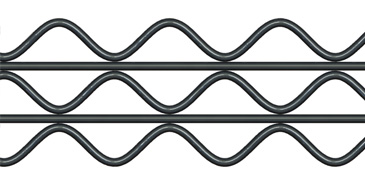
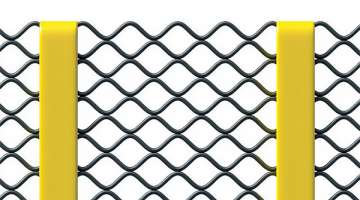
The difference in aperture stability starts at the wire crossover point. In a single-crimp screen, the warp and shute wires are crimped only before weaving. They sit in the crimps but are not locked in place, allowing for slight movement under stress. A double-crimp wire woven screen adds a second, offset crimp after weaving. This second crimp acts like a mechanical lock, pinching the wires at the intersection and preventing lateral or rotational movement. This locked-joint construction is the primary reason for the superior aperture stability of double-crimp screens.
Single Crimp: Flexible, Economical, and Honest Only in Light Duty
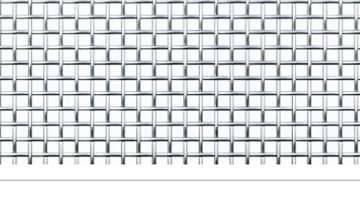
A single-crimp Crimped Woven Wire Screen usually pre-crimps one direction—commonly the weft, while the warp runs with a lighter or simpler set—so the weave keeps more surface freedom and the panel is easier to handle, cut, and tension on smaller machines. That flexibility is genuinely useful: for grain cleaning, light aggregate, dry sand screening, architectural panels, and low-impact duties, the screen does not need to fight heavy rock, it needs to breathe, drain fine material, and stay cheap enough to swap often. The weakness shows up the moment the duty gets serious, because with only one direction mechanically locked the intersections rely more on friction and frame tension to stay put, and a vibrating deck spends its whole life trying to undo exactly that. Under continuous vibration, off-center feed, heavy lumps, or uneven clamping, the wires can creep: one diagonal opens, the other closes, the square becomes a parallelogram, and particles that should have been rejected start sneaking through while the product grade quietly drifts. A single-crimp Crimped Woven Wire Screen is not “bad”; it is mis-specified when people put it on a primary scalper or an iron-ore sizing deck and then act surprised when the aperture wandered. Its stability is conditional—good when loads are light, tension is correct, and nobody expects it to behave like a rigid plate.
Double Crimp: Interlocked Geometry That Treats the Aperture as a Structure
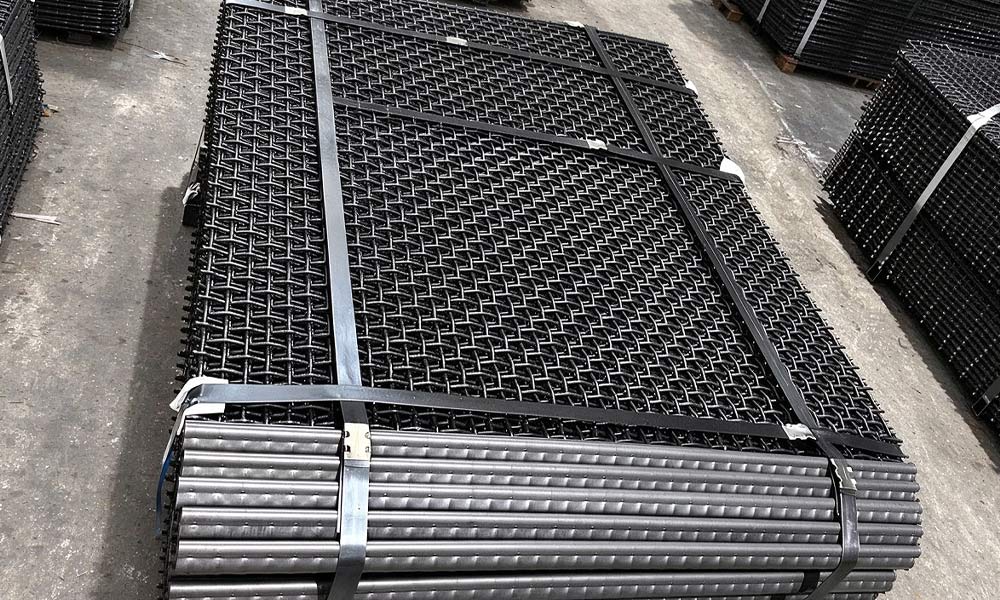
Double crimp changes the conversation because both warp and weft are pre-corrugated before weaving, so the crest of one wire drops into the trough of the other and the intersection becomes a mechanical lock rather than a frictional maybe. A double-crimp Crimped Woven Wire Screen distributes a falling-lump impact across several neighboring intersections instead of dumping it on one point, resists lateral wire migration under high-amplitude vibration, and keeps the aperture profile much closer to the original drawing after weeks of service. Field experience in mineral processing backs this up: double-crimp screens have been reported retaining around 98% of original aperture accuracy after three months of continuous operation, while loosely locked weaves can show meaningful drift in the same window.The cost of that stability is real but manageable—double crimp uses more forming control, needs better crimp-pitch consistency, is stiffer to handle, and typically gives slightly less open area than a comparable single-crimp or plain weave because the wires cannot sit as tightly in the plane. For coarse scalping, quarry aggregate, coal desliming, dense-medium circuits, and abrasive ore sizing, that trade is usually a bargain: you lose a few points of throughput potential and gain a cut point that does not lie to the metallurgist. A double-crimp Crimped Woven Wire Screen is essentially the panel version of “measure twice, cut once”—the geometry is fixed at the intersection, not hoped into place by tension.
What Really Moves the Aperture
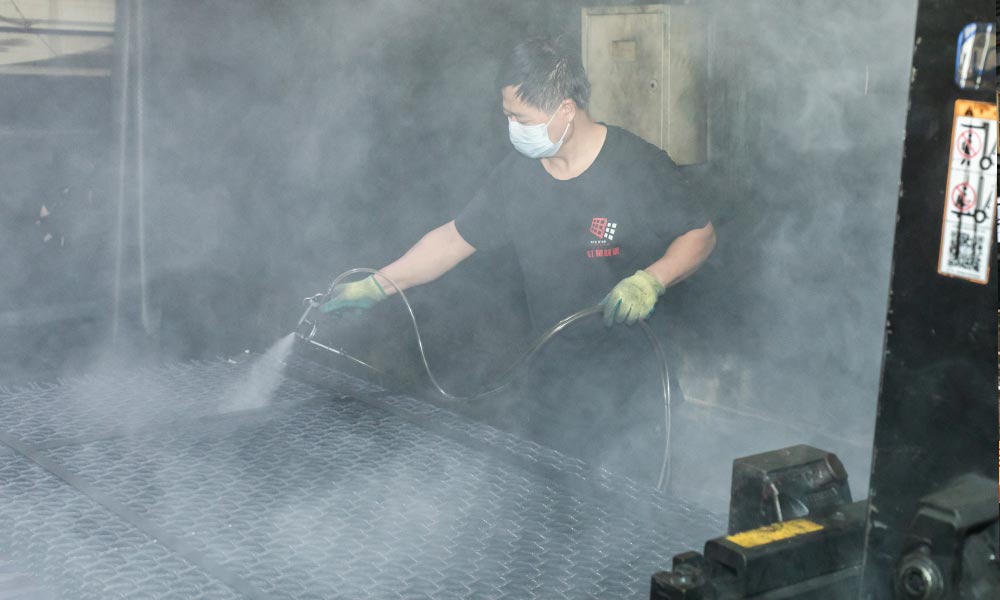
The crimp type is the headline, but aperture stability in a Crimped Woven Wire Screen is a team sport between crimp depth, wire diameter, panel tension, support-bar pitch, and how violently the feed lands. A single crimp with heavy wire and short support spans can out-stabilize a badly made double crimp, because crimp depth relative to wire diameter creates the friction that locks the weave; too shallow and the wires skate, too deep and you eat open area and create stress points at the bend. Tension is the silent murderer: under-tension lets the panel drum, the bed rides instead of stratifies, and the intersections work loose in the direction of the stroke; over-tension flattens the crimp, reduces the aperture, and can permanently deform the wave profile the supplier spent good tooling money to make. Support pitch matters just as much—if the bars are too far apart, even a double-crimp panel will sag between supports and the apertures will breathe with every cycle; if too close, you strangle open area and add edges for fines to peg against. A plant that switches from single crimp to double crimp and still sees drift usually has a frame problem disguised as a media problem: worn clamp rails, uneven hook tension, high/low support bars, or a vibrator throwing the box off-balance. The Crimped Woven Wire Screen is only as stable as the structure that stretches it.
Stability Under Load: Why Double-Crimp Wins on Heavy Duty
When subjected to the impact of heavy feed like iron ore or coal, a single-crimp wire weaving screen can shift. This movement, even by a millimeter, changes the opening size, causing "apex deformation" where square openings become rhomboid. The result is inconsistent sizing and premature blinding as particles wedge into the distorted gaps. The double-crimp's locked joints resist this deformation, maintaining the geometric integrity of each aperture for much longer. This translates directly to a more consistent product size distribution over the entire service life of wire weaving mesh.
The Trade-Off: Flexibility and Rigidity
The enhanced aperture stability of double-crimp screens comes with a trade-off: reduced flexibility. The locked joints create a stiffer panel. This is an advantage on flat deck or inclined screens where rigidity is needed, but it can be a disadvantage if the screen needs to conform to a crowned deck or a complex shape. Single-crimp woven metal screens are more flexible and easier to install on non-flat surfaces, but this flexibility is the very reason for their lower aperture stability under dynamic loads.
The choice hinges on your primary need. If maintaining precise aperture size for accurate sizing is critical, the double-crimp woven wire screen is the clear choice for its superior aperture stability. If you need a screen to fit a specific curved deck profile and absolute size consistency is secondary, a single-crimp screen may be suitable. For the demanding conditions typical of mineral processing, the stability advantage of double-crimp almost always outweighs the flexibility of single-crimp.