How to Qualify Reliable Self-Cleaning Screen Manufacturers
Most buyers shortlist Self-Cleaning Screen Manufacturers on price, lead time, and a spec sheet that says "85–95 Shore A, PU, anti-clog." Then the panels blind early, tear at the clamp, or lose the aperture after one rainy month in the pit. The invoice was never the real product—the production floor was. A self-cleaning screen earns its name in the mold, not in the brochure, so the evaluation has to start where the elastomer is mixed, cast, cured, embossed, and measured.
Compound Mixing and Controlled Casting
The first thing worth asking a supplier about is the polymer system, because "polyurethane" covers everything from soft polyester blends that hydrolyze in slurry to MDI-based polyether systems built for abrasion and wet duty. A serious Self-Cleaning Screen Manufacturers runs pre-weighed polyol and isocyanate on calibrated scales, vacuum-degasses the mix so the panel is not full of pinholes, pours into CNC-machined steel or aluminium molds, and logs mold temperature, pour time, and pot life. No degassing step, no cure log, no witness button? That is not a process—it is hope with a hardener. Tapered slots, wave bars, and diamond openings only stay accurate if the mold is cut to microns and the pour does not trap air at the ligament root.
Cure, Post-Cure, and the Hardness Drift Nobody Watches
A panel that leaves the mold soft is not ready, and a plant that ships it anyway is selling future failures. Proper production runs a stepped thermal cure—often 80–110°C, sometimes a lower pre-cure then a 100–110°C post-cure—so the polymer cross-links uniformly instead of skinning over on the outside while the core stays green. The buyer should ask for Shore A readings taken at several points after full post-cure, not one number from a fresh sample. A Self-Cleaning Screen Manufacturers that cannot show oven-temperature mapping, post-cure duration, and a hardness spread across the panel face is guessing at wear life. Three Shore points of drift can mean the difference between a screen that flexes for six months and one that goes brittle before the first shutdown.
Embossing, Ridge Geometry, and Why "Texture" Is Not Decoration
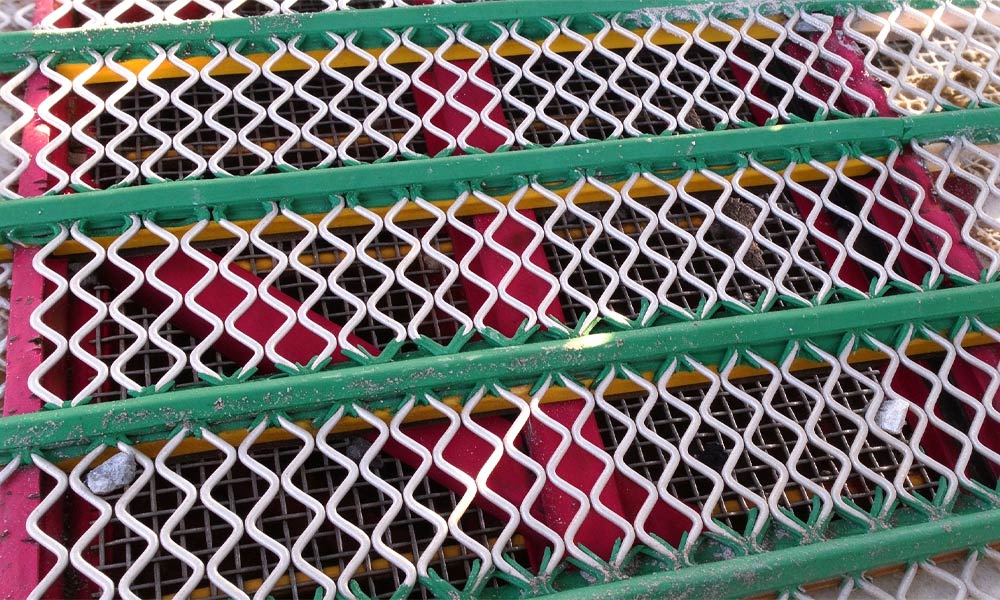
Embossing is where most cheap screens quietly fail, and most buyers never look. On a self-cleaning deck, the surface is not flat by accident: ridged, humped, wave, or micro-channel embossing changes how the bed flows, breaks capillary slime films, and gives near-size particles a secondary vibration path so they eject instead of pegging. CNC or precision roller embossing holds uniform depth across the whole panel; hand-finished or uneven molding leaves dead zones that blind first. When vetting Self-Cleaning Screen Manufacturers, ask for embossing-depth tolerance, crown-height consistency, and a macro photo of the same panel corner versus centre. Uneven embossing is not cosmetic—it is a local blinding map you are about to install.
Dimensional QA, Batch Traceability, and the Exit Interview
The last checkpoint is whether the factory can prove what it just made. Aperture scanning with optical or laser measurement, open-area calculation, crown and thickness gauges, tensile/tear/abrasion witnesses, and a batch record tied to mix ratio, mold ID, cure log, and inspector initials turn a shipment into evidence. Good Self-Cleaning Screen Manufacturers welcome this questions—they send a first-article report, keep a retained sample, and let a third-party inspector onto the floor. The ones that "don't usually share process data" are telling you exactly where the corners got cut.
If you are qualifying a new screen supplier, stop reading the PDF and start reading the process: ask for the mix log, the cure curve, the embossing tolerance, the aperture scan, and one worn panel from a reference site. Send us your ore type, moisture and clay load, deck model, stroke, target cut, and failure photos, and we can turn that into a factory audit sheet instead of a quote comparison—so the Self-Cleaning Screen Manufacturers you shortlist either prove the floor or quietly remove themselves before the container sails.