Self-Cleaning Screens Design for Water Flow and Anti-Clogging in Tailings Processing
Tailings dewatering screens aren’t just another piece of equipment. They have a tough job: let water escape quickly, yet stay clear of sticky, ultra-fine particles that love to clog things up. With standard screens, you’ll notice they get blocked fast—especially with clay-rich slurries—so water stops flowing, and the whole process grinds to a halt. That’s why self-cleaning screens aren’t a luxury here; they’re essential. You need designs that keep water moving while refusing to get plugged up, so the operation keeps rolling and you stay within environmental or backfill limits for moisture.
How you build the screen surface makes all the difference
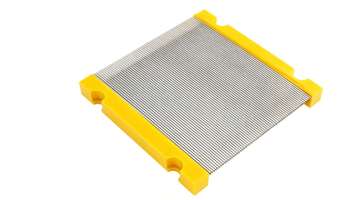
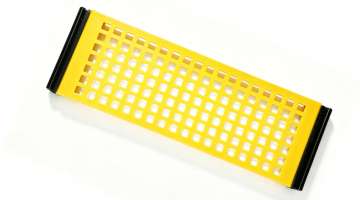
Most plants use polyurethane panels instead of self-cleaning screen. They’re flexible, tough, and can be molded to exactly the shape you need. The signature feature? Tapered apertures—a little wider up top and tighter below. This isn’t just for show. The wider mouth means solids aren’t as likely to stick, and the shape encourages any particles that do hang around to slip right off. Plus, a big open area percentage lets more water drain with each pass.
Water Flow First: Drainage Is a Bed-Thickness and Slot-Orientation Problem
People spec a tailings screen by aperture and forget that water has opinions, because in a high-frequency dewatering deck the slurry wants to stratify, the fines want to migrate downward, and the free water wants to leave through the panel before the cake gets thick enough to trap it. A Self-Cleaning Mesh helps drainage not by magically sucking water out but by preserving effective open area: when near-size particles can’t peg the slot, the deck keeps behaving like a screen instead of mutating into a rubber sheet with memories. Slotted and harp-style geometries shine here because elongated openings aligned with material flow give water and fine passing particles a longer, cleaner path, while square holes create more corners where damp tails can perch and bridge.The deck angle, vibration amplitude, and feed-box distribution matter just as much as the mesh—too deep a bed and even the best self-cleaning surface spends its energy tossing material instead of draining it, too shallow and the solids don’t form the permeable cake that lets the last film of water shake free. In tailings duty the target is not “bone dry,” it is “dry enough to stack, pump, or thicken downstream,” and the screen that holds open area over a full shift usually outperforms the screen with higher catalog open area that blinds by lunch.
Anti-Clogging Mechanics: Independent Movement Beats a Tighter Hole
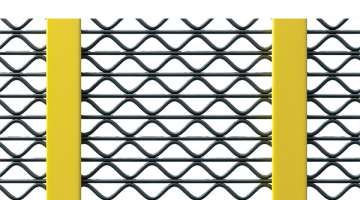
The reason a Self-Cleaning Mesh works in tailings is not mystic—near-size particles are the enemy, and rigid intersections are their best friend. Conventional woven cloth ties longitudinal and transverse wires together at every node, so when a damp granule of the same size as the opening lands there, the whole screen agrees to keep it; self-cleaning constructions break that conspiracy by letting longitudinal wires, piano wires, PU strips, or flexible panels move at their own frequency under vibration.The aperture twitches fractions of a millimeter thousands of times an hour, the wedged particle loses its stable seat, and either passes through or gets bounced back into the moving bed. Diamond, triangle, wave, and harp formats are really different dialects of the same language: triangle and diamond favor anti-pegging on sticky near-size ore, harp and wave favor open area and dewatering on freer fines, and polyurethane-strip or flip-flow versions add material flex so the whole opening “breathes” instead of just the wire.For tailings with clay, slime, or flotation reagent coating the particles, that breathing is gold, because surface tension is what blinds screens, and micro-movement is what breaks the surface tension before the bridge sets.
Don’t Put One Mesh Personality on the Whole Deck
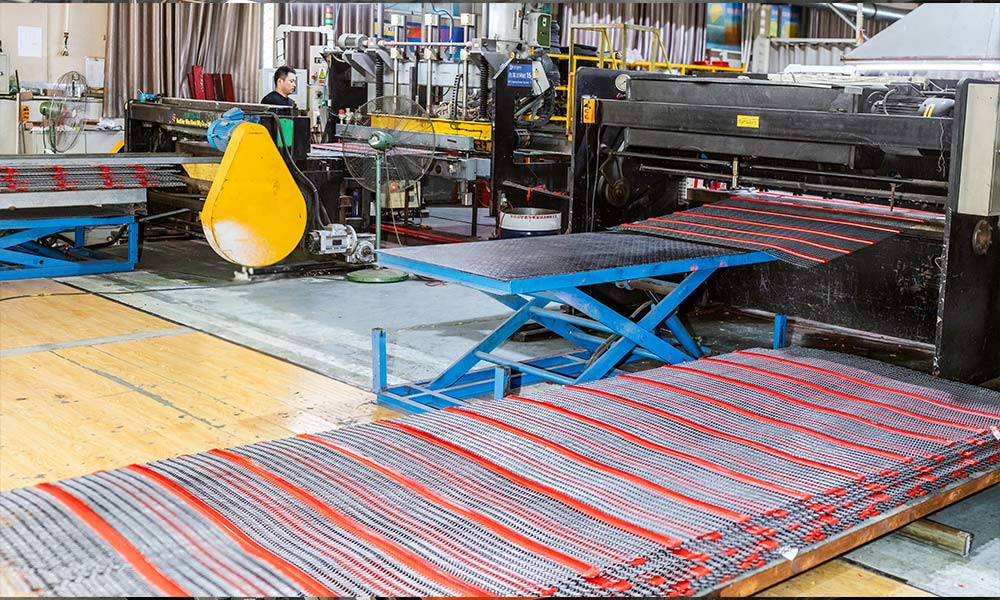
A tailings screen is not one problem from feed lip to discharge; it is three. The feed zone eats impact, the mid deck fights abrasion and blinding, and the discharge zone is where the cake says goodbye and the panel must keep its slot honest under the heaviest vibration. A smart Self-Cleaning Mesh program zones the deck: wear-resistant harp or PU-reinforced mesh in the abrasive middle where throughput and drainage dominate, triangle or diamond geometry where the slurry is sticky and the near-size fraction is nasty, and a flexible flip-flow or PU wave panel where the bed is thinnest and the self-cleaning motion matters most.Material choice follows the water, not the catalog—65Mn or spring steel where abrasion rules and cut accuracy matters, 304/316 where chloride or process chemicals make rust the real failure, polyurethane strips where noise, stickiness, and edge wear hurt more than absolute aperture precision.
A clever shape alone won’t save you in tailings applications
These screens need active anti-clogging tricks built in. The main tool? High-frequency, low-amplitude vibration—basically, making the deck buzz at just the right intensity. The motion breaks up compacted solids and shakes loose any stubborn fines, so nothing gets a chance to settle in the openings. It’s a balancing act, too. If you crank up the vibration too much, you’ll start tossing solids before they have time to drain. Too little, and the screen quickly blinds over.
There is more to it, though
The feed has to hit the screen as a thin, even layer. If it piles up, the vibration gets muffled, and clogging creeps in from the bottom up. That’s where integrated high-pressure spray bars— self cleaning screen come in. These aren’t your average rinse systems; they’re targeted jets that blast away tenacious clays, working with the deck movement to clear out buildup and keep the water pathways open.
Really, running these screens is all about finding that sweet spot
Operators need to adjust vibration and spray intervals on the fly, adapting to whatever the tailings throw at them that shift—whether it’s a sandier slurry mid-morning or a sticky clay surge after lunch.
Every self-cleaning screen needs to be dialed in for the specific slurry you’re working with. What nails it for sandy material will fall flat with high-clay content. Aperture size, taper shape, vibration settings, wash bar layout—they all have to match your tailings. Start with a detailed analysis of what’s actually in your slurry. That’s the key to specifying a screen that never plugs up and always keeps the water moving, shift after shift.