Standards for Installation Tensioning Torque of Self-Cleaning Screens and Common Installation Errors
The advanced vibration technology of a self-cleaning screen is only as reliable as its installation. A poorly tensioned screen deck will fail prematurely, regardless of its self-cleaning capabilities. Unlike standard screens, the high-frequency, often linear motion of self-cleaning units places unique stress on the tensioning system. There is no universal torque standard; the correct installation tensioning torque is dictated by the screen manufacturer and the specific deck material. Ignoring this and falling into common installation errors is a sure way to void warranties and create costly operational headaches.
Why Torque Standards Matter for Self-Cleaning Screens
The installation tensioning torque is critical because it ensures the screen deck acts as a single, rigid vibrating mass. Under-tensioning allows the deck to flex independently from the frame, creating destructive secondary vibrations, "flutter," and rapid fatigue failure at the clamp rails. Over-tensioning, especially with polyurethane or rubber decks, can distort the panel, pre-stress the material, and lead to cracking or pulled mounting bolts. The correct torque achieves uniform tension across the entire width, which is essential for the screen's self-cleaning motion to propagate evenly.
Read Tension, Sequence, and Run-In Together
Operators love a single magic number, but a Self-Cleaning Screen does not live by torque alone, because the same bolt torque can mean correct tension on a clean rail and destructive overstress on a rusty, thread-galled stud. Published field practice for high-frequency synthetic and fine screens often cites tension-hook torque around 20–25 Nm, while quarry references mention 25–30 Nm on screen bolts and heavier OEM decks may specify M16 high-tensile bolts at 120–140 Nm; the point is that the bolt size, rail material, hook style, and panel width change the number completely.A more useful standard is layered: confirm the OEM torque if it exists, then tension in passes—roughly 30%, 60%, 100% of final spec—using a calibrated torque wrench and a center-out or star pattern so the panel stretches symmetrically instead of being dragged sideways.For PU-reinforced self-cleaning panels, some suppliers express the target as line tension such as 30–40 N/mm and check at several points across the width rather than trusting the center alone.After installation, the screen should run empty briefly, then the bolts should be re-checked; after 4–8 hours or the first shift, the panel should be re-tensioned to take up initial stretch and seating creep.
Under-Tension Kills the Self-Cleaning Action
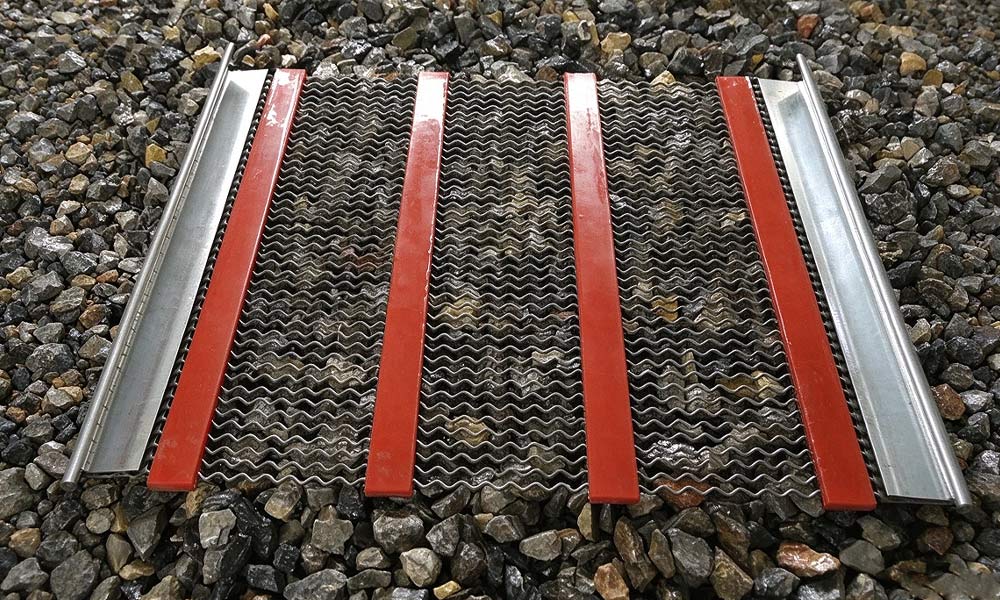
The failure modes sit on both sides of the spec, and a Self-Cleaning Screen is unusually sensitive because its whole value is wire movement. Too little tension lets the panel flutter between support bars, the material bed rides up and down with the box instead of stratifying, near-size particles peg the slots, damp fines smear across the crown, and the self-cleaning flick disappears—so the deck starts behaving like a lazy woven cloth that costs three times as much.Too much tension does the opposite damage: the longitudinal wires are locked so tightly they cannot oscillate, the hook strips stretch or straighten, the PU binding at the transverse members cracks, and the side clamp rails start micro-shearing the edge wires until a whole row lets go. In practice, under-tension shortens the screen by making it blind and flap; over-tension shortens it by making it brittle and edge-torn. The field check old screen-fitters trust is still useful—tap the panel with a rubber mallet and listen: a consistent drum-like tone across center, mid-width, and edges means uniform tension, while dull thuds or floppy corners mean poor seating or uneven pull.A Self-Cleaning Screen should feel alive but controlled, not slack and not board-rigid, because the wires need just enough freedom to argue with the particles.
The Dumb Errors That Wreck Good Mesh:
Most premature failures are not material science, they are housekeeping and sequence. The first sin is installing onto a dirty deck: old capping rubber, hardened slurry, bent crown bars, and worn clamp rails mean the new Self-Cleaning Screen can never sit flat, so one zone carries the vibration while another zone floats and hammers the support bar.The second sin is mixing capping-rubber heights or ignoring the deck crown; without a consistent crown curve the panel cannot be pulled down onto every support, and the wider the deck the worse the problem gets.The third sin is the impact-gun cowboy move—tighten the left side to final, then remember the right side exists, which pulls the mesh off-center, twists the hooks, and leaves one edge permanently overstressed. Side hooks facing the wrong way, panels rotated against the flow direction, overlapping clamp rails, missing bolts, and reused rusty studs all belong in the same hall of shame.Another quiet killer is skipping the run-in re-tension and then blaming the supplier when the panel loosens; synthetic and self-cleaning media relax as the PU strips compress and the wires settle, so the first-shift check is not optional maintenance theater, it is part of the installation.
Finding and Applying the Correct Torque Standard
The authoritative standard for installation tensioning torque comes from the self-cleaning screen manufacturer, not the vibrator manufacturer. This torque value is based on the deck's material properties and its design. It is typically provided in Newton-meters or foot-pounds in the installation manual. The correct procedure involves using a calibrated torque wrench and following a specific sequence—often starting from the center and working outwards in a cross pattern—to ensure even tension distribution.
The Most Common and Costly Installation Errors
Several common installation errors undermine performance:Guessing the Torque: Using "feel" or an impact wrench without a torque setting leads to inconsistent tension.Ignoring the Sequence: Tightening bolts in a random order creates tension islands and weak spots.Reusing Old Hardware: Worn bolts, nuts, or tension wedges cannot apply or maintain the specified torque.Dirty or Damaged Contact Surfaces: Failing to clean the support beams and deck edges before installation prevents a flush fit, making accurate tensioning impossible.Neglecting Re-Tensioning: Not re-checking torque after the initial 24-48 hours of operation, as materials settle and compress.
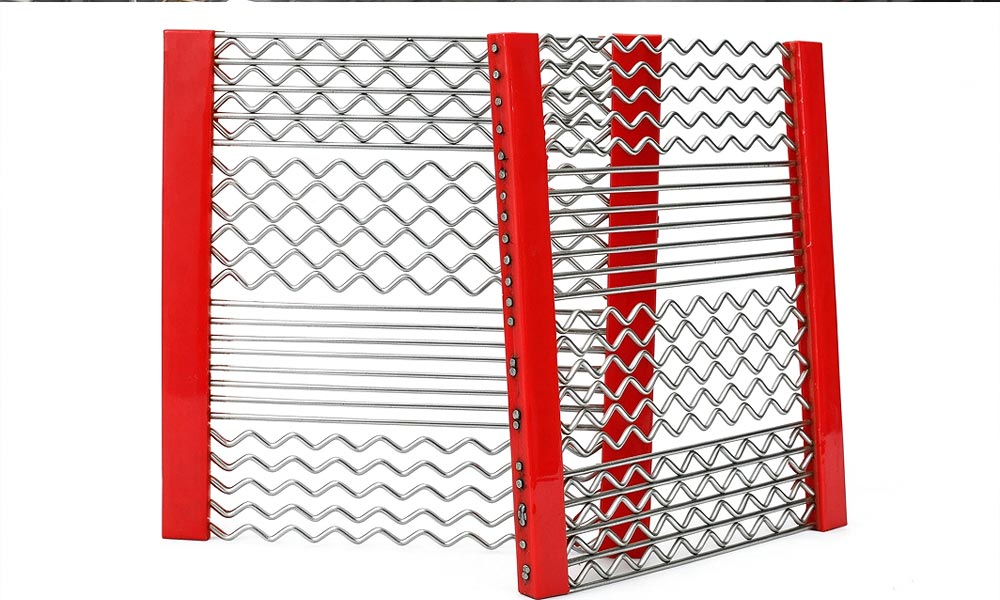
Treating the installation of a self-cleaning screen as a routine bolt-up job guarantees problems. The high cost of these screens demands a precision installation that adheres strictly to the manufacturer's torque standard and avoids the common errors that lead to early failure. Always refer to the specific technical data sheet for your screen deck model, use the right tools, and follow the step-by-step guide—it's the cheapest insurance for your investment.