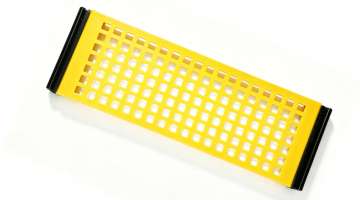
Wear and Corrosion Resistance Testing of Polyurethane Screens for Heavy Mineral Ore Beneficiation
In heavy mineral ore beneficiation, where materials like hematite, magnetite, or ilmenite are processed, screen panels face a brutal combination of high abrasion and often corrosive, saline, or acidic slurry. Polyurethane screens are a popular choice, but not all PU is created equal. Relying on generic material specs is a gamble. Comprehensive wear and corrosion resistance testing under conditions that simulate your specific plant environment is the only way to predict real-world service life and protect your screening investment from premature failure.
Simulating Real-World Abrasion: Beyond the Lab Test
Standard Taber Abrasion or DIN Abrasion tests provide a baseline, but they fall short for heavy minerals. Effective testing must replicate the three-body abrasion found in screening: where ore particles are trapped and rolled between the polyurethane screen surface and other particles under load and water. A more relevant test involves a custom slurry-pot apparatus that circulates a slurry of your specific ore at controlled density and pH against PU samples, measuring weight loss over time. This provides a comparative wear rate that is far more predictive than generic data.
DIN Drum Numbers Are Useful, Heavy-Mineral Slurry Is the Real Examiner
Abrasion resistance on paper usually means DIN 53516/ ISO 4649 volume loss, and a good mining-grade Polyurethane Screen compound will sit in a respectable band rather than chase the lowest possible drum loss at the expense of tear strength and rebound. The trap is that a rotating abrasive drum with standardized sandpaper does not know your ore: heavy mineral sands carry high-specific-gravity grains that hit the panel with more momentum than equally sized limestone, so a compound that looks “abrasion king” in the lab can still groove the slot throat in the plant because the wear is impact-modulated, not pure sliding abrasion. Serious suppliers pair DIN/ISO abrasion with ASTM D412 tensile, ASTM D624 tear, ASTM D2240 Shore A before and after aging, rebound testing, and compression-set checks, because a screen panel fails from crack propagation at the aperture bridge as often as from surface material removal. For garnet- or chromite-heavy circuits, testers often run a slurry pot or pilot-deck trial where real plant slurry is pumped across a sample panel for a fixed tonnage, then measure crown-height loss, aperture enlargement, bridge thinning, and blinding frequency. A Polyurethane Screen that loses little volume in the drum but tears easily at 85–90 Shore A is a worse plant citizen than a slightly higher-wear compound that keeps its slots and resists crack growth under vibration.
Corrosion and Hydrolysis Testing
Corrosion testing for polyurethane is not the same as rust testing for steel; the enemy is chemical attack on the polymer itself, especially hydrolysis, where water plus heat plus pH extremes cleave the soft segments and turn a precise panel into a chalky, swollen, low-rebound sponge. Polyester-based polyurethane can post strong dry-abrasion numbers but carries ester linkages that water loves to attack, so in heavy-mineral circuits with acidic leach tails, warm seawater intrusion, or alkaline flotation overflow, polyester panels may lose tensile strength and distort apertures long before the wear surface looks bad. Polyether-based, MDI-cured polyurethane with carbodiimide anti-hydrolysis stabilizer is the more defensible choice for wet heavy-mineral duty, and the test program should prove it: immerse coupons in plant-representative solutions across pH 2–12, hold them at ambient and at elevated temperature, then measure mass change, water absorption, hardness drift, tensile retention, tear retention, and dimensional change of the molded slot. A credible Polyurethane Screen qualification also includes chloride exposure for coastal mineral-sands plants, flotation-reagent immersion for fatty acids or fuel-oil circuits, and UV/thermal cycling for outdoor dewatering decks.
Stop Rating Wear and Corrosion as If They Arrive Separately
The reason so many “lab-approved” polyurethane screens fail in heavy mineral plants is that abrasion and corrosion are tested in different rooms, while the deck runs them as a team: acidic warm slurry softens the polymer, heavy angular grains then gouge the softened crown, slurry wicks into micro-cracks, hydrolysis widens the damage, and vibration finishes the crack at the support rib. A proper test scheme for a Polyurethane Screen therefore includes coupled conditioning—age the coupon chemically, then abrade it, then vibrate or flex it—and compares retained properties against virgin baseline rather than against some generic pass/fail from another industry. Pilot-deck trials remain the gold standard: run candidate panels on the nastiest deslime or dewatering deck, pull them at 250, 500, and 1,000 hours, and score crown wear, slot drift, blinding area, insert delamination, edge tearing, and cost per tonne of correctly classified heavy mineral.
Combined Wear-Corrosion Synergy Testing
The most severe degradation occurs from the synergy of wear and corrosion acting together—a phenomenon where chemical attack weakens the polymer surface, making it more susceptible to mechanical abrasion. Advanced testing uses a setup that simultaneously subjects the polyurethane screen to abrasive slurry flow and corrosive chemistry. This combined wear-corrosion testing often reveals a much higher degradation rate than the sum of separate wear and corrosion tests, highlighting the critical need for PU formulations stabilized against this synergy.
Field Trials: The Ultimate Validation
While lab testing narrows the field, a controlled field trial is the ultimate validation. Installing sample panels of different PU grades on an actual operating screen provides direct, comparative data on service life. Measuring thickness loss at regular intervals and documenting failure mode under real load and chemistry offers irrefutable evidence for material selection.
The core conclusion for wear and corrosion resistance testing of polyurethane screens is that it must be application-specific. The abrasive mineralogy, slurry pH, water chemistry, and operating temperature of your beneficiation circuit are unique. Partner with your screen supplier to design a test protocol that mirrors these conditions. Investing in rigorous pre-qualification testing is far cheaper than the downtime and replacement costs of a screen that fails prematurely in the field.