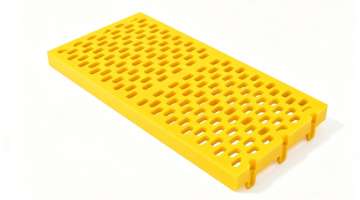
Technical Parameters and Selection of Polyurethane High Frequency Panels for Coal Slime Dewatering
Getting water out of coal slime is a big deal in coal processing. It affects everything—how good the product is, how much it costs to ship, and whether you’re following environmental rules. High-frequency vibrating screens do the heavy lifting here, and how well they work depends a lot on the screening panels you use. These days, polyurethane high frequency panels are the go-to choice. They hold up against wear, don’t blind easily, and can handle wet, messy conditions without falling apart.But just picking polyurethane isn’t enough if you want the best results. You need to know exactly what kind of panel fits your operation.
Aperture Specification: The Core of Separation Efficiency
For coal slime, the standard is long, narrow slots. We're talking slot widths from around 0.1mm to 0.5mm, and you have to match that to the actual size of the stuff you’re feeding into the screen. Too wide? Fines and extra water slip through, and you end up with a product that’s still wet. Too narrow? The slots clog up fast, slowing everything down. Slot length also matters because it keeps material from packing in and helps everything move smoothly across the deck. In short, getting the tech details right on your screen panel makes all the difference in keeping moisture down and throughput up.
Slot Width, Open Area, and the Cut Point
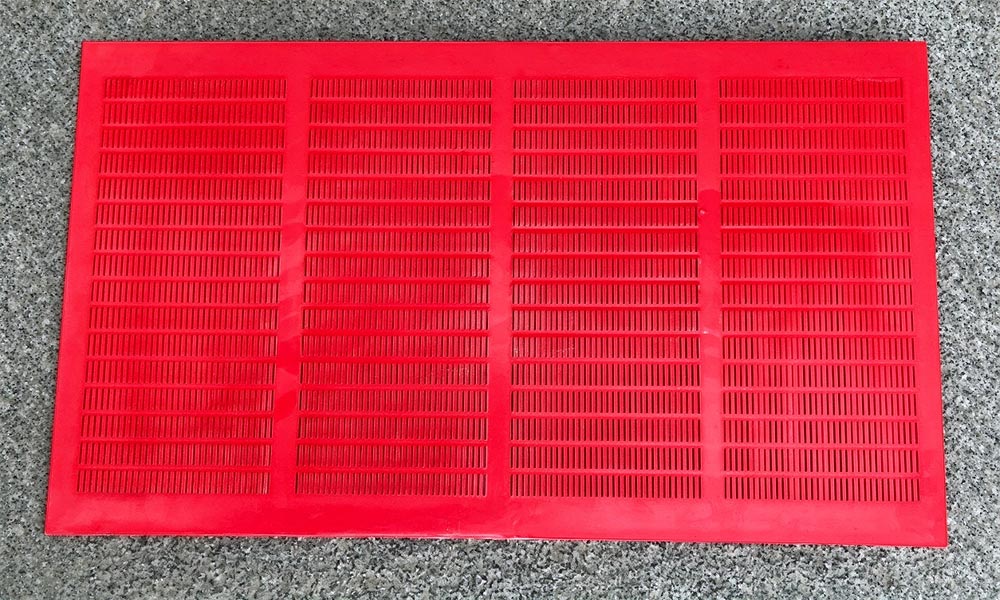
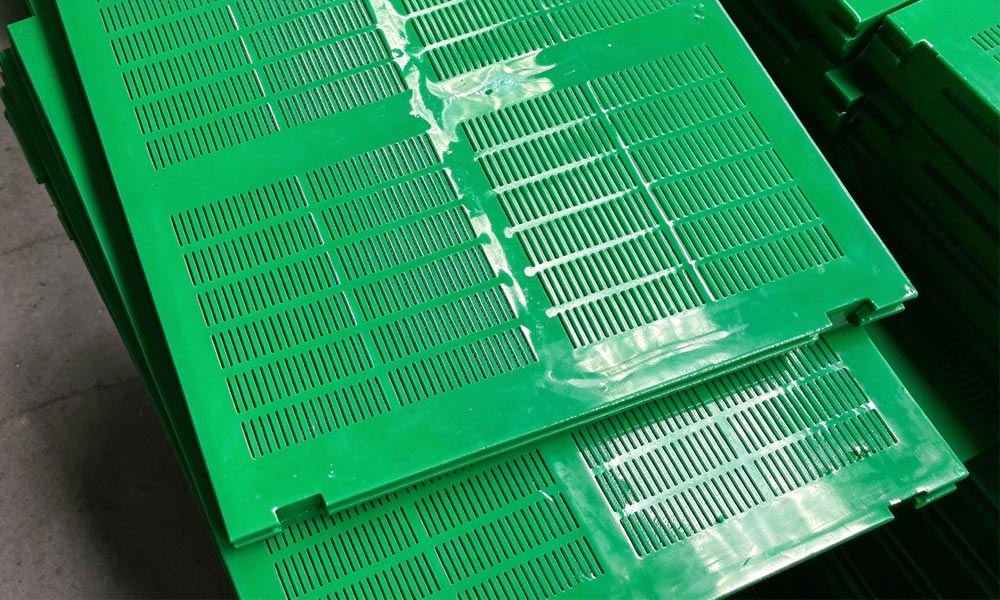
The first parameter that decides success or failure on a Polyurethane High Frequency Panel is the aperture, and for coal slime that almost always means long, narrow slots rather than square holes. Fine coal slime dewatering commonly runs slot widths around 0.15 mm to 0.5 mm, with slot lengths in the 14–16 mm range so near-size particles do not peg in the opening. Go too wide and water plus ultrafines blow through, the recovered cake gets leaner than the metallurgist wants, and the underflow turns into a re-treatment headache; go too tight and the panel surface starts plastering with clay, the high-frequency vibration can no longer break the meniscus, and the deck turns into a damp sponge. Open area is the quiet companion to slot width: most coal-slime dewatering panels sit around 25–45% open area, because too high destroys panel strength and too low strangles drainage. A good Polyurethane High Frequency Panel spec also zones the deck—coarser or wider slots at the feed end to relieve load, finer slots mid-deck for final cut, sometimes a short dam or rider bar to hold bed depth long enough for water to escape. The buyer who only writes "0.3 mm slot PU panel" has not really selected anything; the buyer who writes slot width, slot length, open area, zone layout, and acceptable aperture tolerance has.
Hardness, Compound, and Wet-Abrasion Life
Polyurethane is not one material with one personality, and coal slime is not one feed either—some plants pump oxidized fines with clay content over 15%, some run acidic recirculation water, some feed slabby middlings that still carry sharp silica. A Polyurethane High Frequency Panel for fine dewatering often lands in the 65–80 Shore A band because the panel needs elasticity to self-relieve pegging and enough flex to ride the high-frequency stroke without micro-cracking. Coarser scalping or heavy-impact duties push harder, sometimes 85–95 Shore A, where rigidity protects the aperture but the formulation has to earn its keep on tear strength and rebound. The compound story matters more than the color of the panel: polyether-based PU resists hydrolysis better in continuously wet coal circuits, hydrolysis-resistant additives matter when process water recirculates for weeks, and anti-stick or low-surface-energy mold skins help slimy oxidized coal slide instead of gluing itself to the deck. Abrasion resistance is usually quoted by Akron abrasion or comparative wear life, but the number that counts on site is months of service before slot widening crosses the tolerance. A well-formulated Polyurethane High Frequency Panel in coal slime duty commonly runs 6–12 months, roughly two to three times the life of unprotected steel mesh, provided the edge was reinforced and the deck was not overloaded.
Thickness, Fixing System, and Deck Dynamics
Thickness is where plants accidentally design their own failure. A thicker Polyurethane High Frequency Panel carries more wear volume and holds the support bar load better, but it also stiffens the deck, slightly reduces open area, and can change how the high-frequency energy travels through the panel. Coal slime dewatering panels are often in the 25–40 mm range for modular decks, while flip-flow or thin flexible mats sit much lighter; neither is "better," they are different machines with different physics. Fixing system is the part procurement forgets: pin-and-sleeve, rail clamp, bolt-down, hook/tension, or embedded steel-frame styles all demand different frame accuracy, different install labor, and different failure modes. A Polyurethane High Frequency Panel with a great compound still fails if the support rail is worn 3 mm and nobody machined it flat, because the panel rocks, the seam opens, slurry bypasses the screen at the side plate, and the plant reports "PU leaks" when the real problem is a tired deck.
Material Formulation: Ensuring Durability Under Stress
The longevity and performance of polyurethane high frequency panels depend heavily on the polymer's chemical formulation. A high Shore A hardness is essential. This hardness provides the necessary rigidity to maintain precise aperture dimensions under the dynamic load of the vibrating slurry and offers exceptional resistance to the abrasive cutting action of coal particles. Additionally, the polyurethane compound must be fortified with additives to resist hydrolysis, protecting it from degradation in the constantly wet and potentially chemically aggressive process water.
Panel Design and Integration: Balancing Structure and Function
The physical architecture of the polyurethane high frequency panels must support their operational role. Panel thickness involves a strategic trade-off: thicker panels offer greater wear volume and structural integrity, extending service life, but may slightly reduce the total open screening area. For most coal slime applications, a moderate thickness that ensures durability without significantly compromising capacity is ideal. Furthermore, an effective screen deck often employs a strategic layout, such as using panels with progressively finer apertures from the feed to the discharge end, to optimize the dewatering process stages.
Selecting the right polyurethane high frequency panels is a precise engineering exercise that translates into tangible operational benefits. By meticulously defining the aperture geometry, specifying the correct material hardness and chemical resistance, and choosing an appropriate panel design, operators can significantly enhance dewatering efficiency, extend screen life, and reduce total operating costs. Collaborating with a knowledgeable supplier to map these parameters to your plant's specific conditions is the most reliable path to a successful and cost-effective dewatering solution.