Screen Material Selection Guide for Iron Ore Screening
In the highly abrasive environment of iron ore processing, almost all mining operations have faced pitfalls regarding screen selection. Standard metal screens often develop holes from iron ore abrasion in less than two weeks; the resulting frequent downtime for replacements and clearing lodged material drives up total costs. Choosing the wrong screen material not only increases direct expenses but also adds significant time costs and reduces overall operational efficiency.
Standard High-Manganese Steel Screens: An Entry-Level Choice for Coarse Screening
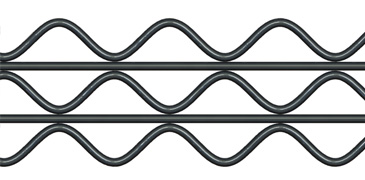
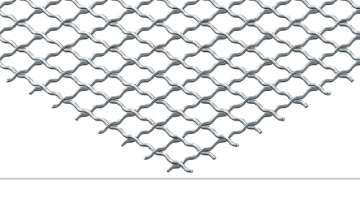
When screening iron ore, many operators opt for woven high-manganese steel screens. Known for high hardness and impact resistance, they can withstand direct impacts from large ore chunks during the coarse screening stage and come at a relatively affordable price. However, they have a clear drawback: they struggle against the continuous abrasive action of fine iron ore particles. Their average service life is only about a month, with data often showing that they require replacement at least twice monthly, thereby silently inflating costs.
Coarse Scalping: Steel That Likes a Hit
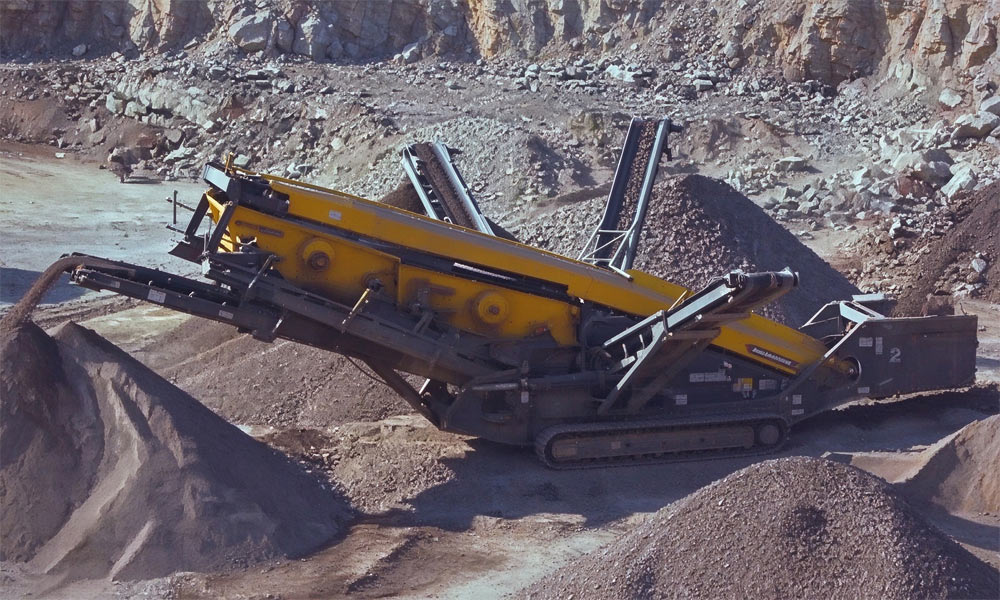
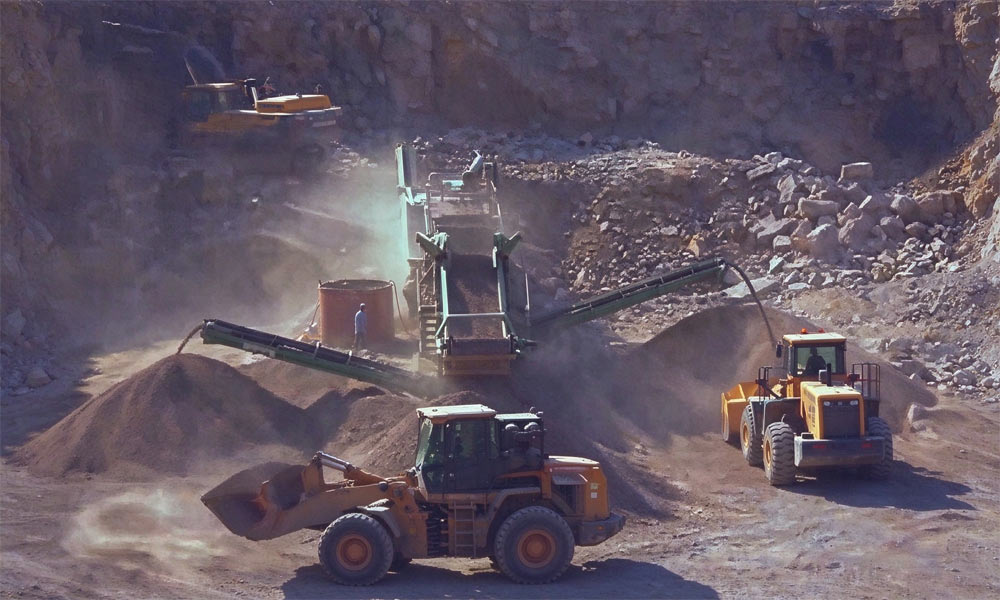
The top deck is where boulders land and egos die. Here the ore is large, angular, sometimes wet, and the screen media has to absorb impact without tearing at the hook or stretching the aperture into a memory of itself. High-manganese steel and heat-treated 65Mn woven mesh earn their place on dry or moderately wet coarse scalping because they are rigid, cheap to understand, and happy under sharp loads; manganese even work-hardens under impact, so the surface gets tougher as the ore keeps hitting it. AR400/AR450 punch plate or quenched-and-tempered manganese panels are the fallback when top size is brutal and precision matters less than “do not let the jaw choke.” The catch is fine abrasion: ordinary high-manganese cloth can scalp beautifully for a few weeks and then lose crown fast once the lumps turn into grit, which is why plants that know the ore specify pre-crimped lock-crimp 65Mn rather than plain weave. On a primary iron ore scalp deck, the right Screen Materials are not the hardest—they are the ones that take the first punch, hold the hole, and let the finer decks below do the precision work.
Secondary Sizing: Where Polyurethane Starts Winning
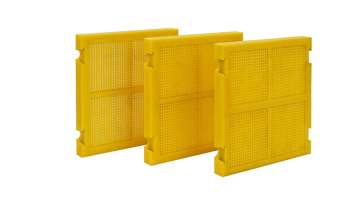
Move down one deck and the problem changes from “don’t get smashed” to “don’t get sandpapered.” Iron ore secondary screening carries a heavy load of hard fines, near-size particles, and often moisture from upstream washing or native pit moisture, and that is exactly where plain steel mesh bleeds life. Heavy-duty polyurethane modular panels, usually with an embedded steel skeleton, shrug off the continuous scouring that kills wire crowns, flex enough to pop near-size particles out of tapered apertures, and keep open area high enough that the plant does not have to slow the belt to compensate. A good PU panel on a 10–40 mm iron ore deck can outlast manganese cloth several times over, not because it is “softer,” but because elastomer spreads the abrasion instead of letting a sharp grain carve a single wire until it snaps. In sticky hematite or goethite-rich feed, Screen Materials with self-cleaning slot geometry quietly save more money than any hardness chart suggests, because the saving is labor, spray water, and scraper time as much as panel life.
Fine Classification and Dewatering: Wedge Wire, Stainless, and Composite Tricks
Below about 4 mm the iron ore story gets wet, fine, and unforgiving. Desliming, dewatering, and high-frequency fine screens need aperture consistency more than brute impact resistance, so the media shortlist shifts again: wedge wire and polywedge panels for drainage and fine slurry work, 304/316L stainless where process water is corrosive or chloride-loaded, and composite manganese-frame-plus-PU panels where the plant wants metal rigidity at the edges and polymer wear life in the active screening zone. Stainless trades some abrasion life for corrosion sanity—on a saline Pilbara-type circuit or a leach-forward iron ore stream, 316L can out-earn 65Mn because rust crust changes the aperture faster than abrasion ever could. Wedge wire deserves special respect here: the V-profile slot drains water instead of trapping slime, which keeps the cut steep and the underflow consistent. At this fineness, Screen Materials are chosen like filter elements, not fences—surface finish, slot profile, crown height, and open-area-vs-wear trade-off matter more than “how thick is the steel.”
Heavy-Duty Skeleton Polyurethane Screens: The Optimal Solution for Medium and Fine Screening
Heavy-duty polyurethane screens are specifically engineered for the high-abrasion environments of iron ore screening and represent the mainstream upgrade choice in the industry. They utilize highly wear-resistant imported polyurethane with an embedded high-strength steel skeleton for structural support. This design retains the high elasticity and self-cleaning properties of polyurethane while overcoming the insufficient heavy-load impact resistance of standard all-polyurethane screens. Their wear resistance is several times that of standard high-manganese steel screens, effectively withstanding continuous impact and abrasion from iron ore particles. Additionally, the material's high elasticity allows particles lodged in the apertures to pop out automatically, minimizing clogging and blockages.
Composite Wear-Resistant Screens: Customized Solutions for Extreme Conditions
In certain high-altitude or ultra-large-scale iron ore crushing operations, mines often select composite screens featuring a high-manganese steel frame combined with polyurethane. This material combination balances the high rigidity of metal with the superior wear resistance of polyurethane, enabling the handling of massive material volumes and significantly extending the screen's average service life.
In the highly abrasive environment of iron ore screening, different stages require specific screen materials: high-manganese steel screens are suitable for coarse screening to withstand impact, heavy-duty polyurethane screens for intermediate and fine screening to minimize wear, and composite wear-resistant screens for extreme heavy-duty applications; only by selecting the right materials for each stage can costs truly be reduced and efficiency improved.