Heavy-Duty Screen Selection Guide for Copper Ore Mining
In copper mining, Selecting the right screening equipment and heavy-duty screen is crucial. screening isn’t a one-size-fits-all task. After primary crushing, use a circular vibrating screen with 50–75mm openings to remove oversized rock and reduce load on downstream equipment.
Different Processing Stages Need Different Types of Screen
How to choose the right heavy-duty Screen? For intermediate sizing, switch to a linear vibrating screen — its straight-line motion prevents particle bridging in sticky, clay-rich ores. At the final stage, deploy a high-frequency screen with fine mesh to separate copper-bearing particles from gangue fines. Skipping this stage leads to over-grinding and lost recovery. One Chilean mine boosted copper recovery by 6% simply by adding a dedicated fine-screening deck after secondary crushing.
Primary Scalping: Take the Hit, Protect the Circuit
The first screen after the feeder is where copper ore tries to break your equipment budget. ROM can land at 800 mm to 1 m, carry pit clay after rain, and include blocky sulfide lumps that do not care about your aperture tolerance. Here the machine has to be a brute: reinforced side plates, stress-relieved frame, heavy coil or rubber mounts, grizzly bars or manganese punch plate on the top deck, and a feed box that spreads the load instead of dumping it on one corner. A Heavy-Duty Screen built for copper scalping is judged by what it survives, not by how fine it separates—its job is to strip fines and reject oversize before the jaw, stop bridging in the hopper, and keep tramp metal from reaching the crusher lips. Plants that put light commercial vibrating screens here learn fast: side plates crack, hooks tear, and the maintenance crew develops a unhealthy friendship with the welder. Copper primary screening is a structural problem first and a separation problem second, so the deck, the supports, the exciter bearings, and the scalping media all have to be specified like crusher ancillaries rather than quarry accessories.
Closed-Circuit Sizing: The Screen That Actually Controls the Product
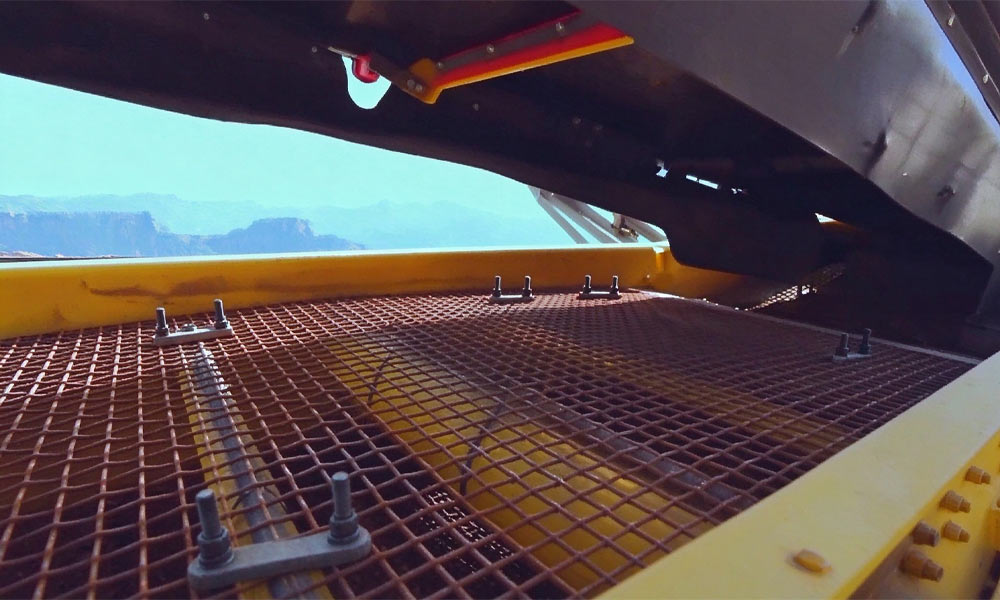
After secondary and tertiary cone crushing, the real size control lives on the screen, not inside the crusher. A modern copper line runs jaw → cone → short-head cone → multi-deck screen → return conveyor, and the screen is what closes the loop: anything above the target cut, often around 12–15 mm for ball-mill feed, goes back to the tertiary cone, while the undersize moves toward grinding. A Heavy-Duty Screen in this position needs accurate cut points, enough deck area to avoid overloading, and media that will not stretch its holes after a week of abrasive porphyry. Circular motion screens handle coarse and medium fractions well, banana screens squeeze capacity out of a wide PSD, and horizontal linear screens sharpen the cut on damp or near-size material. The copper plant that treats this unit as a minor sorter is missing the point—closed-circuit screening is what prevents over-crushing, holds the mill feed curve steady, and keeps the cone from recycling material it already broke once. Miss the screen efficiency and you do not just lose tons; you lose the particle-size envelope the entire flotation circuit was tuned for.
Media Selection: Steel, PU, Rubber, and Wedge Wire by Zone
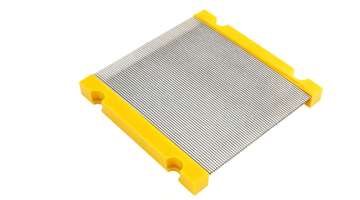
The screen machine is only as honest as its surface, and copper ore is too varied for one media religion. Dry coarse scalping still respects high-carbon or manganese woven heavy mesh and punch plate because they take impact and hold big apertures; the moment the circuit gets wet, clay-rich, or fine, steel starts to blind and the economics flip. Polyurethane modular panels dominate medium-fine copper screening because they outlast steel in abrasive slurry, resist pegging, dampen noise, and let the plant swap one worn block instead of restringing a deck. Rubber earns its place at the feed lip and high-impact zones where a sharp lump would dent anything thinner. Wedge wire and polywedge panels take over where drainage matters—desliming, dewatering, concentrate and tailings duty—because the V-slot drains water instead of trapping slime. A Heavy-Duty Screen program in copper is therefore zonal: manganese or punch plate up top, PU on the abrasive fine decks, rubber at impact points, wedge wire where water has to leave the solids. Buying “one mesh for the whole plant” is how a concentrator ends up with a steel deck that blinds in the rain and a PU deck that cannot survive the scalp end.
How to choose the screen with the best value for money
When selecting heavy-duty screens for copper mining and mineral processes,Steel mesh may look cheaper upfront, but copper ore is brutal: high abrasion, moisture, and sulfide corrosion eat through carbon steel in 2–4 weeks. Polyurethane screens, though 3–5x more expensive, last 8–12 months in the same conditions. They resist blinding from wet clay, dampen noise by 15dB, and don’t corrode in acidic slurry. In a Peruvian open-pit mine, switching to polyurethane cut screen replacement costs by 70% and reduced downtime by 110 hours annually. 4,000 per year for steel and 3,200 per year for polyurethane,when you factor in labor, lost production, and safety risks.
Defeat Blinding with Engineering, Not Just Bigger Holes
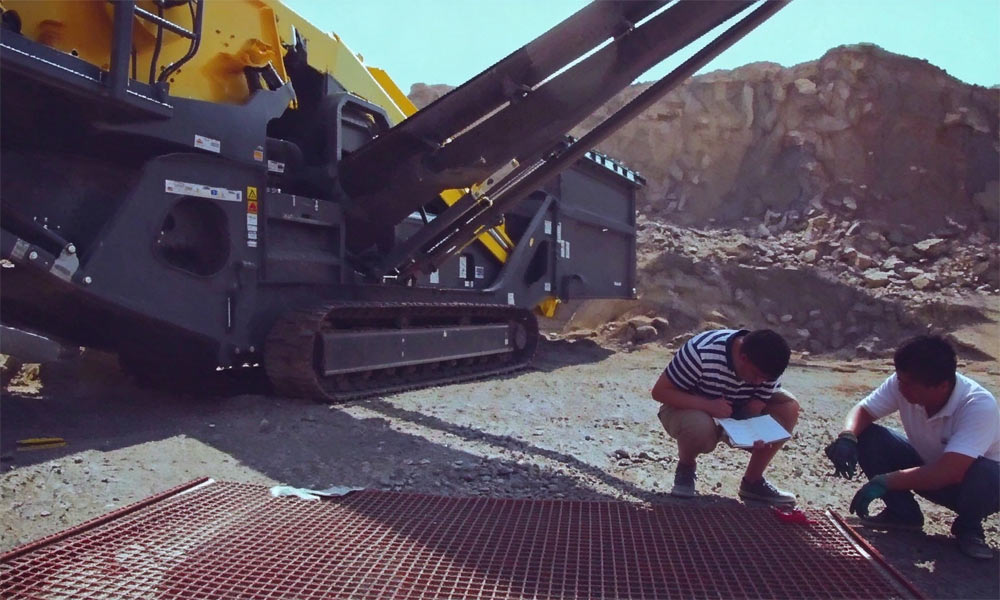
Copper ores with >12% clay content will blind any screen if you only change the aperture. The real fix? Combine three tactics: Pre-wet the feed: Spray 10–15% water by weight before screening,it breaks clay clumps without creating sludge.Use self-cleaning mesh: Opt for screens with raised diamond-patterned ribs or ball track systems that gently knock loose stuck particles.Tune vibration: Increase frequency to 900–1200 RPM and reduce amplitude to 3–5mm — this creates a “tumbling” action that prevents particles from settling into holes.Don’t just buy heavy-duty screens during copper mining and mineral crushing,it is more important to “buy” uptime. The best copper operations don’t react to failures ,they engineer them out.
When selecting heavy-duty screens for copper mining, it is critical to match screen type and screen media to each processing stage. Proper equipment and media selection helps reduce abrasion, prevent blinding, cut maintenance expenses and maximize uptime for your copper concentrator.