Picking the right rubber screen panel thickness might seem like a tiny
detail, but it’s one of the easiest ways to slash unnecessary wear costs and
keep your screening line running reliably. Too thin for the job, and you’ll be
patching or replacing panels every few weeks. Too thick, and you waste money on
extra material you don’t need while hurting your screening efficiency. This
guide breaks down how to match your rubber screen panel thickness exactly to
light-duty and heavy-duty operating conditions, so you never waste time or money
on a bad fit again.
What Rubber Screen Panel Thickness Actually Affects On Site
Thickness isn’t just about how tough the rubber screen plate feels in your
hand. It directly impacts three key things: impact resistance, open area
percentage, and screening accuracy. A thinner panel lets more material pass
through the slots faster, but it can’t take a heavy falling feed without
tearing. A thicker panel absorbs way more shock, but it can slow down material
flow and trap near-size particles in the deeper slots. Getting this balance
right means you don’t end up with either premature failure or lost throughput,
no matter what your operating conditions look like.
Light-Duty Operating Conditions: Thinner Panels for Fine Sizing and Dewatering
For light-duty operating conditions like fine dewatering, sizing fine sand,
or low-volume feed with minimal drop height, go with rubber screen panels in the
8mm to 12mm thickness range. These thinner panels keep the slot depth shallow,
so fine particles don’t get stuck halfway through, and they maintain a higher
effective open area for faster drainage. They’re lighter on the screen deck too,
putting less strain on your vibrator motors and reducing overall energy use.
This is the sweet spot for low-impact, high-precision work where you don’t need
extra heavy protection.
Heavy-Duty Operating Conditions: Thicker Panels for High-Impact
Scalping
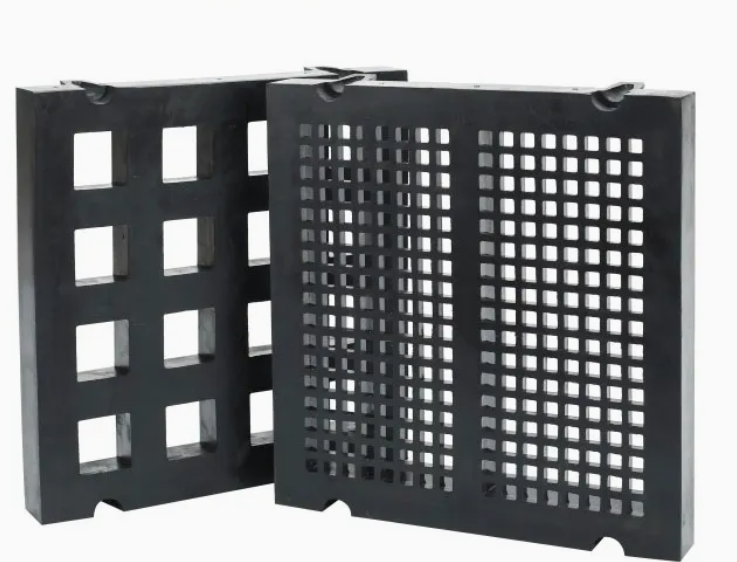
If you’re dealing with heavy scalping, large drop heights of 1 meter or more,
sharp abrasive ore, or high tonnage coarse feed, you need rubber screen panels
that are 15mm to 25mm thick, or even thicker for extreme cases. That extra
rubber mass absorbs the full force of falling rock, stopping tears and punctures
that would rip a thin panel apart in days. The added thickness also makes the
panel far more resistant to constant abrasive scraping, extending service life
by 2–3 times compared to a thin panel in the same heavy-duty operating
conditions. It’s a small extra upfront cost that pays for itself fast in fewer
changeouts.
At the end of the day, there’s no one-size-fits-all rubber screen panel
thickness that works for every job. The smart move is to size your panel
thickness around your exact operating conditions: keep it thin for light-duty
fine sizing and dewatering, and go thick for heavy-impact, high-tonnage scalping
work. This simple, targeted selection will cut your panel replacement frequency,
reduce unplanned downtime, and keep your screening efficiency at its peak
without wasting money on overbuilt parts you don’t actually need.


Leave A Reply
By using form u agree with the message sorage, you can contact us directly now