When you’re out on the processing floor, the last thing you want is a rubber
screen panel that wears out in weeks or clogs up mid-shift. The secret to
avoiding that headache often comes down to one simple number: Shore Hardness.
Soft and hard rubber screen panels aren’t interchangeable, and their performance
lives or dies by the unique conditions of your application environment. Getting
this choice right can cut your downtime and boost throughput way more than you’d
expect.
What Shore Hardness Actually Means for Rubber Screen Panels
Shore Hardness is the standard scale we use to measure how resistant a rubber
material is to indentation. For most mining and aggregate operations, you’ll be
looking at panels ranging from 40 Shore A up to 70+ Shore A . It’s not just a
random spec on a data sheet — this number directly dictates how the panel
handles impact, abrasion, and material flow. A misjudged hardness rating will
leave you with either a panel that tears apart under heavy load or one that
plugs up with sticky near-size particles.
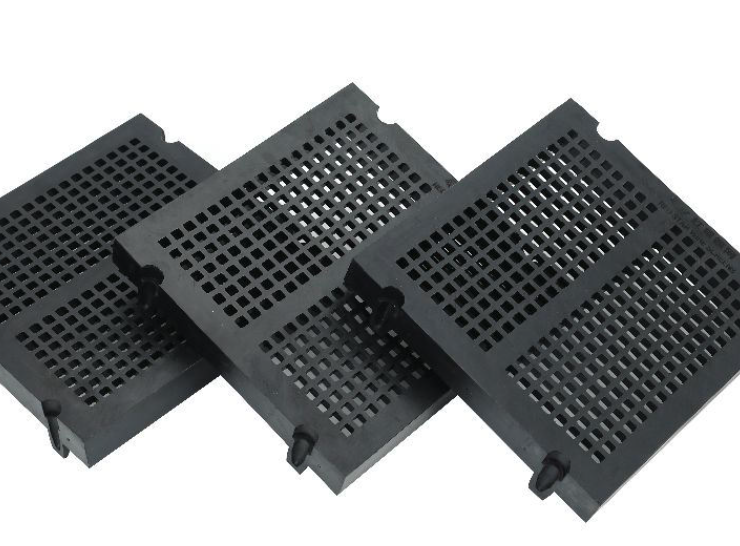
Soft Rubber Panels: Best for Sticky, Fine Material Environments
Soft rubber screen panels, usually sitting around 40–55 Shore A, shine in
tough, sticky applications. If you’re running wet clay, fine silt, or damp fine
coal, their flexible surface flexes and vibrates with every stroke. This
constant movement keeps the screen openings from blinding, stopping wet material
from sticking and plugging the slots. They also absorb a lot more impact force,
making them a solid pick for dewatering circuits where fine, damp material would
otherwise stick to a rigid surface and kill your throughput. The trade-off? They
wear faster under sharp, heavy, abrasive rock that would scrape right through
the softer surface.
Hard Rubber Panels: Built for High-Impact, Abrasive Feed Zones
Hard rubber screen panels, typically 60–75 Shore A, are made for the heavy,
rough work. When you’re feeding sharp crushed rock, granite, or abrasive ore at
high velocities, their rigid surface stands up to constant scraping and grinding
far better than soft rubber. They hold their shape even under heavy material bed
loads, so the slots stay consistent and your sizing stays accurate over time.
The catch is that their stiff surface doesn’t flex much, which means they’re far
more likely to blind if you run damp, sticky fine material through them. They’re
perfect for the top deck of a scalping screen, but a bad fit for a wet
dewatering stage.
At the end of the day, there’s no universal “best” Shore Hardness for every
rubber screen panel. The winning move is matching the hardness rating directly
to your specific application environment: go soft for sticky, fine, wet
dewatering work, and go hard for high-impact, abrasive scalping and coarse
sizing. Getting this small detail right will extend your panel life, reduce
blinding-related stoppages, and keep your whole screening circuit running at
peak efficiency far longer.


Leave A Reply
By using form u agree with the message sorage, you can contact us directly now