For procurement and maintenance teams placing new orders for screening media, failing to clearly state key technical details in initial inquiries often leads to receiving panels that do not fit your existing deck, deliver poor classification performance, or wear out far faster than expected, creating avoidable delays and extra costs. Many teams we have worked with shared stories of receiving batches that did not line up with their mounting bolt layout, or had the wrong aperture design that ruined their final product gradation, simply because they missed a few critical details in their initial request. Clearly defining the three core Rubber Screen Plates parameter groups in your first inquiry will eliminate almost all these common misalignment issues, helping you get a product that perfectly matches your operation’s needs.
Exact Full Dimension and Mounting Structure Specifications
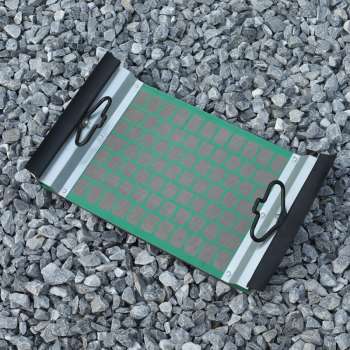
The first non-negotiable set of details you need to provide covers not just the basic length and width of the panels, but also the thickness, clamping edge profile, bolt hole spacing and any special cutouts required to fit your existing screen deck frame. Skipping even one small dimension detail in this Rubber Screen Plates parameter group can lead to delivered panels that cannot be properly secured, shift under vibration, or leave large unwanted gaps around the deck edges that cause fine material leakage.
Aperture Shape, Size and Open Area Requirements
The second critical detail group clearly states the exact aperture shape you need, whether that is round, square, slotted or a custom non-standard profile, alongside the precise clear opening size and the minimum required total open area for the panel. Many operations only state a single “mesh size” number in their inquiry, which can easily lead to suppliers shipping the wrong aperture shape that fails to meet your classification, dewatering or anti-blinding performance targets, making this one of the most performance-critical parts of the full Rubber Screen Plates parameter set.
Rubber Hardness and Material Formulation Requirements
The third essential detail group lays out the exact Shore A hardness range you require, alongside any special material performance needs such as flame retardancy, oil resistance, or corrosion resistance for processing specific salt or chemical-laden materials. Failing to specify this Rubber Screen Plates parameter often results in receiving panels with generic standard rubber hardness that is too soft for high-abrasion ore or too rigid for sticky fine material processing, cutting the usable service life of your new panels by half or more.
Clarifying these three core parameter groups in your initial inquiry removes almost all room for miscommunication, ensures you get a product that fits perfectly and delivers the exact performance you expect, and helps you avoid costly rework and return delays. If you share photos or sketches of your existing screen deck, your current product gradation targets and typical processed material properties, our technical team can help you put together a complete, fully optimized parameter specification sheet for your next inquiry.


Leave A Reply
By using form u agree with the message sorage, you can contact us directly now