The Three Enemies of Your Screen: Maximizing Life of Rubber Screen Panels
If you’ve ever pulled a screen deck and found half the high-natural rubber screen plates shredded while the other half look brand new, you know the frustration. Natural rubber is incredibly resilient, but it isn't magic. To get the most tons per dollar out of your screens, you have to understand the three factors that dictate wear life: the rubber formulation, the operating temperature, and the "cut point" of your feed material. Ignore these, and even the best plates will fail early.
The Chemistry Behind the Compound
Not all "natural rubber" is created equal. The lifespan of a rubber screen plate is determined long before it hits the deck,it starts in the lab. A high-quality compound includes specific polymers, carbon black, and protective agents like antioxidants and waxes. If the mix lacks these, the rubber will dry out, crack, or harden under UV light and oxygen. Furthermore, the cross-link density from vulcanization is critical. If the plate is too soft, it will "chunk"; if too hard, it will fracture. If your supplier can't explain their compound's specific additives, you’re likely buying a generic mix that won't last.
Enemy One: Impact Energy Concentrated Exactly Where the Panel Is Thinnest
The first enemy is the one everybody recognises and few people quantify properly, largely because impact energy scales with the square of velocity, which means a modest change in drop height changes the damage far more than a substantial change in rubber hardness. A rubber screen panel handles impact by deforming locally and returning that energy as rebound, and elastomer is genuinely good at this — far better than steel wire cloth, which work-hardens and snaps, or than a hard polyurethane deck, which tends to crack when the strike arrives at a steep angle. But the capacity to absorb is finite, and it is finite precisely at the place where the material lands, which is also where the feed chute delivers its coarsest, heaviest, most angular lumps after a free fall onto a deck that is already loaded with a moving bed. The failure signature is easy to read once you know it: chunking or tearing out of the web between apertures in the first half metre, rather than uniform thinning across the whole deck. The defence is mostly not a harder compound but a change upstream — lower the chute, fit a rock box or impact bed so material lands on material, feed onto the deck in the direction of travel rather than against it — and where nothing upstream can be changed, a thicker panel with a softer durometer in the landing zone only, so the rest of the deck keeps its open area.
Enemy Two: Heat, the Failure That Happens Inside the Rubber Itself
The second enemy is the one that gets misdiagnosed as wear, because by the time it becomes visible it has been accumulating for months and the panel looks simply old. Every flex cycle inside a vibrating deck puts energy into the elastomer, and no rubber returns all of it; the fraction that is lost as internal friction is called hysteresis, and it shows up as heat in the middle of the panel where it cannot escape. Heat accelerates oxidation, oxidation stiffens and embrittles the surface, and an embrittled surface cracks under the next impact cycle instead of flexing — so a rubber screen panel that has been running hot will often develop hairline cracking at the tension rails and around stiffening ribs while the screening surface itself still has plenty of thickness left. The conditions that make this worse are predictable: high amplitude with high frequency, decks that are over-tensioned and therefore flexing against the frame rather than with the material, thick panels where the middle is furthest from any cooling surface, and hot process water or hot feed that raises the baseline temperature the rubber has to sit at. The specification response is to choose a compound with low hysteresis — natural-rich blends are better here than general-purpose SBR, which is one of the quiet reasons natural compounds outlast cheap synthetics on heavy decks — to avoid specifying more thickness than the duty actually needs, and to watch durometer rather than hardness alone, since a panel that is very hard but not very resilient generates more heat per cycle than a slightly softer one that rebounds cleanly.
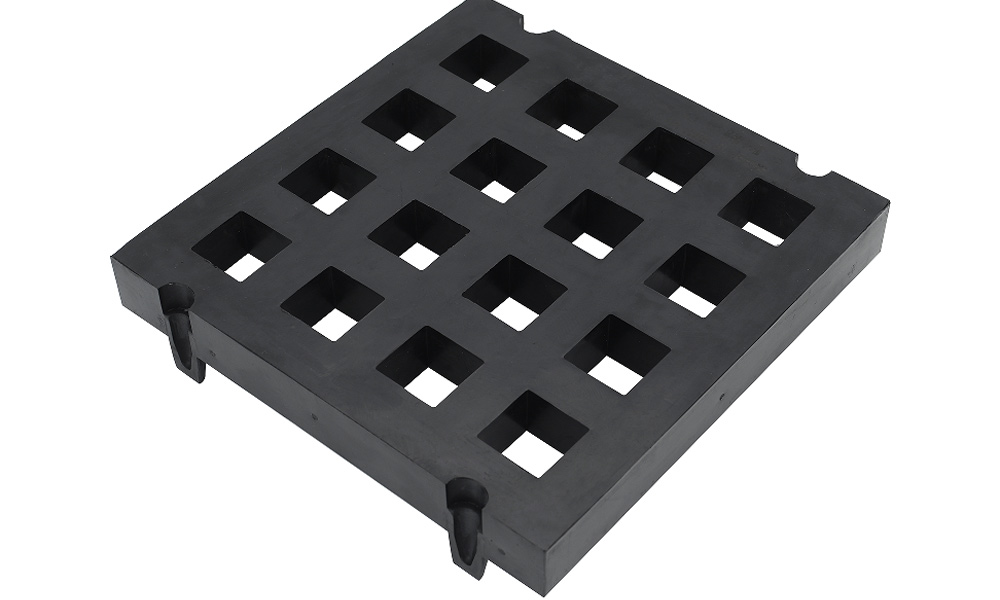
Heat Buildup and Hysteresis
Rubber hates heat. During high-impact screening, energy converts to heat through hysteresis. If the rubber can't dissipate this heat, it leads to "reversion"—the rubber softens, becomes tacky, and peels away. If your plates are turning brown or smelling like burnt tires, you have a heat problem. Proper airflow around the deck and a compound formulated for low heat buildup are essential to maintain the structural integrity of your high-natural-rubber screen plates.
The "Cut Point" of the Feed
This is the most overlooked factor. High-natural-rubber screen plates are great at absorbing large, blunt impacts, but they struggle with high-pressure abrasion from fine particles. If your feed size is very close to the aperture size, those tiny, sharp rocks act like millions of tiny knives. Matching the rubber durometer to your specific feed size distribution is the secret to preventing premature slicing and tear.
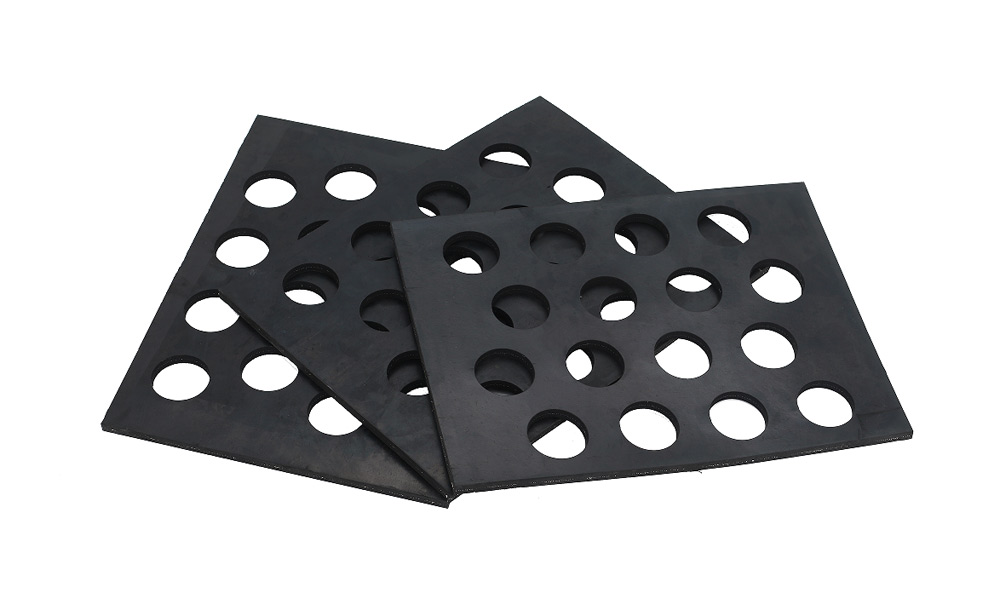
In conclusion, maximizing the life of your high-natural-rubber screen plates requires looking beyond the price tag. You need a scientifically formulated compound, a cool operating environment to prevent heat degradation, and a screen design matched to your feed. Master these three factors, and you’ll stop changing screens and start hitting your tonnage targets.