Screening decks rarely fail all at once; they drift. A deck that hit its target split in April is quietly missing it in October, and the usual suspects — feed rate, moisture, bed depth — get blamed first because they are easier to see. What gets overlooked is the slow loss of elastic recovery in the panel itself. Rubber screen works on a vibrating screen precisely because it flexes, snaps back, and throws the near-size particle clear of the aperture, and once that snap-back starts to lag, throughput falls off in a way no amount of feed tuning will fix. Understanding how recovery degrades over a full service life explains a lot of the efficiency complaints that never seem to have an obvious cause.
Why Snap-Back Decides What Passes Through
Every time a deck cycles, the panel surface deforms under the load and rebounds as the stroke reverses, and that rebound is what keeps apertures from blinding. A rubber screen with healthy recovery sheds the wedged particle on the return stroke, so the open area you specified at purchase is roughly the open area you still have in month ten. When recovery fades, particles that should have been ejected stay put, pegging begins, and the effective open area drops long before anyone notices a visible tear. The result is not a dramatic failure but a slow bleed of capacity, with more oversize reporting to the undersize stream and more recirculating load going back through the crusher.
What Actually Wears the Elasticity Out
Recovery loss is mostly chemistry and heat working together over thousands of hours. Continued flexing at high stroke gradually breaks crosslinks in the compound, and decks running hot — whether from ambient conditions, a deck sitting close to a dryer, or simply heavy continuous duty —age far faster than the calendar suggests. Oils and fine clay accelerate the softening, and rubber panels stored outdoors under direct sun can lose meaningful elasticity before they are ever installed, which is worth remembering when a spare stockpile sits uncovered for a season.
Reading the Warning Signs Early
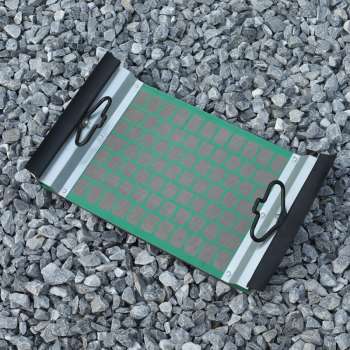
The practical check is simple enough to do during a routine shutdown: press a thumbnail into the wearing surface and watch how quickly it fills back in, and look at whether the panel still sits flat against its supports instead of showing a permanent sag. Rubber Panels that feel dead and spring back slowly are already costing you capacity, whether or not they look worn.
The cheapest way to manage this is at the specification stage, by asking your rubber screen supplier about compression set and rebound figures at elevated temperature rather than just hardness and tensile strength. Keep a record of when decks were installed and what they were achieving when new, so drift becomes measurable instead of anecdotal. If you want help comparing compounds on recovery rather than price alone, get in touch with our team and we will walk through your deck conditions with you.


Leave A Reply
By using form u agree with the message sorage, you can contact us directly now