Few things eat into a shift as quietly as fitting the wrong panel. The deck is open, the crane is waiting, and somebody is kneeling on a stack of spares trying to read a moulded part number that has been half scoured away by months of abrasive slurry. A rubber screen color coding system removes that hesitation entirely, because aperture size, thickness and compound become something the crew reads at a glance from the walkway instead of something they decode from a spec sheet while the plant sits idle.
Why a Rubber Screen Color Coding System Pays for Itself During Changeouts
Changeouts rarely happen at a convenient hour or under good light, and the panels coming off a deck are usually caked, wet and hard to tell apart at the best of times. When each aperture band carries its own moulded colour on the edge or corner of the panel, the person doing the swap picks the right rubber screen on the first try and the deck closes sooner. Just as valuable is the confidence afterwards: nobody has to wonder whether the 12 mm panels went on the top deck and the 8 mm ones below, which is exactly the sort of mix-up that quietly wrecks a product split and sends good material back through the crusher for another pass.
How the Codes Map to Aperture, Thickness and Compound
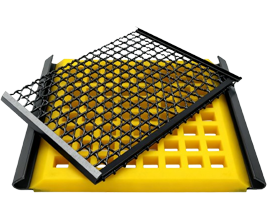
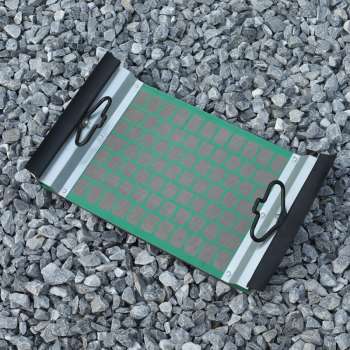
The most workable schemes keep it to two signals rather than three, since a code nobody can remember is no better than no code at all. One Rubber Screen Color Coding System identifies the aperture range, and a second marker—a stripe, a dot or a coloured locating pin — flags thickness or compound, so a blue panel with a white dot might mean the same opening in a heat-resistant rubber screen while plain blue is the standard compound. Because the colour is mixed into the compound before curing rather than painted on afterwards, it survives pressure washing and abrasion instead of disappearing halfway through the panel's life.
Keeping the Colour System Honest Across Shifts and Sites
A rubber screen color coding system only works while everyone reads it the same way, which means the chart needs to live where the work happens: laminated at the deck, posted in the stores container, and included in induction for new fitters. It is worth auditing incoming deliveries against the chart as well, because a supplier who drifts a shade between shipments creates exactly the confusion the system was meant to eliminate.
Rather than coding every panel you own, begin with the five or six apertures that turn over most often and expand from there. Ask your supplier to mould your rubber screen color coding system into future orders so the rubber screen arriving on site already matches your chart. If you would like a template chart and sample panels in your own colour sequence, get in touch and we will put a set together for your decks.



Leave A Reply
By using form u agree with the message sorage, you can contact us directly now