Edge Sealing Design for Rubber Screen Panels: Preventing Fine Powder Leakage
For mineral processing, chemical and industrial classification operations that handle high-value fine powder materials, small gaps between adjacent screen panels or between the panel edge and the deck side frame often create hidden leakage paths that let fine particles slip through without being properly sized, causing major product quality inconsistencies and unnecessary material loss. Many operations spent months troubleshooting uneven final product gradation, only to find the root cause was tiny, easily overlooked gaps around the edges of their screen panels that no one had paid attention to. A properly engineered Rubber Screen Edge Sealing Design completely eliminates these hidden leakage paths, delivering consistent sizing accuracy and drastically reducing fine powder loss across your entire screening operation.
Interlocking Tapered Edge Profile Between Adjacent Panels
The first core feature of the optimized Rubber Screen Edge Sealing Design uses a precision molded interlocking tapered profile on the two side edges of each individual panel, which fits tightly into the matching tapered groove on the adjacent panel, creating a continuous, zero-gap flexible seal between every two units across the full screen deck surface. Unlike flat, straight cut edges that leave small variable gaps when panels vibrate and shift slightly during operation, this interlocking profile stays fully sealed even under high-frequency heavy-load vibration, so no fine powder can slip through the joint between panels.
Why the Powder Wins at the Edges
A rubber screen panel flexes, and that is both its superpower and its leak path. Under stroke the deck breathes: panels shift a fraction, side liners vibrate, support bars compress, and a joint that looked tight with a ruler at 8 a.m. opens into a fine-particle highway by the third hour of feed. Straight-cut panel edges make this worse because they have no geometry to recover the seal—once they back off, they back off forever until someone climbs up with a mallet. Side-frame interfaces are even meaner: the metal side plate does not move like rubber, so the contact line becomes a tiny pumping action that throws dust and slurry behind the deck. In dry screening the plant loses yield and creates a dust hazard; in wet screening the same gap sends valuables and process water onto the support structure, where they corrode bolts, rot insulation, and turn the screen house floor into a slurry pond. Good Rubber Screen Edge Sealing accepts that the deck will move, and instead of fighting the movement it uses the movement: compression, interlock, and spring-back keep the barrier closed while everything around it shakes.
Interlock, Compression Lip, and Steel Skeleton
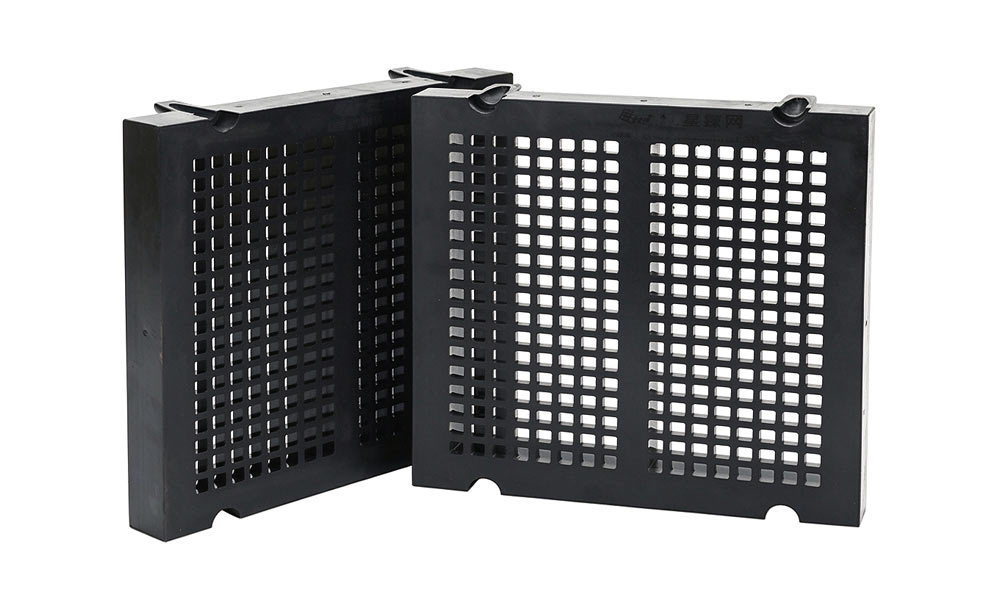
The panels that actually hold fine powder use three ideas at once rather than one sticky strip slapped on the frame. First is the molded interlocking edge: a tapered tongue on one panel seats into a matching tapered groove on the next, so the joint is continuous and self-centering instead of two flat faces hoping to stay friends. Second is the compression lip against the deck side plate—a thicker, softer-edged border that squashes a few millimeters when the clamp or pin pulls the panel home, giving a dust-tight and slurry-tight line that moves with vibration instead of fighting it. Third, and often missed, is a thin embedded steel or textile-reinforced core along the sealing edge so the rubber cannot creep, roll, or take a permanent set after weeks of heat and motion. A bare soft edge eventually “remembers” its deformed shape and stops sealing long before the screening surface is worn; the reinforced edge stays honest. Done properly, Rubber Screen Edge Sealing stops being a maintenance chore and becomes a molded feature you spec at the quoting stage, not a tube of sealant the fitter grabs on Friday.
Compound Choice Is Half the Seal
People talk about profile and forget chemistry, then wonder why the “same” edge seal fails in one plant and lasts two seasons in another. The rubber at the edge lives a harder life than the aperture bridge: it sees UV at the walkway side, reagent-laden mist in flotation recycle, chloride from make-up water, oil from conveyor gearboxes, and temperature swing from a cold start to a sun-baked screening tower. Natural rubber gives bounce and tear resistance but dislikes oil and some oxidized slurries; neoprene handles weather and moderate chemicals; nitrile shrugs off oily streams; EPDM tolerates heat, ozone, and outdoor duty better. If the edge compound swells, hardens, or blooms after contact with your actual process water, the lip loses compression and the interlock gets sticky or brittle—so the seal did not “wear out,” it chemically retired early. Specifying Rubber Screen Edge Sealing without naming the slurry chemistry is like ordering brake pads without saying what vehicle they go in. The compound table belongs in the same document as the panel drawing.
Integrated Compression Lip Sealing Against Deck Side Frames
The second key part of the Rubber Screen Edge Sealing Design adds a thick, flexible molded compression lip that runs along the full outer edge of every panel, which presses tightly against the rigid metal side frame of the screen deck when the panels are fully clamped down into place. This integrated lip replaces the separate, easy-to-age rubber sealing strips that many operations stick onto the deck frame manually, which often shift, tear or degrade after a few weeks of operation and create new leakage gaps that let fine powder escape past the deck edge.
Reinforced Embedded Steel Core at Sealing Edges
The third critical upgrade in the high-performance Rubber Screen Edge Sealing Design embeds a thin, flexible steel reinforcing core right along the full length of every sealing edge, which keeps the seal profile from stretching, warping or deforming even after months of continuous heavy vibration and temperature fluctuations. This prevents the common long-term failure issue where soft, unreinforced rubber sealing edges slowly deform over time, creating new gaps that start leaking fine powder long before the main screening surface of the panel shows any visible signs of wear or damage.
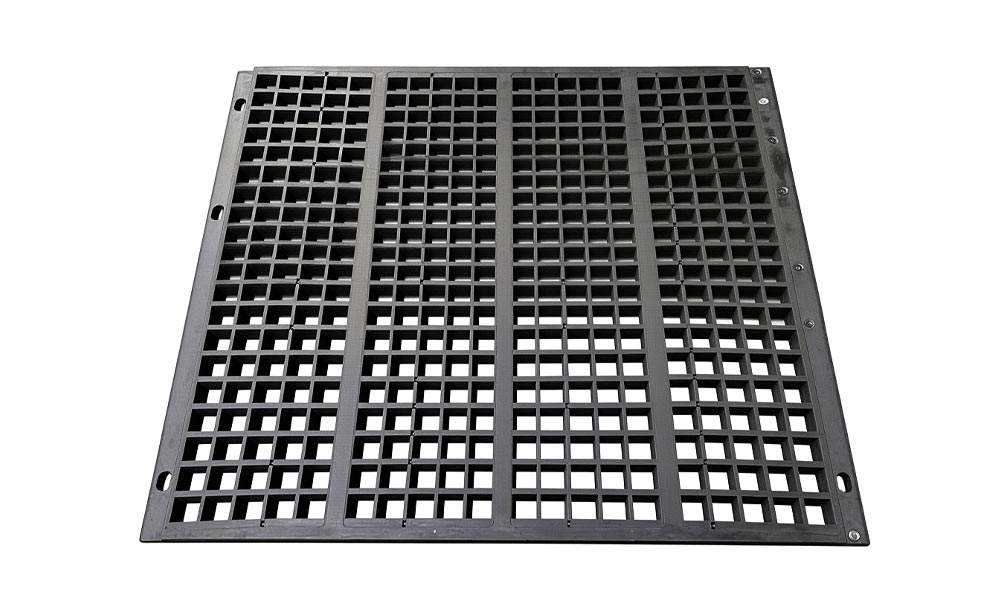
This fully integrated edge sealing solution can help most operations cut fine powder leakage loss by more than 90%, stabilize final product gradation consistency, and reduce unnecessary waste of high-value fine materials. If you share details of your current screen deck dimensions, typical fine powder particle size range and existing panel edge structure, our engineering team can put together a fully customized edge sealing design proposal that fits perfectly into your existing screening system.