Effect of Different Aperture Shape Designs of Rubber Screen Meshes on Material Screening Efficiency
If you’ve ever swapped out a rubber screen mesh panel only to find your material throughput still lags or your end product doesn’t hit the right gradation, the issue might not be your machine speed — it’s the aperture shape you’re using. Most plant operators focus almost entirely on aperture size when ordering new panels, but the actual shape of those openings has a surprisingly large impact on overall material screening efficiency. Picking the wrong shape for your feed type can lead to constant pegging, lost fine material, and hours of unnecessary downtime, even with top-tier rubber screen media.
Circular Apertures: A Primary Choice for Rubber Screens
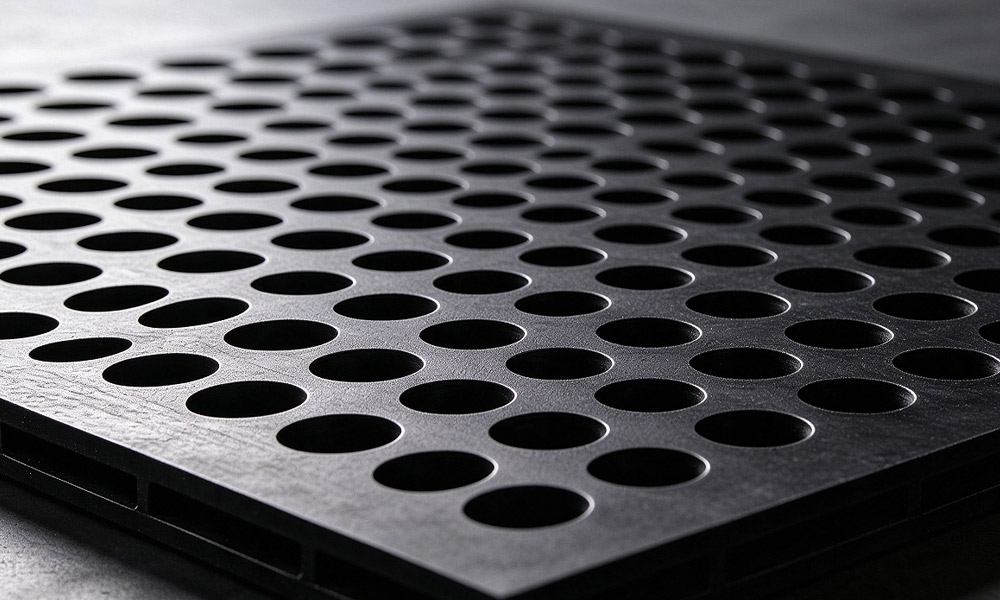
Circular apertures are the most common design for rubber screens, making them suitable for handling free-flowing materials such as dry sand and fine gravel. With smooth, uniform edges that prevent oversized particles from accidentally passing through, they are ideal for applications requiring strict control over maximum particle size. However, a drawback is their lower open area ratio compared to other shapes; consequently, screening efficiency is lower when processing large volumes of dry, fine material that require rapid throughput.
Open Area Is a Function of Shape Before It Is a Function of Size
The first thing worth internalising is that two rubber panel designs with identical nominal cut sizes can differ in effective open area by more than ten percentage points, and that gap translates almost directly into throughput. Circles are the least efficient packing shape, because round holes cannot be nested tightly without leaving thick webs between them, so a round-hole deck typically surrenders open area to gain isotropy. Squares pack better and give a genuinely two-dimensional cut. Slotted apertures — rectangular openings with the long axis aligned to material travel — pack best of all and can lift open area substantially above what either of the others achieves at the same structural strength, because the load is carried by long continuous ribs running in the direction the machine throws material. The consequence for efficiency is straightforward: on fine duty where screening is a probability problem and every extra chance for an undersize particle to find an opening counts, the shape that maximises open area usually wins, provided it does not simultaneously wreck the cut — which is precisely where the trade-off begins.
Why the Square Aperture Still Owns Specification Duty
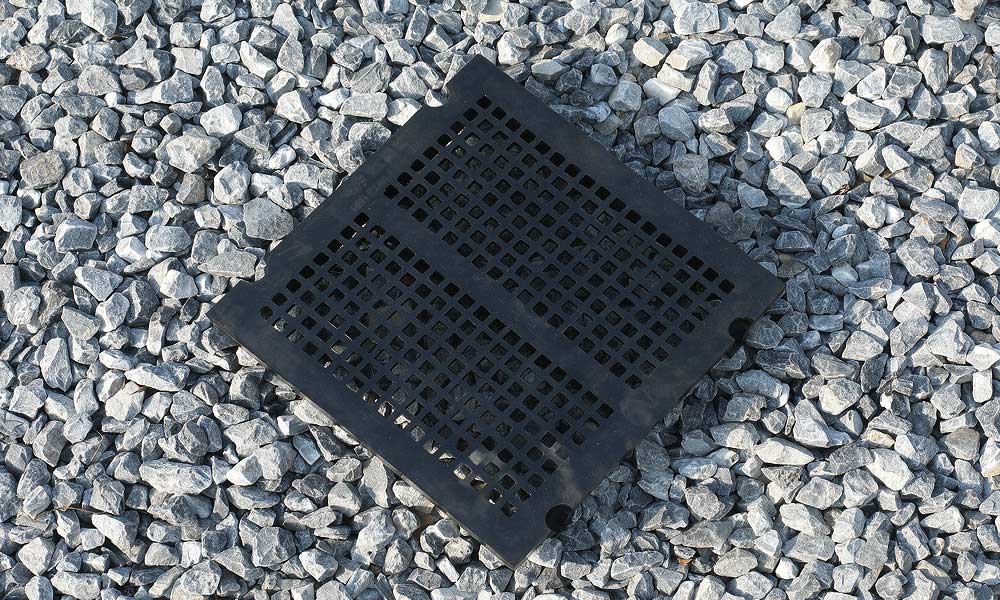
Square apertures persist in aggregate and specification product circuits for a reason that has nothing to do with habit: they are the only common shape that enforces a two-dimensional cut. A particle has to clear the opening in both directions, so the deck rejects on the particle's intermediate dimension — which is exactly what a laboratory sieve does and exactly what a grading standard assumes. A slotted rubber panel of the same nominal width will happily pass a flaky or elongated particle end-on, so the plant makes product that tests coarser than the screen that produced it, and the discrepancy shows up as a rejected load at the customer's laboratory rather than as anything visible on the deck. Square openings also blind more predictably than slots on dry material, because the bed moving across them tends to scour all four edges equally, and the failure that eventually arrives — gradual corner rounding with wear — is slow and measurable. The cost is open area, and the cost is pegging: a square hole presents four corners for a near-size particle to seat into, and on damp feed those corners are where a paste bridge starts.
Round Holes: Blinding Resistance at the Expense of Capacity
Round apertures are unfashionable in coarse screening and quietly indispensable in a few specific duties, mostly because a circle has no corner at all. With no corner, a near-size particle has nowhere to wedge, and a forming paste bridge has no anchor point, so a round-hole rubber panel stays open longer on sticky, clay-bearing or wet feed than either a square or a hex opening of the same nominal size — at the price of the lowest open area of the three. They are also the most forgiving shape with respect to orientation, which matters on decks where material does not travel cleanly in one direction, on circular-motion screens with significant lateral component, and on feed that arrives from multiple chutes. Where they earn their place is fine wet duty where blinding, not capacity, is the binding constraint: if your deck is currently being hosed between shifts, the fastest experiment is often to trade ten points of open area for a shape that cannot be bridged, because a deck running at thirty percent open all shift beats one starting at forty-five and ending at twenty.
Rectangular and Slotted Apertures: Built for High-Fine Loads
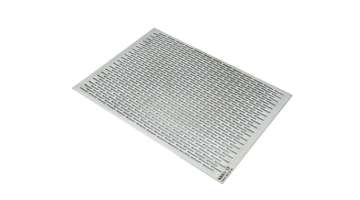
Long, narrow rectangular apertures turn that tradeoff around, boosting total open area by up to 30% compared to round holes of the same equivalent size. This shape lets elongated, flat particles slide through easily without getting stuck, which makes them perfect for sticky clay, wet sand, or shredded recycled material that tends to blind standard round openings. Many operators running high-volume fines streams report a 15–25% jump in screening efficiency after switching to slotted rubber screen meshes, since the wider open area keeps material moving instead of building up across the deck surface.
Specialized Self-Cleaning Apertures: Solving Pegging and Blinding Issues
For the toughest, most abrasive feed types like crushed ore, sharp quarry rock, or damp construction debris, diamond or zig-zag shaped apertures on flexible rubber panels deliver the biggest performance jump. These non-uniform shapes work with the natural flex of the rubber screen mesh to shift slightly every time the deck vibrates, popping stuck pegs out of openings before they can cause full blockages. This cuts blinding-related downtime drastically, and keeps your screening efficiency consistent even when your feed moisture or particle shape varies unexpectedly through the shift.
Picking the right aperture shape for your specific material is one of the cheapest, highest-impact tweaks you can make to boost your entire screening line’s output. Instead of sticking to the same default round openings you’ve always used, test a small panel of slotted or self-cleaning rubber screen mesh on your highest-wear deck section, and you’ll almost certainly see fewer blockages, more consistent gradation, and a noticeable jump in your overall material screening efficiency.