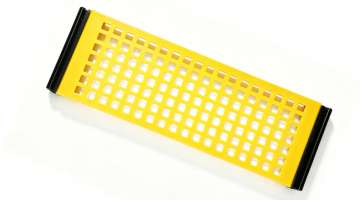
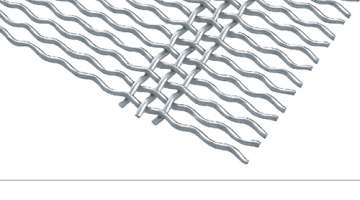
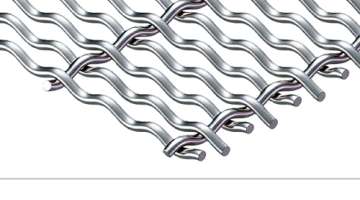
Deformation and tear resistance of carbon steel reinforced rubber screens
If you’ve ever had a rubber screen mesh tear mid-shift after a sudden heavy feed surge, or stretch so far out of shape that your cut size drifts off spec, you know how much that small failure can derail your whole operation. That’s exactly why steel reinforced rubber plate have become the go-to upgrade for high-wear screening zones in quarries, mines and recycling plants. Unlike standard plain rubber panels, these reinforced designs lock in rubber’s natural flexibility while adding the structural strength to fight deformation and tear, drastically cutting unplanned downtime even under the harshest conditions.
Carbon Steel Reinforcement Eliminates Permanent Deformation
The biggest flaw of regular rubber screen mesh is that under sustained heavy load or deck tension, it slowly stretches out of shape, warping apertures and ruining final product gradation before you notice. Carbon steel reinforced rubber screen meshes fix this by embedding high-tensile steel cords deep in the rubber matrix. This internal skeleton absorbs all pulling force from clamps and falling material, so the rubber surface never sags or stretches even after weeks of continuous operation. Most operators find these panels hold perfect aperture shape 3–4 times longer than plain rubber, eliminating the gradual cut-size drift that once forced frequent process recalibrations.
Where a Reinforced Panel Actually Carries Its Load
The composite logic behind a carbon steel rubber screen is straightforward once you look at a cross-section, though few specifications describe it. The elastomer on the surface is chosen for what it does well: absorbing the strike of coarse material, resisting cutting and abrasion, and flexing through millions of cycles without fatigue cracking. What rubber does badly is hold a dimension, because it creeps under sustained tension — slowly, invisibly, and permanently. Steel is the mirror image: it holds a dimension almost indefinitely at the stresses a screen panel sees, but it has no compliance and would transmit impact straight into the screen body. Embedding high-tensile carbon steel cord or a woven wire layer inside the rubber during vulcanisation means the steel takes the tension applied by the clamping system while the rubber takes everything the ore delivers, and each material is used for the property it actually has. The grades involved are ordinary high-carbon drawing grades rather than anything exotic, because the property being purchased is modulus and dimensional stability rather than corrosion resistance — a distinction that turns out to matter enormously once water gets in, which it eventually does.
How Deformation Quietly Moves the Cut
The stretching failure deserves more attention than it gets, because it produces no debris, no noise, and no obvious symptom until a downstream circuit starts complaining. An unreinforced panel tensioned enough to stop it flapping on a vibrating deck will elongate progressively through its campaign: the polymer chains straighten under load, the panel necks slightly across its longest unsupported span, and because every aperture is moulded into the same sheet, all of them distort together. Three or four percent elongation is typically enough to turn a nominally square opening into a rhombus and to shift the effective opening by a margin no one would accept if it appeared on a drawing; on a specification deck, that is the difference between product that ships and product that gets re-screened. Heat accelerates the process, since hysteretic warming from the panel's own flexing makes warm rubber creep faster, and so does a deep wet bed, which adds a continuous static load the panel only escapes during a shutdown.
Why Tears Start at Discontinuities and Stop at Steel
Tearing is the failure everyone photographs, and it helps to separate how a crack starts from how far it travels, because reinforcement contributes very differently to each. Initiation almost always happens at a geometric discontinuity — an aperture corner, a tension hook, a bolt hole, a cut edge, or a nick left by a chute or a pry bar during the last change-out — and once a crack tip exists, every vibration cycle opens it further, with growth accelerating because a sharp tip concentrates stress exactly where the least cross-section remains. This is where tear strength as a material property earns its place, and where natural-rich compounds with good crack-growth resistance consistently outperform cheaper synthetics on heavy decks.
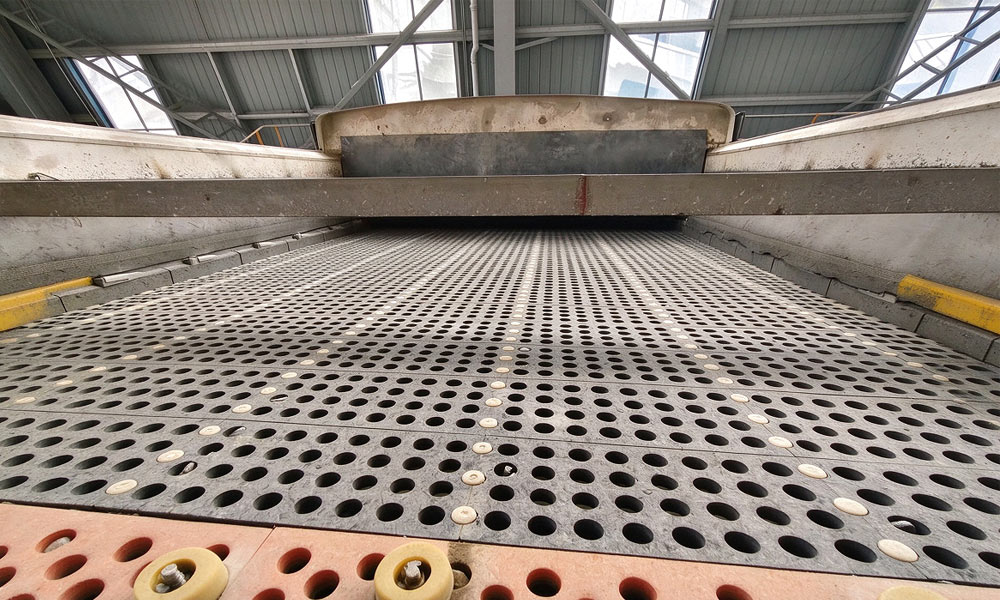
Carbon steel reinforcement effectively prevents the propagation of tears
Even high-hardness rubber can be damaged by rocks or large pieces of material. On non-reinforced rubber screen panels, minor cuts can rapidly tear across the entire screening surface, allowing large particles to contaminate the finished product. In contrast, carbon steel-reinforced rubber screens offer superior tear resistance: even if the outer rubber layer is damaged, the internal steel cables anchor the cut, preventing it from expanding. This ensures uninterrupted equipment operation, reduces unplanned downtime, and boosts overall productivity.
Balanced Performance Cuts Long-Term Operating Costs
This dual resistance to deformation and tear does not just prevent sudden breakdowns — it also extends total panel service life dramatically. You no longer need to over-tighten clamps to compensate for stretching, letting the rubber wear evenly across the entire deck. The steel reinforcement also preserves natural flexibility of rubber, so you keep all its original noise-dampening and anti-blinding benefits without sacrificing structural stability.
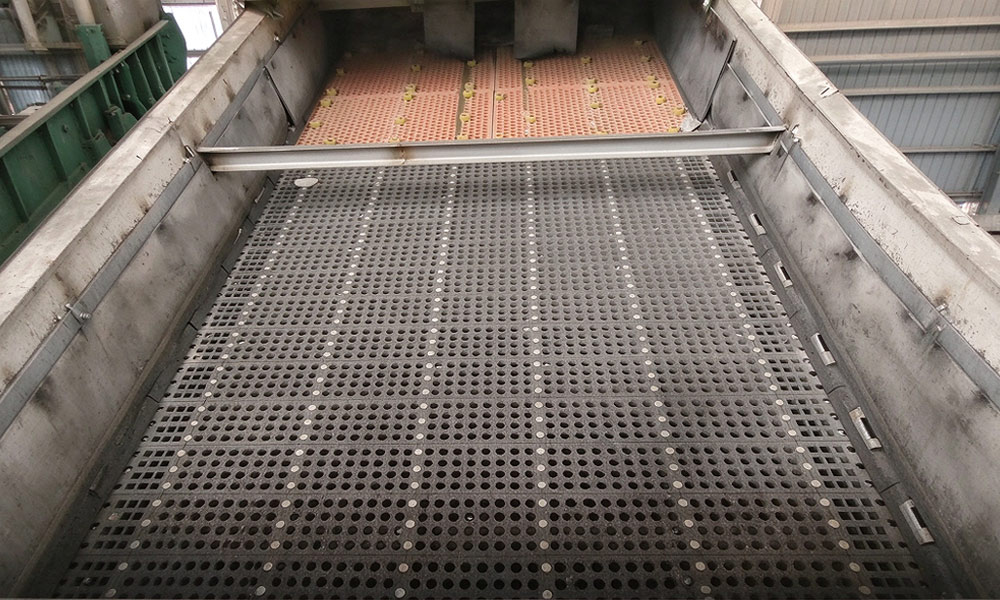
If you are still replacing torn or warped rubber panels every week in your high-impact feed zone, carbon steel reinforced rubber screen meshes are one of the most cost-effective upgrades you can make. Reach out to your local screen media supplier for a custom panel matched to your deck size and feed type, and you will immediately see fewer unplanned stops, more consistent product quality, and a sharp drop in monthly screen replacement costs.