Wear-resistant design of polyurethane panels for media recovery and dewatering stages in coal preparation
In coal prep plants, the media recovery and dewatering stages are where profit margins are won or lost, facing a brutal combination of abrasive magnetite slurry and high-pressure spray water. Standard screening surfaces fail quickly here. Specifically engineered wear-resistant polyurethane screen panels are not just spare parts but a critical operational upgrade, with plants reporting screen life extensions of 300% or more by addressing the unique wear mechanisms of these stages.
Enhanced Urethane Formulation for Abrasion Resistance
The core of the design is a specialized polyurethane compound. Wear-resistant polyurethane panels for media recovery use a higher-durometer urethane embedded with ceramic or mineral additives. This combination method resists the micro-cutting action of fine, dense magnetite slurry, which acts like liquid sandpaper. A West Virginia plant using this on dense medium cyclone screens extended panel life from 45 days to over 140 days, cutting annual media loss and replacement costs by nearly 65%.
Media Recovery: Slots That Refuse to Blind
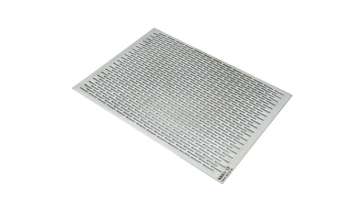
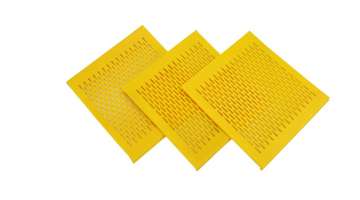
Media recovery screens live or die on whether the aperture stays open when magnetite slime, clay, and recirculated fine coal decide to camp on the deck. A wear-resistant polyurethane screen panel for this stage is usually not the hardest panel in the plant—too high a Shore and the surface stops flexing, near-size particles peg, and the medium drains back into the circuit instead of reporting correctly. The trick is elastic enough to self-relieve pegging, but compounded and profiled so the slot walls do not round off under constant slurry rubbing. Tapered slots that widen downward are the workhorse: particles enter at the top, get rejected instead of wedged, and the opening keeps its effective width long after a square-hole steel mesh would have skinned over. A low-surface-energy molded skin helps the magnetite suspension slide instead of stick, and a slightly higher open area at the feed zone relieves the bed before it pancakes. Wear shows up first at the slot lip, not the panel face, so the designer adds crown height there, sometimes with a mineral- or ceramic-filled compound on the upper 3–5 mm while the body stays elastic enough to ride the high-frequency stroke. A polyurethane screen panel built this way does not just "resist wear," it resists the specific wear that costs medium: slot-fatigue blinding.
Dewatering: Drainage Without Eating the Crown
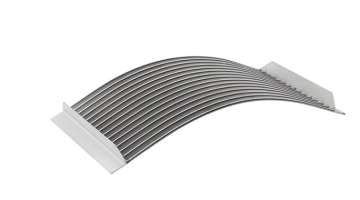
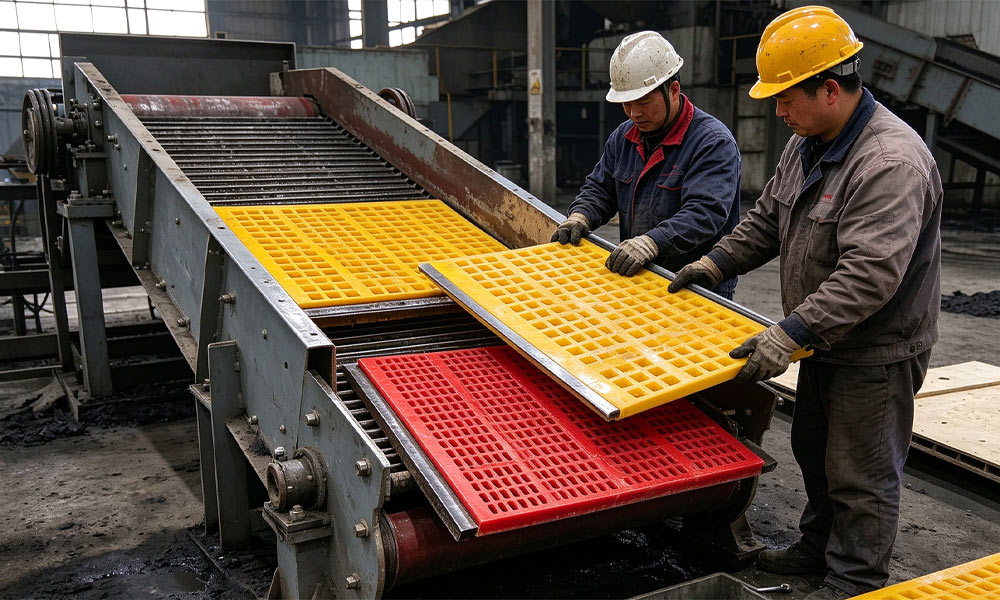
Dewatering panels are a different animal. Here the plant wants water gone, cake moisture down, and conveyors not dripping, which means the polyurethane screen panel must keep long slots open under a thick, heavy bed while abrasive fine ash and shale cuttings grind the ridges flat. This is where hardness earns its keep: dewatering zones often run harder compounds than media-recovery zones, because the panel is less worried about pegging and more worried about losing its ridge profile under tonnes-per-hour of sliding slurry. But brute hardness backfires—a too-hard panel cracks at the support bar, loses rebound, and the deck starts chattering. The mature design is zoned: feed end of the dewatering deck gets a tougher, thicker, more abrasion-rated polyurethane screen panel; mid and discharge get a profile tuned for drainage and cake release. Ridges, corrugations, or triangular bars are molded so water is channeled sideways while solids ride the crest, which keeps the effective drainage area honest instead of letting a flat worn surface turn the panel into a plastic tray. Thickness is not vanity either: a 30 mm panel carries more wear volume than a 22 mm panel, but only if the support-bar spacing and deck amplitude were designed for that mass.
Compound, Fillers, and the Rebound Problem
The quiet hero of wear resistance is the polyurethane itself. Polyester-based PU grabs strength and oil resistance but can hydrolyze in warm recycled plant water; polyether-based PU shrugs off hydrolysis better, which matters in coal prep where process water recirculates for weeks and the pH wanders. A media-recovery polyurethane screen panel in a magnetite circuit wants hydrolysis resistance and good rebound, because every vibration should snap the bed, not soak it. A dewatering panel wants abrasion resistance, so formulators add silica, alumina, barytes, or engineered mineral fillers—carefully, because overfilled PU gets brittle and micro-cracks, and those cracks become the exact channels where slurry seeps, freezes in winter plants, and tears the panel from the inside. Rebound is the number old hands watch: low rebound means the panel absorbs the stroke instead of transmitting it, the bed stratifies poorly, and wear concentrates at the feed lip. A well-designed polyurethane screen panel has a documented Shore band—say 75–82 A for media recovery, 85–92 A for dewatering wear zones—plus a tear-strength and Akron-abrasion figure, not just a color and a price.
Reinforced Structure to Prevent Edge Failure
Edges and bolt holes are typical failure points. Wear-resistant designs integrate steel cable or fabric reinforcement into the polyurethane screen around the perimeter and stress points. This prevents stretching, tearing, or dishing under constant load, maintaining dimensional stability and preventing premature media leakage that hurts separation efficiency.
Deck Layout Optimized for High-Pressure Sprays
Dewatering screens face erosive high-pressure sprays. Wear-resistant panels for this stage feature a deck layout with reinforced spray bar impact zones and a surface profile that channels water efficiently. This minimizes turbulent eddies that trap abrasive particles, allowing the polyurethane screen mesh to handle 80-100 psi spray pressures without the rapid surface erosion seen in standard panels.
If media recovery and dewatering screens are a constant maintenance cost, switching to engineered wear-resistant polyurethane panels offers a high ROI through longer life, less downtime, and reduced media loss. Consult a screening specialist to analyze your slurry density and spray pressure for a tailored solution.