Anti-Adhesion and Wear-Resistant Solution Using Polyurethane Screen Panels for Zinc Ore Processing
Processing zinc ore presents a unique set of challenges for screening equipment. The ore is often damp, clay-bound, and can be highly abrasive, leading to rapid screen blinding and accelerated wear. Traditional steel screens may corrode, while rubber can lack the necessary cut resistance. This is where specially formulated polyurethane screen panels offer a targeted anti-adhesion and wear-resistant solution. By combining inherent material resilience with engineered surface properties, these panels address the dual threats of material buildup and abrasion, directly enhancing screening efficiency and reducing total operating costs in zinc processing circuits.
Understanding the Challenge: Stickiness and Abrasion in Zinc Ore
Zinc ore, particularly when sourced from wet mines or containing clay seams, has a strong tendency to adhere to screen surfaces. This adhesion leads to rapid blinding, where apertures are sealed off, drastically reducing throughput and classification accuracy. Concurrently, the hard, angular particles in the ore cause severe abrasive wear, quickly degrading screen surfaces and changing aperture sizes. A solution must therefore combat both sticking and grinding to be effective.
Why Zinc Ore Breaks Ordinary Screens
The trouble with zinc processing is that the two worst failure modes arrive together. Wet, clay-rich ore wants to plaster itself over every opening, so the Polyurethane Screen Panel—or any screen—loses effective open area while the operator is still bragging about startup. At the same time, the "clean" fraction is not clean at all: it carries hard, angular particles that scratch the surface, round off aperture edges, and migrate the cut point wider until oversize starts riding into the mill circuit or the filter feed. Steel fights the abrasion but loses the corrosion and blinding war; acidic process water in the pH 4–6 range common to many zinc flotation circuits chews at carbon steel, and sulfide slime sticks to wire crowns like barnacles. Rubber fights the impact but can tear under slabby lumps and erodes under high-velocity slurry. That is why a zinc concentrator often ends up swapping media every couple of months, paying for labor and downtime more than for the panel itself. The real cost is not the mesh, it is the shutdown, the manual deck cleaning at 2 a.m., the classifier starving because the screen is blinded, and the concentrate grade drifting because the cut point moved and nobody noticed until the lab report.
Formulation: Hardness, Fillers, and Surface Energy
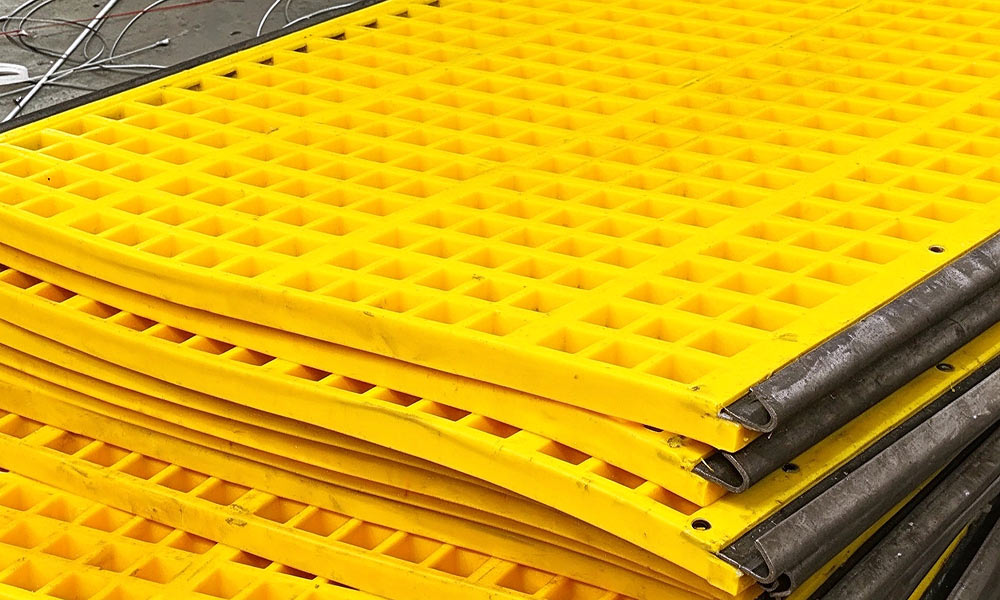
A Polyurethane Screen Panel that works in zinc ore is rarely an off-the-shelf 90 Shore A yellow panel pulled from a catalogue. The compound is the product. Polyether-based systems resist hydrolysis better in wet, recycled-process-water circuits, while carefully balanced prepolymer and chain-extender chemistry let the maker tune Shore hardness somewhere in the 85–95 A band without making the panel brittle. Fillers matter more than buyers think: mineral or ceramic loading can raise cut resistance against sharp zinc sulfide and gangue, but overload the compound and you lose elasticity, invite micro-cracking, and turn the anti-adhesion story into a chalking, fracturing mess. Surface energy is the quieter lever—a smoother, lower-surface-tension molded skin makes clay-rich oxidized zinc fines slide instead of grab, while a rough, porous surface becomes a hotel for slime. Some mills add a polished top skin, anti-stick additive package, or release-friendly mould finish so the Polyurethane Screen Panel keeps effective open area north of where steel wire would have clogged shut. The point is that "polyurethane" is not one material; it is a formulation brief, and zinc ore demands a brief written by somebody who has seen sphalerite paste dry on a deck overnight.
Geometry Does the Anti-Blinding Work
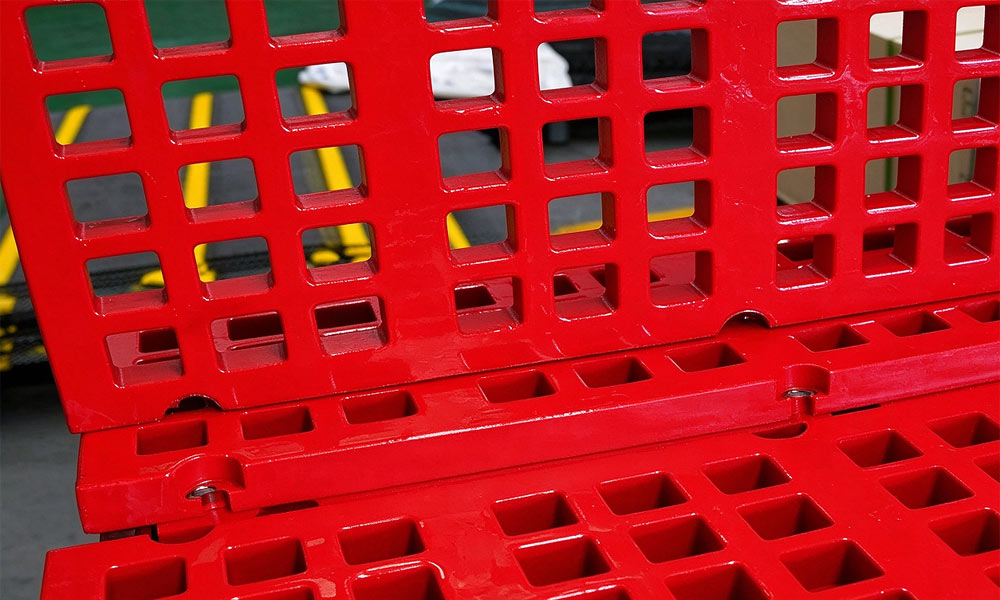
Material alone is not enough, because zinc slime will find any flat ledge and call it home. The aperture design on a Polyurethane Screen Panel does the second half of the job: tapered slots widen toward the underside so near-size particles get ejected instead of wedged, slotted openings let elongated zinc particles orient and travel instead of pegging, and molded ridges or dimples break the contact patch between ore and panel so a thin drainage film never turns into a sticky mattress. On dewatering decks, corrugated or ridged PU surfaces push water sideways while solids ride the crest, which keeps the walkway-side of the panel less flooded and the discharge less soupy. Modular pin-and-sleeve or wedge-lock panels let the plant pull only the battered feed-end module instead of lifting the whole deck, which sounds like a maintenance detail until you realize the feed end in a zinc scalping deck takes 70% of the abuse and the discharge end could run another six weeks if nobody was forced to change the whole sheet. A Polyurethane Screen Panel program done properly treats the deck as zones: impact zone, abrasion zone, classification zone, dewatering zone—each with its own hardness, thickness, aperture, and replacement clock.
The Polyurethane Advantage: Inherent Resistance and Customization
Polyurethane screen panels are uniquely suited to this task. Firstly, polyurethane's low surface energy and hydrophobic nature naturally resist material sticking, especially when wet. Secondly, through advanced polymer chemistry, manufacturers can tailor the polyurethane compound's hardness, elasticity, and additive package. This allows for the creation of panels that are both tough enough to resist cutting from sharp ore edges and elastic enough to absorb impact energy, significantly outperforming rubber in wear-resistant applications.
Surface Engineering for Enhanced Anti-Blinding Performance
Beyond the base material, the surface design of polyurethane screen panels is critical for anti-adhesion. Manufacturers often employ textured designs—such as dimples or ribbing—for the surface of the screen media. These textures reduce the contact area between the ore and the screen panel, thereby preventing significant material buildup, minimizing aperture clogging, and promoting material stratification. When manufacturing polyurethane screen panels for use with sticky materials, some factories apply low-friction coatings or incorporate release agents to reduce material accumulation. Proper selection and maintenance of the screen media can significantly extend its service life.
Maximizing Service Life Through Proper Selection and Maintenance
To fully realize this solution, correct polyurethane panel selection and installation are key. Factors like aperture shape, panel thickness, and the tensioning system must be matched to the specific feed size, moisture content, and tonnage of the operation. Implementing a routine visual inspection and cleaning schedule will prevent compacted material from hardening, preserving the panel's anti-adhesion properties and extending its service life.
Implementing an anti-adhesion and wear-resistant solution with specialized polyurethane screen panels is a strategic investment for zinc ore processors. It directly tackles the core operational pains of blinding and wear, leading to more consistent throughput, accurate sizing, and lower long-term media replacement costs.