Dewatering and Erosion Resistance Performance of Polyurethane Screens for Aggregate Washing and Screening
In aggregate washing and screening plants, achieving efficient dewatering while withstanding constant abrasive and hydraulic wear is a major operational challenge. Polyurethane screens have become a go-to solution, but their performance in this dual role—dewatering and resisting erosion—isn't automatic. It's the result of specific material properties and design features working together. Understanding how a polyurethane screen's formulation and structure tackle the combined assault of water flow and sharp sand/gravel particles is key to selecting the right panel for reliable, long-lasting performance.
The Dewatering Mechanism: More Than Just Draining
Effective dewatering on a polyurethane screen relies on its ability to create a thin, stable bed of material that allows water to pass through quickly while retaining solids. The high-frequency, linear vibration of the screen is crucial, as it stratifies the material and “walks” it across the deck. The polyurethane panel itself aids this process through its smooth, hydrophobic surface, which repels water and reduces surface tension, allowing faster drainage compared to more porous or sticky materials like rubber. This property is vital for meeting strict moisture specs in washed aggregates.
Dewatering Is a Bed-Thickness Game, Not Just a Hole-Count Game
People obsess over open area percentage and forget that dewatering on a vibrating deck is really about building a thin, stable, moving bed of aggregate where water can escape downward faster than the solids try to follow it. A Polyurethane Screen helps here because its surface is smoother and more hydrophobic than rubber or oxidized steel, so the capillary film that makes wire mesh feel “wet and sticky” is weaker, and the slurry drains instead of clinging. High-frequency linear vibration stratifies the material, the panel flexes microscopically, near-size particles that would peg a rigid mesh get nudged loose, and the retained sand forms a permeable cake rather than a pasty blind mass. Slotted or tapered apertures matter enormously in this step: a longitudinal slot gives water a longer drainage path while letting flat chips and elongated manufactured-sand grains orient and pass, whereas a square hole fights the particle shape and invites blinding the moment clay or scrubbed slime appears. A good aggregate-wash Polyurethane Screen is therefore not the one with the highest theoretical open area, it is the one that still has most of its working apertures open at hour 400, because dewatering efficiency is governed by effective open area maintained across the operating cycle, not by the number printed on the data sheet.
Erosion in a Wash Plant Is Hydraulic Abrasion
The wear mechanism in aggregate washing is sneakier than dry screening, because erosion here is hydraulic: high-velocity water carries sharp silica, crushed granite dust, and recycled-concrete grit that sandblast the crown, the slot throat, and the land between apertures all at once. A cheap, soft Polyurethane Screen will smile at you on arrival and then round off its slot edges within weeks, lose crown height, widen the cut point, and start shipping oversize into the concrete sand fraction. High-performance panels fight back with a denser, higher-durometer polyether or MDI-based compound, often loaded with ceramic micro-particles, silanized mineral filler, or quartz-sand filler that raises surface hardness without turning the panel into brittle plastic. The filler does the cutting resistance, the polyurethane matrix does the impact absorption, and the molded taper does the self-relieving work so particles do not sit and grind at a sharp lip. Erosion resistance is also a structural story: a 30–40 mm panel with proper support spacing and a steel skeleton or reinforced rib root distributes load better than a thin flexible mat that flaps, because flapping creates localized scrubbing at the support bar and eats the bottom face long before the top looks tired. In crushed-stone or manufactured-sand circuits, the Polyurethane Screen that survives is the one engineered as a composite wear part, not the one marketed as yellow rubber with holes.
Zoning the Deck Beats One Hero Panel for the Whole Machine
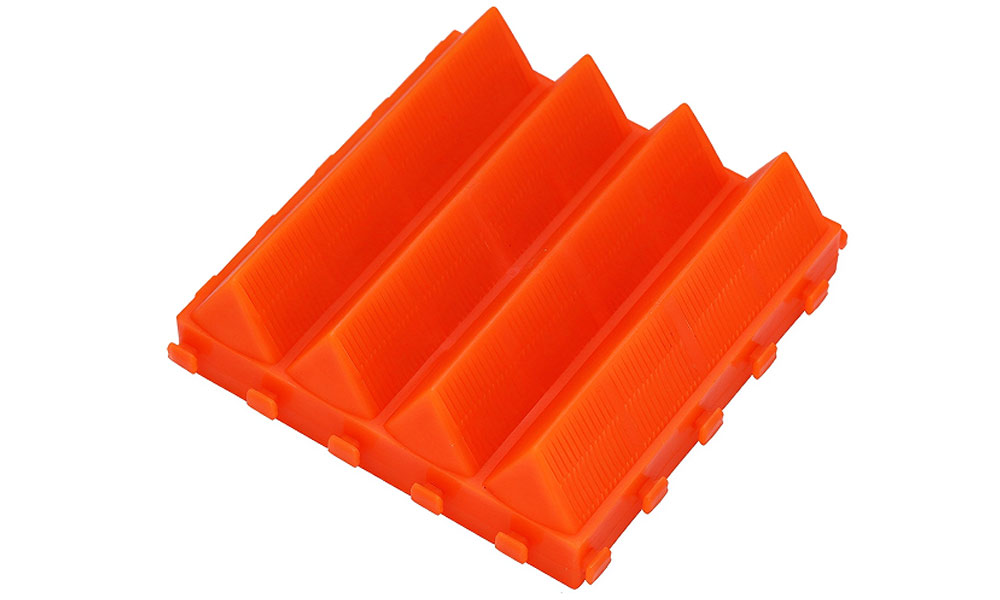
The mistake most aggregate plants make is buying one grade of Polyurethane Screen and covering the scalper, the rinse deck, the deslime deck, and the dewatering deck with it, then wondering why the feed-end panel dies first and the discharge-end panel looks bored. Wash-plant decks are not uniform: the feed landing zone takes rock-drop impact and slabby lumps, the mid deck sees the heaviest hydraulic abrasion from recirculating fines, and the dewatering zone cares less about impact and more about slot cleanliness, drainage length, and crown stability. A more honest specification puts a thicker, slightly softer, impact-absorbing compound at the feed nose, a high-durometer ceramic-loaded compound in the abrasive mid section, and a precise tapered-slot panel on the dewatering zone where moisture spec is the product. Ridge-profile panels help coarse sand move and drain, flat-top panels suit fine sand recovery, and modular pin-or-rail systems let the crew swap only the eaten section instead of re-clothing the whole machine.
Erosion Resistance: The Battle Against Abrasive Slurry
The primary threat to screen life in washing applications is hydraulic erosion—the scouring action of abrasive particles suspended in high-velocity water. A standard polyurethane may wear quickly. High-performance panels for this service use a dense, high-durometer polyurethane formulation, often with ceramic or quartz sand fillers. These fillers dramatically increase the surface hardness and cut resistance, turning the polyurethane panel into a composite material that can withstand the sandblasting effect of the slurry far longer than unfilled polymers.
Aperture Design for Dual Performance
The aperture design must serve both functions. Slotted or elongated apertures are preferred for dewatering as they offer a longer drainage path. To combat erosion, these apertures feature a pronounced, smooth taper. This design minimizes the “lip” where particles can impact and grind, distributing wear more evenly down the aperture wall. A sharp, square edge would be quickly rounded off by the abrasive flow, changing the effective screen size and reducing efficiency.
Structural Integrity Under Wet Conditions
A polyurethane screen must maintain its tensile strength and dimensional stability when constantly wet. High-quality, moisture-resistant MDI-based polyurethanes are used to prevent hydrolysis—a chemical breakdown that causes the material to soften, swell, and lose strength over time. This ensures the panel stays tightly tensioned on the frame, preventing “flapping” that accelerates wear and compromises dewatering.
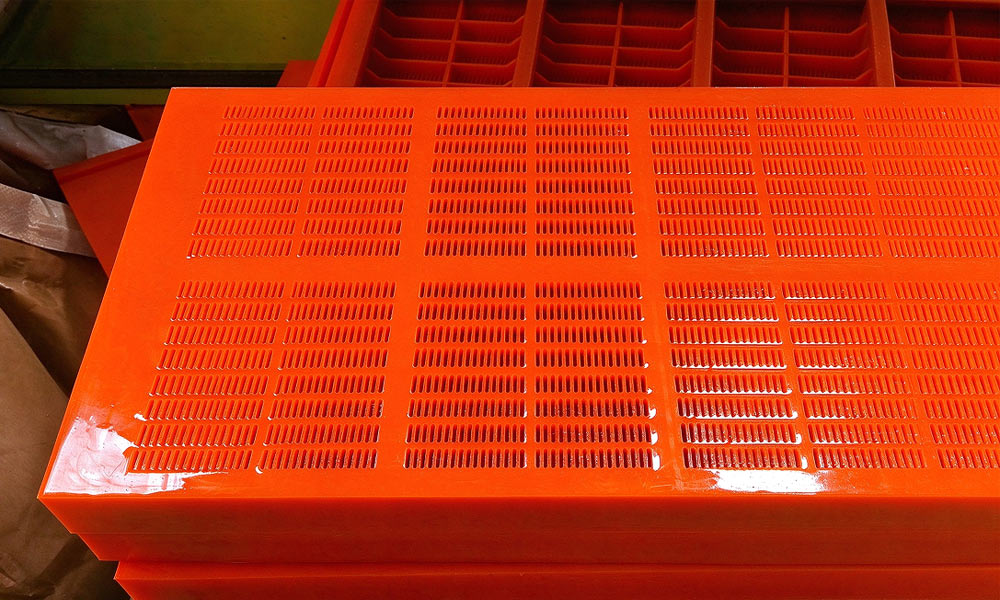
When selecting polyurethane screens for aggregate washing, it is essential to strike a balance between dewatering speed and corrosion resistance. For materials with high sand and water content, priority should be given to screen panels that incorporate reinforcing fillers and possess higher hardness; conversely, for materials that are less abrasive but highly adhesive, screens with smooth, hydrophobic surfaces are more suitable. Conducting a trial run before purchasing is recommended to ensure the screen's performance quality. Selecting a screen suited to the specific operating conditions not only extends service life but also enhances product quality, thereby reducing overall operating costs and improving production efficiency.