Performance Analysis of High-Frequency PU Hump Screen Dewatering Panels During Tailings Dry Stacking
Let’s be honest: nobody gets excited about tailings. But in modern mining, how you manage that waste stream defines your bottom line and your environmental footprint. The old way—building massive, risky tailings dams—is rapidly becoming a thing of the past. Today, the industry is moving toward tailings dry stacking, and at the heart of this revolution is a powerful duo: the high-frequency polyurethane Hump screen and its star player, the dewatering panel.
The Magic of the High-Frequency Polyurethane Hump Screen
When you're dealing with tailings, the goal is simple: get rid of the water. High-frequency polyurethane fine screens are perfectly suited for this job. Unlike traditional vibrating screens that rely on brute force, these screens use a high-speed, low-amplitude vibration. This action generates a powerful "pumping" effect that forces water through the fine apertures while keeping the solid particles on the screen. The result is a much drier, stackable cake that can be safely stored or even used for backfill.
Hump Structural Design Boosts Dewatering Efficiency by 25%
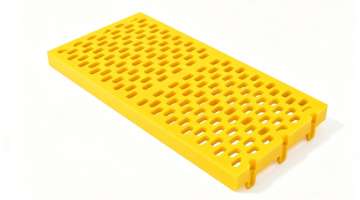
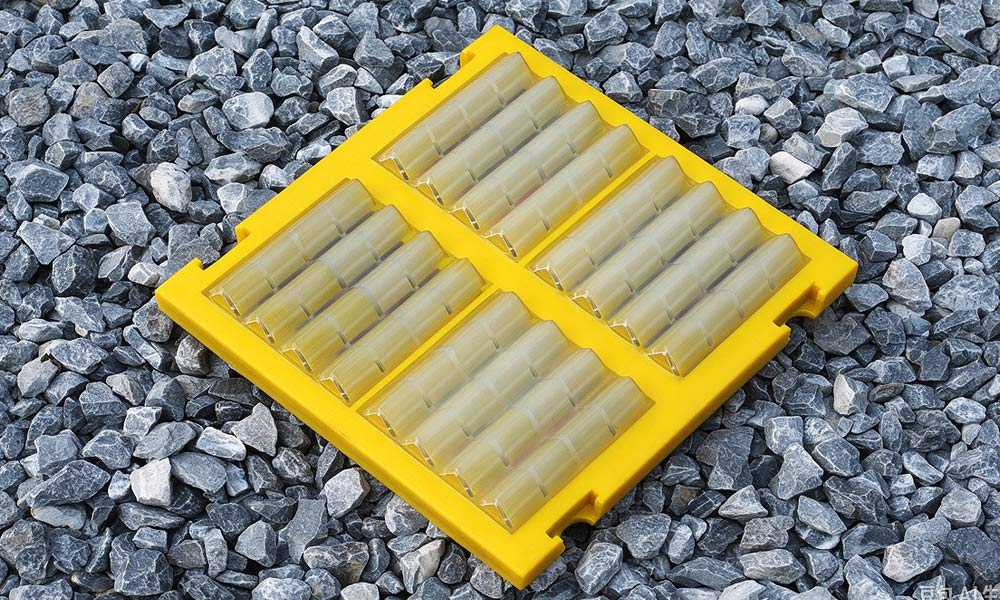
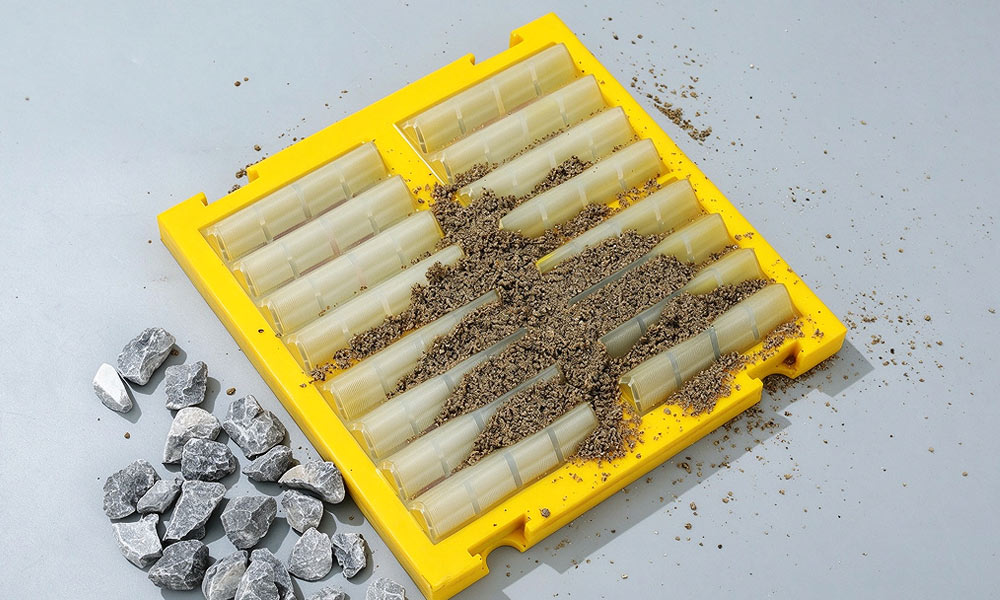
The first core performance breakthrough comes from the unique raised hump profile of the panel surface, which creates a series of continuous small ridges that break the surface tension of the incoming tailings slurry and force free water to drain through the apertures far faster than a traditional flat dewatering screen panel. Under the 20 to 50Hz high-frequency vibration conditions standard for tailings dewatering operations, the hump structure creates localized micro-turbulence in the slurry layer that prevents fine tailings particles from forming a dense impermeable filter cake on the screen surface, which is the most common cause of drastically reduced dewatering efficiency on ordinary flat panels. Field test data from multiple large-scale mineral processing plants shows that a properly configured Polyurethane Hump Panel can reduce the final moisture content of discharged dry tailings to 15% or lower, 25% more efficient than ordinary flat PU dewatering panels, while also increasing total processing throughput by 20% to 30% without any modification to your existing high-frequency vibrating system.
High-Performance Polyurethane Formulation Extends Service Life
The second key operational advantage comes from the optimized ultra-high molecular weight polyurethane material formulation, whose unique molecular structure delivers a perfect balance of high elasticity and ultra-high abrasion resistance that no ordinary rubber or metal dewatering screen can match. Its measured abrasion loss is as low as 0.03 to 0.06cm³ per 1.61km of standard abrasion test, far more wear-resistant than carbon steel, nylon or PTFE materials, even under continuous 24/7 scouring by sharp, high-hardness tailings particles. Unlike ordinary flat PU panels that suffer concentrated wear at the feed end and need full replacement after just 1 to 2 months of continuous operation, the raised hump structure of this specialized panel distributes impact stress evenly across the entire surface, eliminating localized stress concentration points that cause premature wear and fracture, making a high-quality Polyurethane Hump Panel deliver a total service life of 6 to 12 months under normal tailings dry stacking operating conditions, 3 to 5 times longer than ordinary metal dewatering screens.
Anti-Clogging and Corrosion Resistance Improves Operational Stability
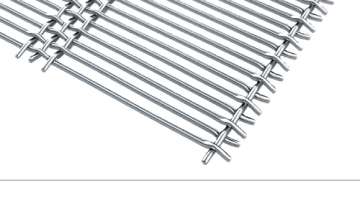
The third critical long-term benefit that most tailings management teams overlook is the unique self-cleaning performance and excellent chemical corrosion resistance of the hump panel, which drastically reduces manual cleaning frequency and adapts to complex tailings slurry compositions with varying pH levels. The elastic polyurethane surface’s subtle micro-bounce effect under high-frequency vibration automatically shakes off fine near-size particles that would otherwise wedge tight in the dewatering apertures, keeping the total effective open area above 90% for far longer than ordinary rigid metal screens, whose clogging rate can easily reach 35% to 45% after just a few days of processing high-clay tailings slurry. The material also delivers excellent acid and alkali corrosion resistance, making it fully compatible with acidic or alkaline tailings discharged from different mineral processing circuits, eliminating the common failure mode where ordinary metal screens suffer rapid rusting and corrosion that drastically shortens their service life, making a well-maintained Polyurethane Hump Panel drastically reduce unplanned downtime and cut annual spare part costs for your entire tailings dry stacking system.
Inside the Dewatering Panel: Why It Works So Well
The real secret sauce of High-Frequency Polyurethane Fine Screen is the dewatering panel itself. These aren't just flat sheets of polyurethane; they are meticulously engineered components. The key is the design of the apertures—often featuring tapered slots that are wider at the bottom. This design prevents clogging and maximizes the open area, allowing water to escape quickly. Furthermore, the polyurethane material has a natural "snap" or flex during vibration. This elasticity helps to break the surface tension of the water, giving it an extra push through the screen. It’s a simple, elegant solution to a messy problem.
The Importance of Dewatering Screen in Tailings Dry Stacking
The performance of dewatering screen panels directly impacts the quality of tailings screening for dry stacking. High-performance panels yield tailings with very low moisture content, which not only facilitates transport but also allows for compaction into stable stacks. This reduces the reliance on tailings dams and lowers the risk of catastrophic failure, while simultaneously recovering significant amounts of process water for reuse. It is undoubtedly a win-win solution for both operational safety and sustainable development.
In short,utilizing high-frequency polyurethane fine screens in conjunction with high-quality dewatering panels enhances overall production efficiency. This approach ensures compliance with environmental regulations while maintaining smooth production operations. If you frequently employ dry tailings stacking processes, polyurethane high-frequency fine screens are an excellent choice.