Tear Resistance and Open Area of Polyurethane Fine Screens in High-Concentration Slurry Screening
When screening high-concentration mineral slurries using polyurethane fine screens, the screen media are subjected to the impact of abrasive particles and the immense weight of the slurry under high pressure. Under these operating conditions, tear resistance and open area are the two critical parameters determining screening performance; a balance between them is essential to ensure the final quality of the screening process.
The Trade-off Between Durability and Open Area in Polyurethane Fine Screens
A dilemma exists: increasing the durability of polyurethane fine screens typically requires thickening the screen strands, which reduces the open area; conversely, maximizing the open area to boost material throughput can compromise the screen's structural integrity. Striking the right balance between these factors is crucial when processing high-concentration slurries. Insufficient tear resistance makes the screen prone to tearing under heavy slurry loads, while an excessively low open area leads to clogging, thereby reducing production capacity and efficiency. Leading manufacturers of polyurethane fine screens achieve an optimal balance between strength and flow rate through the use of advanced polymer formulations and ingenious geometric designs.
Why Tear Resistance is Non-Negotiable
Let’s be blunt: a torn screen is a failed screen. In high-concentration slurries, the impact and dragging forces are immense. Tear resistance isn't just about the strength of the material; it’s about how the energy is distributed. High-quality polyurethane has excellent elongation properties, allowing it to stretch and absorb shock rather than cracking. This is especially important at the attachment points and around the apertures, where stress is highest. Without superior tear resistance, you're just buying a disposable product that won't survive a week in your circuit.
Maximizing Open Area for Efficient Dewatering
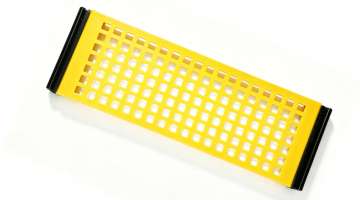
On the flip side, the whole point of a fine screen is to let liquid through while retaining solids. The open area parameter directly dictates your dewatering capacity. If the screen is too "solid," water can't escape fast enough, and you end up with a soggy, high-moisture product. Modern polyurethane fine screen designs use tapered slots and optimized rib profiles to maximize the percentage of open space without sacrificing the structural integrity needed to handle high-concentration feeds. It’s about moving water as efficiently as possible.
Precision Molded Aperture Design for Optimized Open Area Balance
The second key functional benefit comes from the precision molded aperture design that strikes the perfect balance between high open area and structural strength, with the total open area ratio controllable between 30% and 45% while still maintaining consistent, uniform mesh openings with tolerance kept within ±3%. Unlike traditional metal woven fine screens that have to reduce open area drastically to improve structural strength and avoid tearing, the excellent elastic deformation resistance of polyurethane allows the screen to retain a high proportion of unobstructed flow channels for fine slurry particles to pass through smoothly, drastically improving slurry throughput by 20% to 30% compared to ordinary fine screens with the same separation particle size, making this Pre-crimped hooked woven screens a critical upgrade that directly boosts the overall processing capacity of your entire high-concentration slurry classification circuit. This optimized open area design also drastically reduces the risk of fine particle clogging, as the smooth non-stick polyurethane surface prevents sticky fine ore particles from adhering to the mesh edges.
Integrated Hooked Edge Structure for Fast Installation and Long-Term Stability
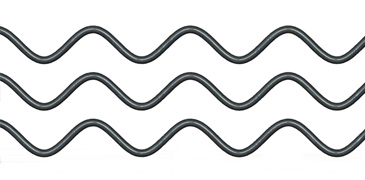
The third practical operational optimization is the one-piece pre-formed hooked edge that runs along both sides of the screen panel, which is precision bent to perfectly match the standard tension rail dimensions of most mainstream high-frequency fine vibrating screen models, no extra on-site cutting, drilling or complex fastener alignment required. The pre-crimped interlocking weave structure of the internal metal reinforcement framework ensures the entire screen panel maintains perfectly uniform tension across its full surface the moment you finish tightening the end tension bolts, no extra repeated stretching and fine-tuning required, eliminating the uneven tension spots that often cause local tearing under long-term high-frequency vibration. This structural stability ensures the screen stays perfectly taut and flat from day one, making this Pre-crimped hooked woven screens not only faster to install, but also far less likely to suffer unexpected early failure due to improper tensioning, cutting total screen replacement time from 3 hours down to less than 30 minutes for most maintenance teams.
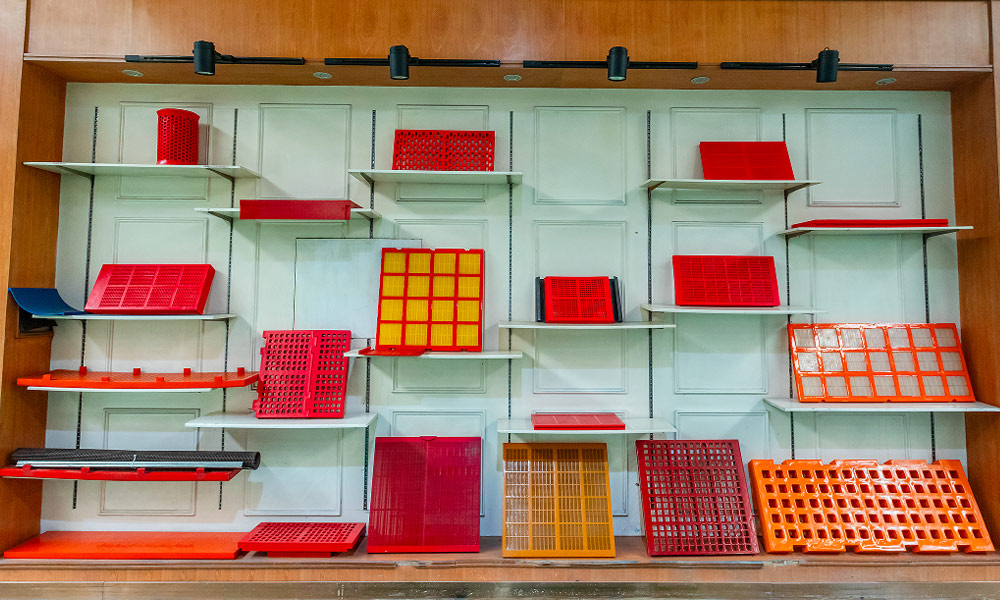
In summary, when evaluating polyurethane fine screens for high-concentration slurry, don't just look at the price tag. Analyze the tear resistance and open area parameters together. A well-designed screen will give you the durability to withstand the punishment while providing the drainage you need to keep your plant running at peak efficiency.