Types of Polyurethane Screen Suitable for High-Purity Beneficiation of Quartz Sand
For quartz sand high‑purity beneficiation operations that require extremely strict classification accuracy and zero metal contamination of the final product, picking the right Polyurethane Screen Type is one of the most critical steps to guarantee final silica purity and long‑term stable production performance. Many operations that use generic metal woven screens or low‑grade general‑purpose polyurethane panels end up introducing trace iron impurities into the high‑purity quartz product, or face frequent aperture clogging that drags down screening efficiency and reduces final product yield. A properly selected, application‑specific Polyurethane Screen Type completely eliminates these pain points, delivering both contamination‑free operation and consistent high‑precision classification for high‑purity quartz beneficiation workflows.
Modular Fine Slot Dewatering Mesh
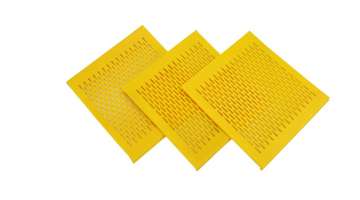
The first widely used Polyurethane Screen Type for this application is the modular fine slotted dewatering mesh, which uses precision‑molded narrow elongated openings aligned parallel to material flow to maximize water drainage while preventing fine near‑size quartz particles from getting stuck inside the apertures. This design drastically reduces manual deck cleaning frequency, and its fully non‑metallic construction ensures no stray metal debris abrades off and contaminates the high‑purity quartz product, keeping final silica purity well above the required industrial threshold.
Fine Tensioned PU Mesh for Sub-2 mm Grading
When the target cut sits in the 0.1–2 mm band—typical for classified quartz flour, filler sand, or pre-flotation sizing—the screen has to hold a tight aperture without blinding on damp fines. The first useful entry among Polyurethane Screen Types is the tensioned fine PU mesh: a thin, high-tensile polyurethane cloth tensioned on a standard frame, often with ±0.02–0.05 mm slot tolerance, giving the precision people expect from woven wire but without the metal-in-contact risk. Because the surface is molded rather than woven, there are no cross-over burrs where near-size quartz lodges, and the elastic rebound quietly ejects particles that would peg a rigid square mesh. For dry screened quartz the compound can lean harder and more abrasion-oriented, while for washed quartz it should be polyether-based so the panel resists hydrolysis instead of cracking in humid storage. This type shines on multi-deck fine classifiers where the whole business is keeping the 200-mesh fraction honest and keeping mechanical iron out of the product stream.
Slotted Dewatering Panels for Wash and Deslime Decks
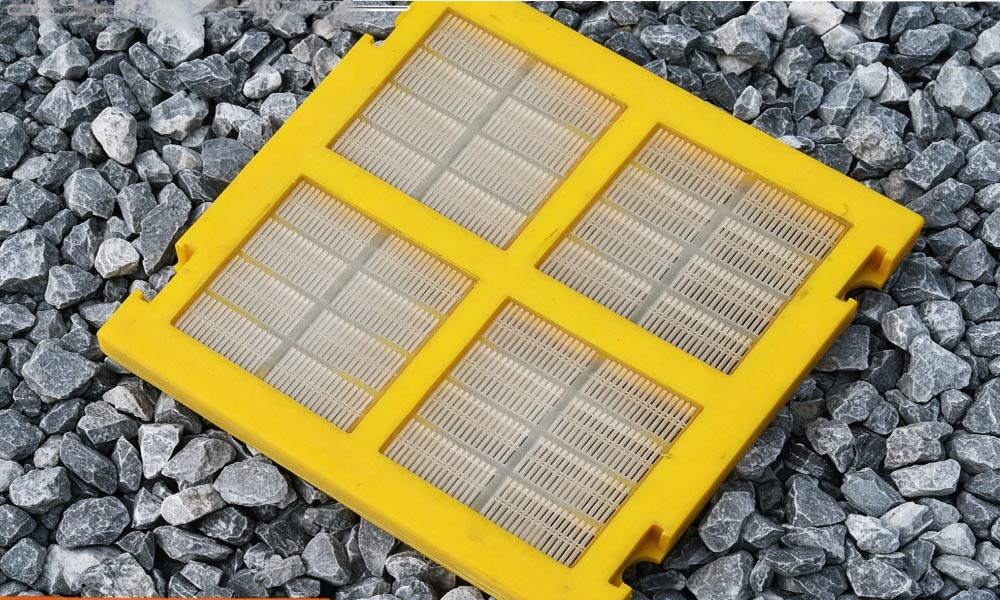
Most high-purity quartz lines are not dry all the way through—scrubbing, desliming, and pre-wash stages throw 15–25% moisture feed at the deck, and square holes turn into paste holders. The second family of Polyurethane Screen Types is the modular tapered slotted dewatering panel, with narrow slots running parallel to flow and widening toward the underside so a near-size grain enters but cannot homestead in the opening. Water drains fast, fines pass instead of bridging, and the non-metallic surface cannot rust iron oxide into the slurry the way steel wedge wire eventually will. These panels are the workhorse on the lower deck of a wash screen or on a high-frequency dewatering screen where the product still carries clay slurry before magnetic separation. A 0.1–1.0 mm slot range covers most quartz deslime duties, and a Shore A band around 85–92 keeps the ligament stiff enough to resist cutting from angular silica while still flexing enough to self-relieve. In practice, this is the type that stops the 2 a.m. hose-and-scraper shift and keeps the downstream hydrocyclone feed at a consistent size.
Polywedge and Self-Cleaning Strip Media for Sticky Quartz
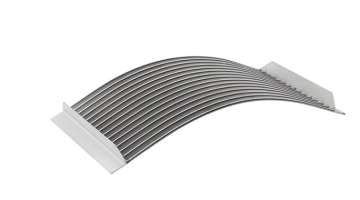
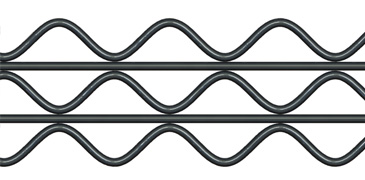
The third group is for the annoying feed: weathered quartz, ion-exchanged clay-host quartz, reclaimed cullet sand, or any parcel where minus-200-mesh slime rides on top of near-size grains. Here the right Polyurethane Screen Types are polywedge profiles and self-cleaning PU strip / harp systems. Polywedge combines a V-profile support wire idea with polyurethane encapsulation, giving a wide-top/narrow-cut geometry that resists pegging and holds ±0.025 mm-class accuracy on fine separations. Self-cleaning strip media goes further: independent PU strands or wave/diamond bars vibrate at slightly different frequencies, so the deck never lets a capillary bridge set long enough to blind the panel. For high-purity work the trick is restraint—too soft a strip medias smears the cut, too hard a wedge medias blinds on sticky feed, so the spec usually zones them: wedge or slotted PU on the main sizing deck, softer self-cleaning strips on the sticky pre-screen, and a reinforced PU impact module at the feed nose so lump quartz does not scar the surface and create anchor points for slime. That zoned thinking is what separates a quartz-purity screen system from a quarry sand screen with a cleaner story.
High‑Frequency Anti‑Blinding Sieve Mesh
The second high‑performance Polyurethane Screen Type is the high‑frequency anti‑blinding sieve mesh, fitted with built‑in flexible secondary vibration elements that shake loose any fine quartz particles that would otherwise get wedged in the openings during long continuous operation. This design maintains a stable effective open area across weeks of non‑stop production, avoiding the gradual drop in screening accuracy that comes with standard rigid mesh panels, and it is perfectly optimized to match the high‑frequency vibration parameters most quartz beneficiation lines already run.
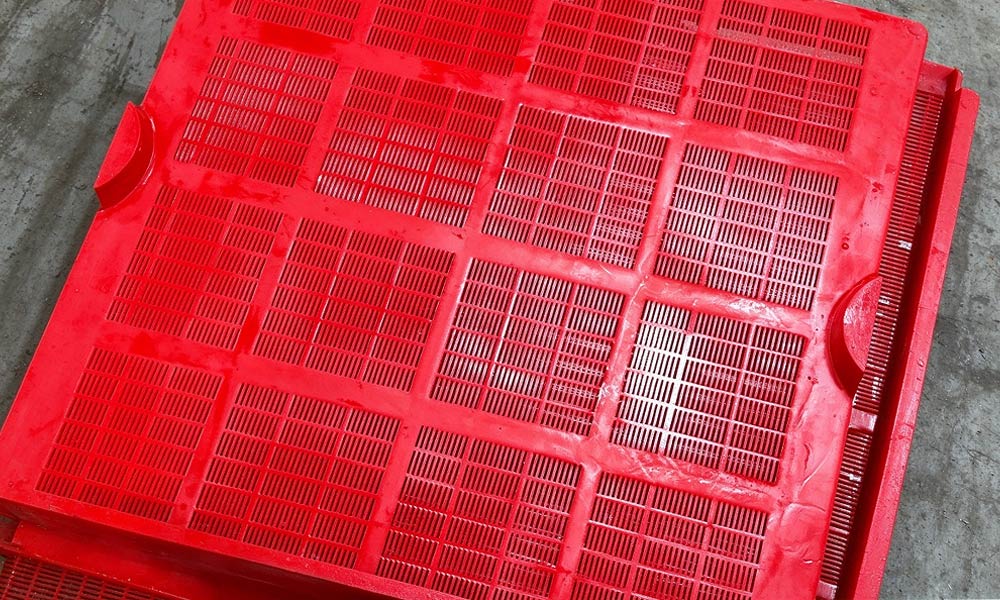
Wear‑Resistant Tensioned Fine Mesh
The third practical Polyurethane Screen Type is the lightweight tensioned fine mesh, which installs quickly on standard tension screen decks without requiring any major modification to existing beneficiation equipment, cutting down installation time and maintenance labor costs drastically. Its high‑tensile strength polyurethane formulation resists the constant sharp abrasive wear of hard quartz particles, delivering 3 to 4 times longer service life than traditional metal tension mesh, while still maintaining the precise aperture tolerance needed to separate ultra‑fine particle fractions for high‑purity quartz production.
Choosing the correct Polyurethane Screen Type tailored to your exact quartz particle size distribution and beneficiation process requirements will help you eliminate metal contamination risks, boost final high‑purity quartz product yield, and drastically cut down long‑term screen maintenance costs. If you need a full customized mesh type matching scheme built around your existing beneficiation line parameters, our team can deliver a targeted solution that fits your workflow perfectly.