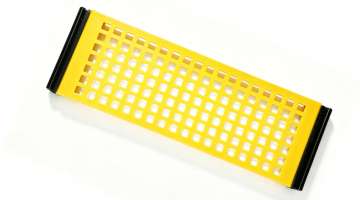
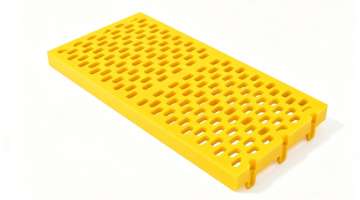
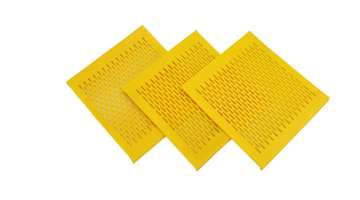
Analysis of Hydrolysis Resistance and Service Life of Polyurethane Screens During the Screening Process
In washing and screening operations—common in aggregates, minerals, and coal—polyurethane screens are constantly exposed to hot water, varying pH levels, and mechanical stress. While their wear resistance is often highlighted, a screen's long-term performance and total service life are fundamentally governed by a less visible property: hydrolysis resistance. This is the material's ability to withstand chemical breakdown in the presence of water and heat. A thorough analysis of this property is not just academic; it's the key to predicting whether a screen will last for months or years under continuous wet service.
Understanding Hydrolysis: The Silent Degrader
Hydrolysis is a chemical reaction where water molecules break the polymer chains in polyurethane. In the warm, often chemically active environment of a wash plant, this process is accelerated. It doesn't cause immediate failure. Instead, it leads to a gradual but irreversible loss of physical properties: the polyurethane screen becomes softer, loses tensile strength and tear resistance, and may swell or develop surface cracks. A screen that initially performs well can become brittle and fail prematurely because its core structural integrity has been compromised from within, long before it's visibly worn thin.
Why Polyether Wins the Shower and Polyester Wins the Dry Crusher
The first fork in the road is the polyol, because polyester and polyether polyurethanes are basically two different animals wearing the same black elastomer suit, and most premature failures in wash plants come from specifying the wrong cousin. Polyester-based Polyurethane Screen Panel compounds usually bring better dry abrasion resistance, higher cut resistance, and a slightly tougher surface for chutes, scrapers, and dry screening decks where the enemy is sharp rock rather than water. The problem is that ester bonds are hydrolytically labile: in sustained moisture, warm slurry, or pH-swung coal-wash water, water nucleophilically attacks those bonds, the polymer chain shortens, tensile strength drops, and the panel can lose elasticity or swell by double-digit percentages before the maintenance log even notices. Polyether-based polyurethane is the calmer choice for washing, dewatering, tailings, and slurry screening because the ether linkage is far more indifferent to water, water uptake is lower, and with carbodiimide anti-hydrolysis stabilizers the material shrugs off humidity that would rot a bargain polyester panel in a season. A mature specification does not say “polyurethane is polyurethane”—it says polyether-MDI with anti-hydrolysis package for the wash and dewater deck, possibly polyester-hybrid or high-rebound blend for the dry scalping zone, and it treats the whole plant as a map of moisture gradients rather than one material order.
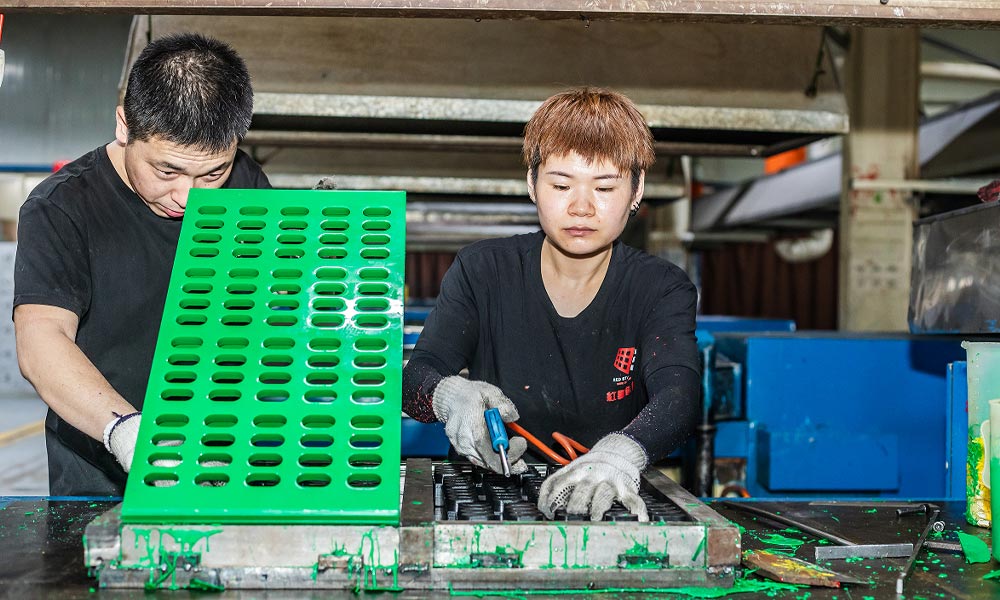
Hardness, Temperature, and the Hidden Acceleration of Wet Wear
Hardness gets oversold as the only durability number, but in a washing circuit Shore A is only half the sentence, because a Polyurethane Screen Panel at 92 Shore A may resist sliding abrasion yet crack under cyclic impact, while an 85 Shore A panel may absorb angular granite better and actually last longer under vibration. Wet screening adds a second variable that people forget: water acts as a plasticizer and a heat conductor, so when slurry temperature climbs above roughly 50–60 °C—common in hot coal wash, caustic phosphate, or closed-loop tailings circuits—hydrolysis kinetics accelerate hard, and a panel that would survive two years in cool water can age in months in hot brine. The wear mechanism also changes shape in water: three-body abrasion from trapped fines, hydrodynamic transport of abrasive slurry into the slot throat, and fatigue from millions of flex cycles combine so the panel does not simply “wear thin,” it loses rebound, the apertures deform, near-size particles peg more often, and the operator blames blinding when the real disease is polymer fatigue.
From Service Life to Total Cost
Service life is not a number printed on the box; it is a curve, and the plant that tracks it wins, because a Polyurethane Screen Panel rarely fails all at once—it first swells a few percent, then the slot width drifts, then the crown shows micro-crazing, then the hook insert starts moving, and finally a panel that still looks reusable quietly ships off-spec product into the dewatered cake. Washing-circuit inspections should check hardness drift at the feed end versus discharge end, surface tackiness or chalking, edge delamination at steel inserts, slot enlargement, and blinding frequency after a fixed run time; when undersize yield drops at constant feed or oversize starts leaking into the screened fraction, the panel is already past its economic life even if it has not physically broken. Economically, polyurethane usually beats steel wire in wash duty not because it is cheaper per square meter—it rarely is—but because changeout labor, downtime, deck damage, and lost grade cost more than the media itself, with quality PU dewatering panels commonly running around 12–24 months where steel wire might manage 2–4 months in the same coal-wash or tailings duty.
Key Factors Accelerating Hydrolysis
There are three main factors drive hydrolysis in screening applications: First, the temperature: Warm process water dramatically increases the hydrolysis reaction rate. Every 10°C rise can double the degradation speed. Secondly, pH: Both highly acidic and highly alkaline conditions are catalysts for hydrolysis. The specific chemistry of your wash water is critical. The last factor is Polymer Chemistry: This is the controllable variable. Standard polyester-based polyurethane panel have poor hydrolysis resistance. Polyether-based and specially formulated hydrolytically stable MDI-based polyurethanes are engineered to resist this breakdown, forming a more stable polymer structure in wet environments.
The Link to Service Life: More Than Just Wear
When analyzing service life, you must consider two parallel timelines: surface wear from abrasion and bulk degradation from hydrolysis. A screen might have ample thickness remaining but fail because hydrolysis has made it too soft to maintain tension or resist tearing. The true service life ends when either wear reaches a critical thinness or hydrolysis degrades the material's properties below a functional threshold—whichever comes first. In warm, wet screening, hydrolysis often dictates the endpoint.
Selecting and Validating for Long Life
To maximize service life, selection must prioritize hydrolysis resistance. Specify hydrolytically stable polyurethane screen as a base requirement. Then, request technical data sheets showing retained physical properties after accelerated aging tests in hot water. A high-quality PU will retain over 80-90% of its original properties. The most reliable validation is a field trial in your own plant, monitoring not just thickness loss but also changes in panel flexibility and tension over time.
Don't wait for a screen to crack and fail to diagnose hydrolysis. By proactively analyzing the hydrolysis resistance of the polyurethane panel and understanding your plant's specific water temperature and chemistry, you can select screens designed for the environment. This informed choice directly translates to longer, more predictable service life, reduced change-out frequency, and lower total cost of ownership for your washing and screening process.