Design of Wear Indicator Strips for Polyurethane Panels: Intuitive Assessment of Replacement Time
For mineral processing operations running high‑abrasion workflows like manganese ore beneficiation, figuring out the exact remaining service life of their Polyurethane Screen Panel units has long been a frustrating pain point, as traditional thickness measurement methods are time‑consuming, prone to human error, and often miss localized uneven wear that can cause unexpected screen failure mid‑production. Many teams have wasted hours of scheduled maintenance time taking dozens of caliper readings across every screen deck, only to still end up dealing with sudden misplaced particles and “fine leakage” issues because they missed a small heavily worn spot on the panel. The integrated wear indicator strip design built directly into a Polyurethane Screen Panel solves this problem completely, letting maintenance crews judge remaining wear status at a single glance without any specialized tools or complex inspection procedures.
Integrated One‑Piece Molding Structure
The wear indicator strips are cast as a single unified part of the Polyurethane Screen Panel during production, using the same base polyurethane formulation dyed with distinct, high‑visibility color pigments that match the parent material’s exact wear resistance, so there is no risk of the indicator layer peeling off or wearing at a different rate than the rest of the panel. These strips are placed on the non‑working edge areas of the screen, completely outside the high‑flow material contact zone, so they do not take up any of the effective screening area or interfere with normal classification performance during operation.
Color Layers That Speak Plain Language
The cleanest design is a co-molded stack of contrasting polyurethane layers cast into the same panel body, not glued on afterwards where they would peel or wear at the wrong rate. A Polyurethane Screen Panel built this way carries a working wear surface, then one or more indicator layers underneath with the same durometer and abrasion behavior but a completely different pigment—blue over yellow, orange over black, red over green, whatever the plant’s lighting and PPE make easiest to see from the walkway. As the working face erodes under chromite, granite, iron ore, or recycled concrete, the first contrast color appears and says “life is being consumed,” the second color says “order the spare now,” and the base color fully exposed says “change it before the next shift or you are screening with a hole, not a slot.” Dual-durometer panels already use color this way in mining supply catalogs, and the same idea scales naturally to three-band systems where 30%, 70%, and 90% life consumption each have their own visual event. The beauty is that the indicator is not a sticker or a painted line—it is the same polyurethane, so it wears honestly with the panel and cannot lie about remaining thickness.
Where the Strip Lives Matters More Than the Color
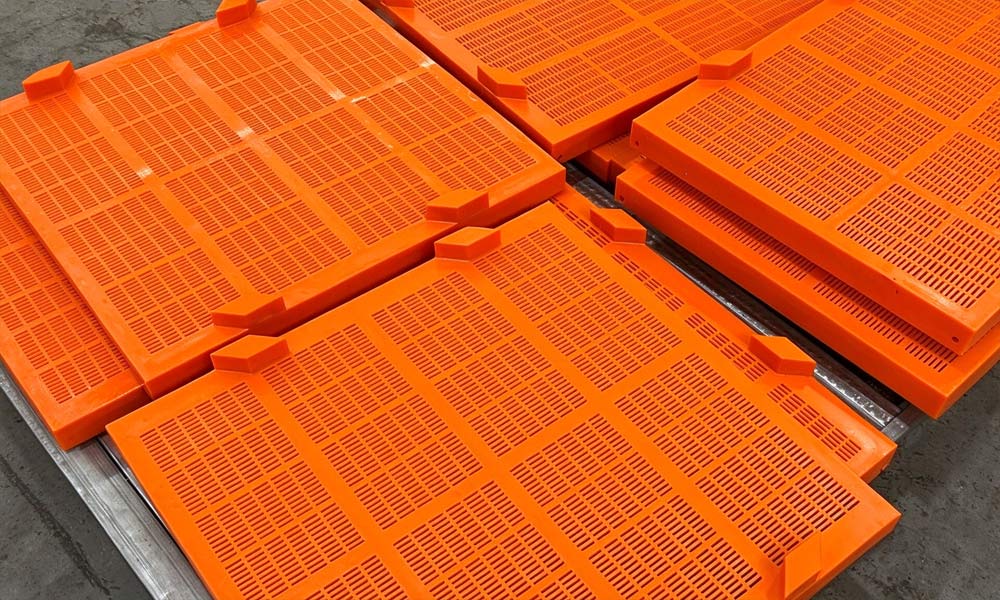
A wear strip placed in the middle of the active aperture zone is a stupid gift: it steals open area, disturbs the bed, and changes the cut point the panel was molded to hold. Good Polyurethane Screen Panels put the indicator on the non-working edge, the blank shoulder beside the apertures, the underside ledge near the support bar, or a small raised lug at the panel corner that sees material flow but never carries the main classification load. The strip mirrors crown wear because it was cast from the same shot, with the same cure, the same filler loading, and the same Shore hardness as the screening face; it just sits where eyes can find it and material cannot hide it. On multi-deck machines, each deck gets its own strip position—feed-end panels show impact wear fastest, fine decks show slurry abrasion fastest, and discharge panels show edge compression and pegging damage fastest. The design rule is simple: the indicator must report the same physics as the working face, but never interrupt the screening event itself.
Turning the Strip Into a Replacement Rule
A colored layer is only useful if the plant agrees what it means before the panel goes in. The spec should state the trigger in plain maintenance language: first contrast color = log wear rate and compare against the life model; second color = release spare panel from stores and schedule changeout in the next planned window; base color fully exposed, aperture enlargement beyond 15–20%, edge tear, through-hole, or loss of side-seal compression = stop the deck and replace. Polyurethane Screen Panels with wear strips also make auditing honest, because the shift report stops saying “looked OK” and starts saying “blue gone, yellow showing, 480 t screened since last check.” That data feeds the only number that matters: wear per 1,000 tonnes. A panel that reaches the second color at 6,000 tonnes and the base color at 9,000 tonnes gives the planner a forecast; a panel that jumps from blue to bare base in 800 tonnes is telling you the compound is wrong, the feed height is too high, the deck angle is off, or the support frame has lost its capping rubber. The strip did not cause the problem—it just stopped the plant from blaming the ore.
Tiered Color‑Coded Wear Calibration
The standard design uses three separate stacked color layers, each with a precisely calculated thickness that corresponds directly to a specific percentage of the Polyurethane Screen Panel’s total rated wear life, with no extra calibration work required for on‑site teams. The top layer vanishing marks 30% of total service life consumed, the middle layer being fully exposed signals 70% life used and that spare panels should be prepped, and the bottom layer appearing means less than 10% life remains and immediate replacement is needed.
Zero‑Training On‑Site Operation
Unlike traditional thickness checks that require experienced maintenance staff to operate calipers and interpret uneven wear data, this indicator system lets even new team members accurately judge the Polyurethane Screen Panel replacement timing in seconds, no technical training or extra inspection tools needed. This drastically cuts down the time spent on routine screen deck inspections, and almost completely eliminates the risk of unplanned downtime caused by missed premature wear points.
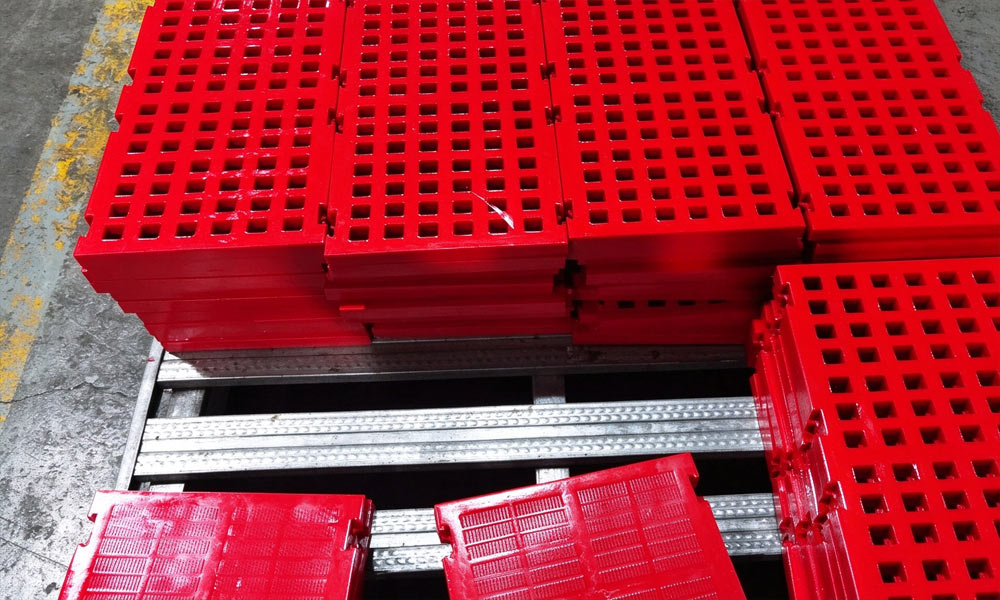
This simple, practical wear indicator strip design removes almost all the guesswork from Polyurethane Screen Panel maintenance, helping processing plants extend average panel service life by 20% and cut unplanned screen‑related downtime by more than 60% in real high‑abrasion mining operations. If you need a customized indicator strip thickness and color scheme tailored to your site’s specific ore properties and working conditions, our technical team can put together a fully optimized design that fits your existing screen panels perfectly.