Choosing the right polyurethane screen is more than just choosing the size.
The chosen mesh shape directly impacts screening efficiency, a fact most
operators don't realize until frequent screen changes. Let's analyze the
applicable scenarios for square, round, and oval meshes.
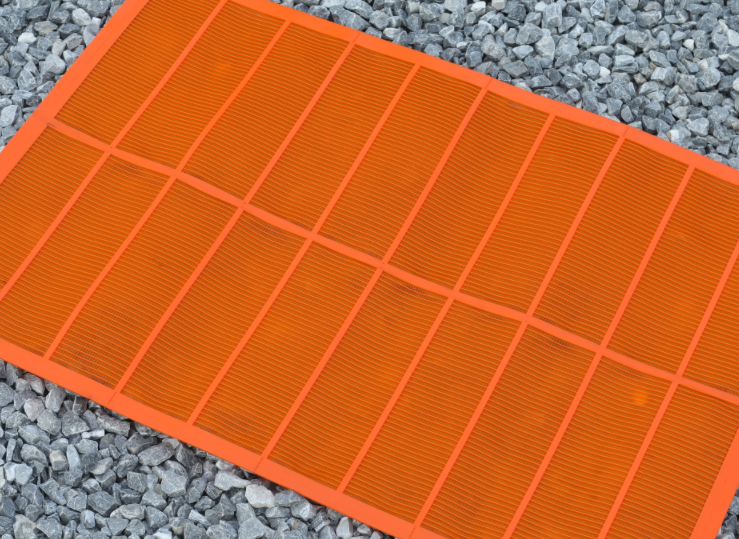
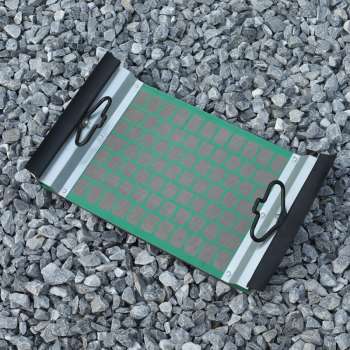
Square Mesh Polyurethane Screens: Ideal for General Screening
If you need to process medium to fine particles with diameters between 1-10
mm and require uniform particle size classification, then square meshes are your
best choice. They are widely used, from sand classification to aggregate
particle size analysis. Square meshes typically have an opening ratio of 45-55%,
ensuring screening efficiency without sacrificing accuracy. If your material has
a low mud content and you are using a standard vibrating screen, then square
meshes on polyurethane screens are the most suitable choice.
Round Mesh Polyurethane Screens: Precision and Self-Cleaning Performance are
Crucial
Round meshes are excellent for handling fine particles smaller than 1 mm,
such as mineral powders and chemical particles. The circular geometry eliminates
sharp corners, reducing clogging. For humid environments, it can be used with
polyether-type polyurethane screens. This material does not hydrolyze, and its
smooth surface allows wet particles to glide easily. A practical tip: If your
feed contains more than 15% slurry, using round holes with lower hardness can
significantly reduce clogging rates.
Oval-hole polyurethane screens: Designed for sticky, irregular, or
coarse-grained materials
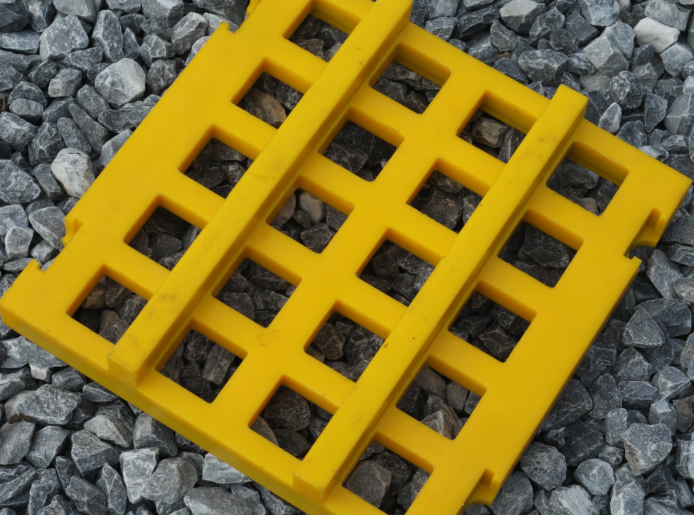
Many people misunderstand oval holes. Oval holes are not simply "larger
square holes." Their shape allows irregular particles to pass through smoothly
without getting stuck. If the particles to be screened are large and highly
viscous, using a thicker polyurethane screen with oval apertures is the best
choice.
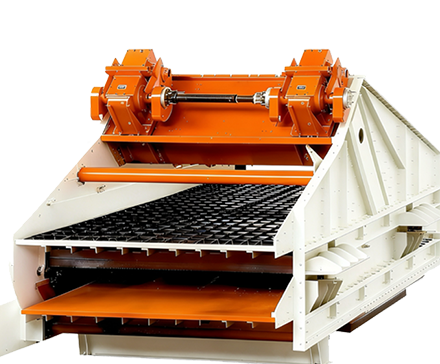
The aperture shape of the screen has a significant impact on screening
efficiency. Selecting the appropriate aperture based on particle size, humidity,
and equipment type is crucial to maximizing the screening effect of the
polyurethane screen.


Leave A Reply
By using form u agree with the message sorage, you can contact us directly now