How to Improve Screening Efficiency Using High-Quality Polyurethane Screen Mesh
For mining, quarrying, and aggregate processing operations stuck with frequent screen clogging, fast wear, and dropping throughput, upgrading to high-quality polyurethane screen mesh is one of the most cost-effective moves to boost overall sieving performance. Unlike traditional woven steel screens that tear easily under heavy abrasive material flow, premium polyurethane mesh is engineered to handle harsh continuous working conditions, cutting unplanned downtime by over 60% while pushing final screening accuracy to above 95% for most mineral and aggregate processing lines.
Precision Anti-Clogging Design Cuts Downtime Dramatically
Top-tier polyurethane screen mesh comes with a carefully optimized 140° tapered aperture design, paired with the material’s natural flexible properties. When running on vibrating screen decks, the mesh slightly deforms with every vibration stroke, jostling stuck near-size particles loose before they can settle and block the sieve openings. This eliminates the common blinding issue that plagues rigid steel screens, even when processing wet clay, fine coal, or damp construction sand that would fully clog a standard metal mesh in less than an hour. Many site operators report they no longer need to pause production for 2 to 3 hours every shift to manually scrape blocked holes after switching over.
Why Efficiency Fades Between Commissioning Day and Month
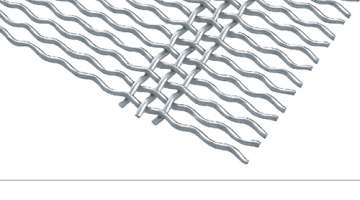
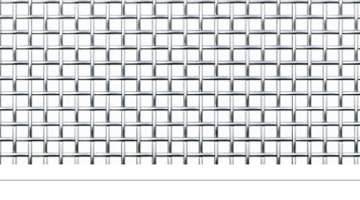
The pattern is familiar enough that it is worth naming before talking about solutions. A deck goes in, runs beautifully for a fortnight, and then throughput slides, the oversize starts carrying visible fines, and circulating load climbs for no reason anyone can find on the control panel. Three mechanisms drive that decline, and a high-quality polyurethane panel addresses each differently. The first is aperture drift: under a heavy bed and continuous vibration, any media deforms, and once the opening has grown, near-size material that should have been rejected starts reporting to undersize, so the cut loosens even though the panel has not failed. The second is blinding or pegging, where near-size particles wedge and then hold the aperture open for everything else, and the third is the loss of open area to paste, wear ribs and surface fouling. Steel wire drifts quickly because it is a fabric under tension; a cast polyurethane panel holds its geometry because the aperture is a moulded shape carrying load through the web rather than through frame tension, and that difference is what turns a fortnight of good screening into a quarter of it.
Open Area as a Probability Problem, Not a Percentage on a Drawing
Once the cut drops below roughly a millimetre, screening stops being a gravity problem and becomes a probability problem, and this is where a well-designed polyurethane panel earns most of its reputation. At that scale, particles stratify slowly because drag dominates weight, the bed has to stay thin for fines to reach the deck at all, and any individual undersize particle may cross several apertures before it happens to drop through one — so throughput scales with how many chances the particle gets, which is another way of saying it scales with effective open area. Because a polyurethane panel is cast rather than woven, the webs between apertures can be made thinner than any crimped wire allows, and effective open area commonly reaches 35 to 45 percent where a woven cloth of the same cut struggles past the low twenties.
Tapered Apertures: Holding the Cut While Passing More Material
The obvious objection to opening up the deck is that more open area means oversize escaping, and the answer to that objection is taper — the single most consequential design decision on a fine polyurethane panel. A moulded aperture can be formed with a generous countersunk entry on the feed face narrowing toward the discharge side, so a particle slightly smaller than the cut slides in freely and is released through, while a particle slightly larger is rejected at the entry instead of being forced through and stuck. That profile also removes the parallel-sided land that gives a near-size particle somewhere to seat, which is precisely the geometry that causes pegging in drilled plate and punched media, and because the narrow end sits on the discharge face, the effective cut stays at specification even as the entry wears.
Heavy-Duty Construction Sustains Consistent High Throughput
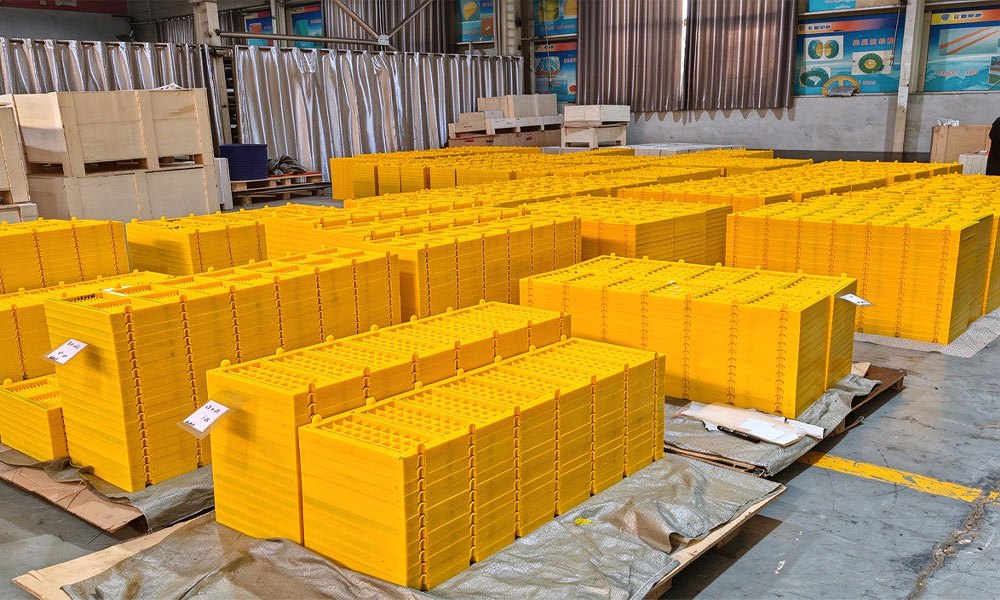
Built with an embedded steel wire skeleton wrapped in high-performance polyurethane, these premium meshes deliver 2.5 times the load-bearing capacity of regular rubber screens, and last 3 to 8 times longer than standard woven steel alternatives. The lightweight polyurethane material also puts far less strain on your polyurethane screen motor and supporting frame, letting you run the system at a slightly higher vibration frequency without extra component wear. This directly lifts your maximum hourly processing capacity, with most operations seeing a 20% to 30% jump in total throughput after installation, no full equipment upgrade required.
Customized Fit for Your Exact Material and Workflow
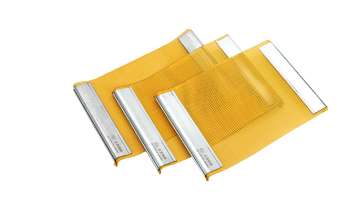
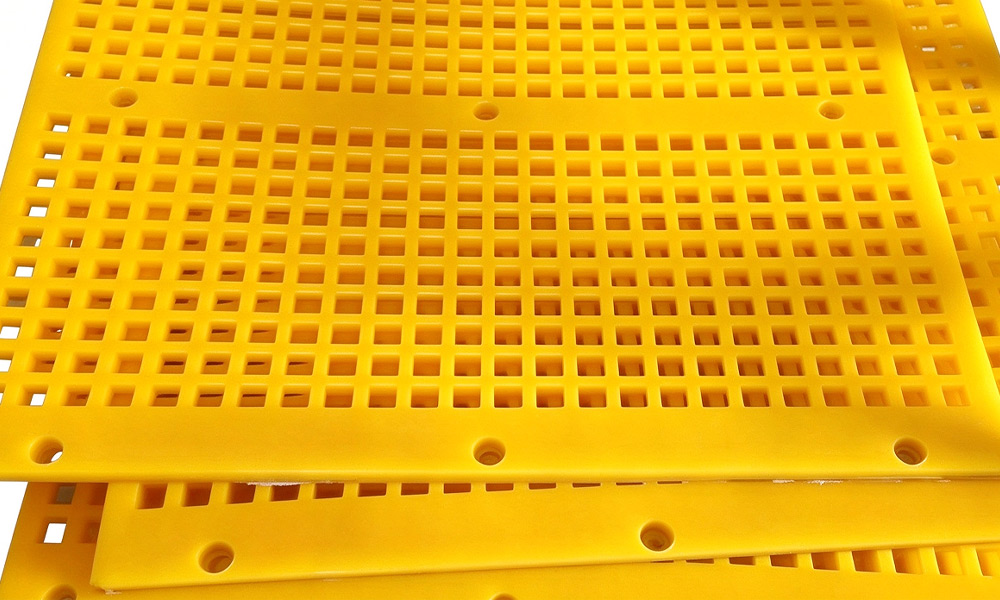
High-quality polyurethane screen mesh supports fully customizable aperture sizes from 0.1mm up to 170mm, with multiple installation options including hook mounting, bolt fastening, and pressure bar fixing to fit nearly all existing vibrating screen models on the market. You can also pick tailored slot, round, or square opening patterns to match your specific material properties, whether you are grading hard rock aggregates, dewatering tailings, or sorting complex mixed construction waste.
If your processing line is still losing money to frequent screen replacements, persistent clogging, and underperforming throughput, investing in premium polyurethane screen mesh will deliver fast, measurable returns for your operation. Reach out to our team today to get a free custom sizing recommendation matched to your exact material type and processing capacity, and start unlocking higher screening efficiency right away.