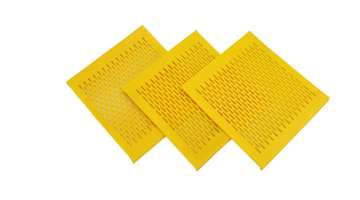
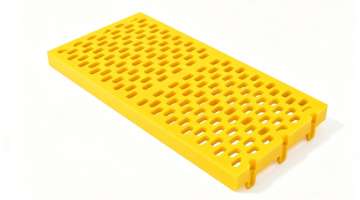
Polyurethane Flip-Flop Screens for Anti-Clogging Material Processing
For mining, coal processing and construction recycling operations that constantly battle stuck sieve holes and plummeting throughput when handling wet, sticky fine materials, self-cleaning polyurethane flip-flop screens have emerged as a game-changing upgrade to traditional metal or rubber screening decks. Unlike standard static screens that trap damp clay, fine coal particles or tangled construction waste in their openings, these purpose-built systems use high-frequency alternating tension and relaxation motion to keep sieve paths clear at all times. This cuts unplanned downtime for manual hole clearing by over 70%, while pushing overall sieving efficiency to as high as 95% even for the most hard-to-process feedstock.
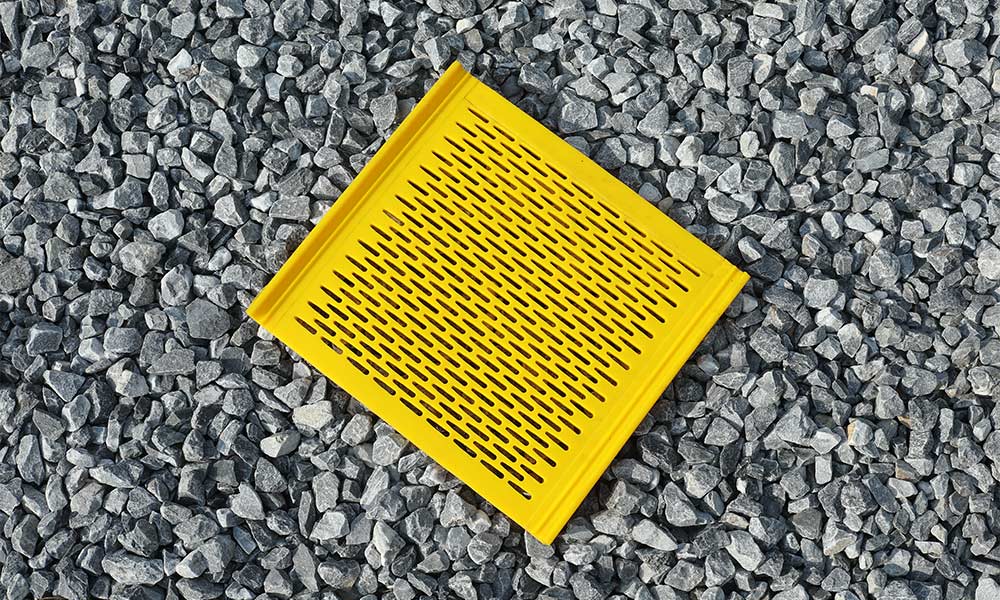
Built-In Self-Cleaning Motion Eliminates Clogging At Source
The core anti-blocking advantage of polyurethane flip-flop screens comes from their unique dual-mass vibration design. Mounted across two separate moving beam frames, the high-elasticity polyurethane panels stretch and snap back hundreds of times per minute, creating a natural "breathing" effect for every sieve opening. This continuous dynamic movement jolts trapped near-size particles loose before they can settle and block the mesh, even when processing high-moisture lignite, sticky clay ore or fine wet sand that would completely jam a woven steel screen in minutes.
How Flip-Flop Motion Breaks the Bridge
The motion is deceptively simple to describe and hard to appreciate until you watch one running. The screening mat is mounted between a fixed frame and a moving frame, and as the machine runs, the mat alternates rapidly between a slack, sagging state and a taut, stretched state — typically somewhere around 500 to 900 cycles per minute depending on the design and the material. Each time the mat goes slack, the apertures close slightly and the bed is thrown upward, lofted and loosened; each time it snaps taut, the apertures open and the bed is accelerated downward at a rate that can reach tens of g locally at the mat surface. That acceleration is the whole point: the material is being flung rather than shaken, the paste bridge experiences inertial forces far exceeding its cohesive strength, and fines are driven through the opening instead of arching across it. Because polyurethane flip-flop screens achieve this by flexing an elastomer rather than by vibrating a rigid structure, the forces go into the material and not into the machine — the supporting frame sees very little dynamic load, which is why these units can be installed on structures that would never tolerate a conventional high-g screen of the same capacity.
Mat Design: Why Polyurethane, and What to Ask For
Flip-flow can be run with woven wire or with elastomer, but polyurethane has become the default for the sticky fine duties, and for good reasons that go beyond habit. Polyurethane can be cast with apertures down to around 0.1 millimetre with tight tolerance and most often in the 0.5 to 3 millimetre band; wire at those sizes is fragile and drifts quickly. It has excellent sliding-abrasion resistance against quartz and silicate fines, so it survives the continuous flexing that would fatigue a metal mat in weeks. And critically, it has the elastic recovery to return to shape hundreds of times a minute for months without taking a permanent set, which is a demanding property that rules out most cheaper elastomers.
Heavy-Duty Polyurethane Construction Cuts Long-Term Costs
Made from premium wear-resistant TPU material, these self-cleaning screen panels last 3 to 5 times longer than standard steel sieve decks, withstanding constant high-impact material flow without tearing or deforming. The flexible polyurethane surface also reduces overall equipment noise by 25% compared to all-metal screens, and its non-stick surface repels damp, adhesive materials far better than rigid metal alternatives. Most models use a modular snap-in design, so site crews can swap out individual worn panels in minutes instead of replacing entire full sieve sections.
Versatile Performance Across Tough Industrial Workflows
These PU flip-flop screens fit seamlessly into nearly all heavy-duty sieving workflows: they handle wet coal classification in coal preparation plants, fine sticky ore grading in mineral processing sites, and even sort tangled construction and municipal solid waste without getting wrapped by plastic strips or fabric scraps. Many field tests show that upgrading to these systems can boost total plant throughput by 20% to 30% while cutting overall screening power consumption by roughly 15%.
If your operation is still wasting hours every week clearing clogged sieve holes and losing money on frequent screen replacements, switching to self-cleaning polyurethane flip-flop screens can deliver immediate, measurable improvements to your bottom line. Reach out to our team today to get a custom sizing recommendation tailored to your specific material properties and processing capacity, and say goodbye to persistent sieving blockage headaches for good.