Selection for Polyurethane Dewatering Panels in Final Stage of Potash Flotation
For potash processing operations working through the final dewatering stage after flotation, picking the right polyurethane dewatering panels is one of the highest‑impact small decisions that can directly boost final product quality, reduce moisture content in the finished potash concentrate and cut down unnecessary downstream drying costs. Many sites stick to generic dewatering panels that work fine for general mineral processing, but they struggle to handle the unique properties of fine potash particles, high brine content and the specific chemical environment that comes right after flotation, leading to frequent clogging, rapid wear and inconsistent dewatering results that drag down overall plant efficiency. A targeted, application‑specific selection scheme for Polyurethane Dewatering Panels solves all these common pain points, making the final flotation dewatering stage run far more smoothly and reliably.
Brine-Proof Compound Before Anything Else
The first question is not “what slot size,” it is “what polyurethane.” Potash circuits run in saturated brine with residual flotation chemistry, so the compound has to resist swelling, softening, and surface tack over months of continuous contact. Polyether-based MDI polyurethane is usually the safer choice here because it handles wet, saline, alkaline-to-mildly-acidic process water far better than a polyester system that may look tougher in the lab and then hydrolyze in the sump. A good Polyurethane Dewatering Panel for potash flotation sits in a medium-hardness band—often around 82–90 Shore A—firm enough to keep the slot edge crisp under a heavy potash bed, yet elastic enough that near-size crystals do not wedge and stick. Tensile, tear, rebound, compression set, and brine-immersion swell should all be on the data sheet; a panel that picks up 3–5% volume swell after 72 hours in plant brine is not “fine,” it is a panel whose aperture will creep, whose crown will soften, and whose cut point will drift while the metallurgist blames the flotation operator. Potash is soluble, the brine is aggressive, and the screen lives underwater for its whole life—compound compatibility is the foundation, everything else is detail on top of it.
Slot Geometry for Soluble, Near-Size Crystals
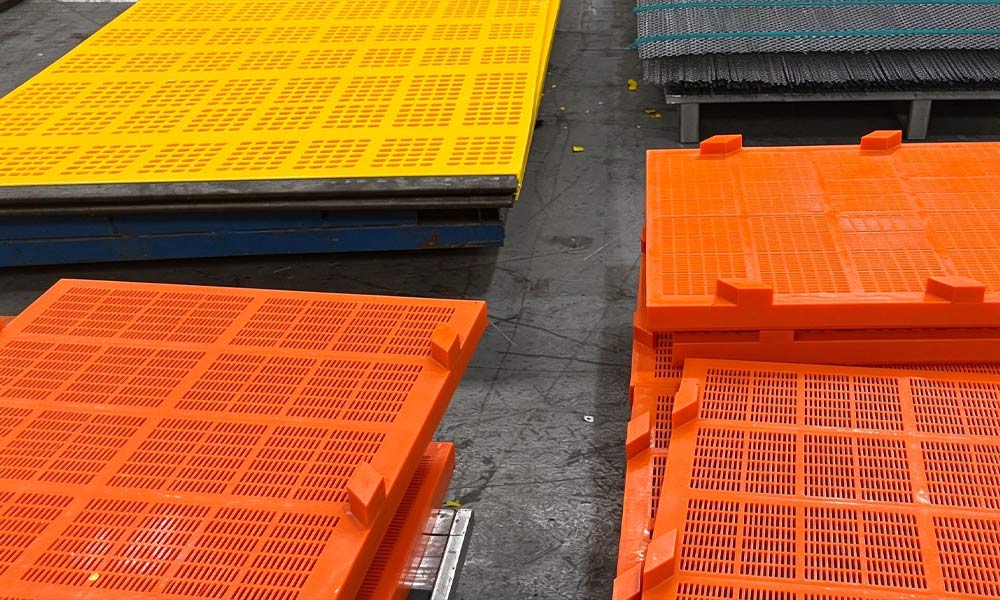
Potash flotation concentrate is dominated by fine-to-medium crystals with a meaningful near-size fraction, so square holes are a trap: a sylvite grain enters halfway, brine surface tension glues it, the next crystal lands on top, and the opening dies without anyone touching a scraper. The better Polyurethane Dewatering Panel uses longitudinal slotted apertures, typically in the 0.3–1.0 mm range for fine potash dewatering, with the slot running parallel to flow so water has a long drain path and crystals ride over the bridge instead of pegging in a four-wall cage. Tapered or inverted-taper slots add another layer of insurance: narrower at the working face or wider underneath depending on the blinding mode, they let the deck relieve itself every vibration cycle and keep effective open area high instead of letting a slime-and-salt film seal the deck. Open area is the constant compromise—most PU dewatering media live around 25–45%, and pushing toward the top of that range drains faster but thins the bridge and shortens life, while going too low keeps the panel alive but ships potash that is still too wet for the dryer or the belt. The selection rule for potash is simple: size the slot to hold the target top size of the product, then choose the highest open area the bridge can survive given the brine, the crystal sharpness, and the deck acceleration.
Thickness, Mounting, and the Final-Cut Zone
The final flotation dewatering deck is not the scalping deck, so thickness and mounting should favor drainage stability rather than impact survival. A Polyurethane Dewatering Panel in this position is often 20–35 mm modular or a thinner tensioned PU mesh where the machine design allows it; too thick and you lose open area and add dead weight to a high-frequency deck, too thin and the crown rounds off after a few weeks and the slot widens past spec. Mounting matters more than buyers admit—pin-and-sleeve, rail, wedge, or bolt-down systems all work, but proud fasteners, loose panels, and mismatched support-frame spacing create local vibration nodes where potash cake builds, brine pools, and crystals dissolve and re-deposit as scale. The discharge lip deserves its own thought: that is where the dewatered potash leaves the deck, so a slightly different slot or a wear-compensated edge there prevents the classic failure where the middle of the panel still drains but the tail of the deck smears moist salt across the product belt. Color-coded zones, wear-indicator strips, and a replacement rule tied to aperture enlargement rather than calendar time turn the final dewatering stage from “someone will notice when it looks bad” into a controlled process variable.
Material Hardness and Chemical Compatibility Matching
The first core step in this selection scheme is to pick a polyurethane formulation with the exact right hardness level and full chemical resistance to the brine and residual flotation reagents present in the potash processing stream, so the panels do not swell, soften or degrade after extended continuous contact with these process fluids. Most well‑designed Polyurethane Dewatering Panels built for potash flotation service use a specialized medium‑hardness formulation that balances enough rigidity to support the heavy bed of fine potash particles, while still retaining the slight elasticity that prevents near‑size potash grains from getting stuck inside the apertures.
Aperture Shape and Deck Layout Optimization
The second key part of the selection scheme is to choose a slotted, non‑square aperture design for the Polyurethane Dewatering Panels, with the narrow opening aligned parallel to the material flow direction on the screen deck, to maximize water passage while still fully retaining the fine potash concentrate particles that are the site’s final valuable product. This design also drastically reduces the clogging issues that are extremely common with standard square aperture panels in potash dewatering, keeping the effective open area consistent across long production runs without the need for frequent deck cleaning or panel replacement.
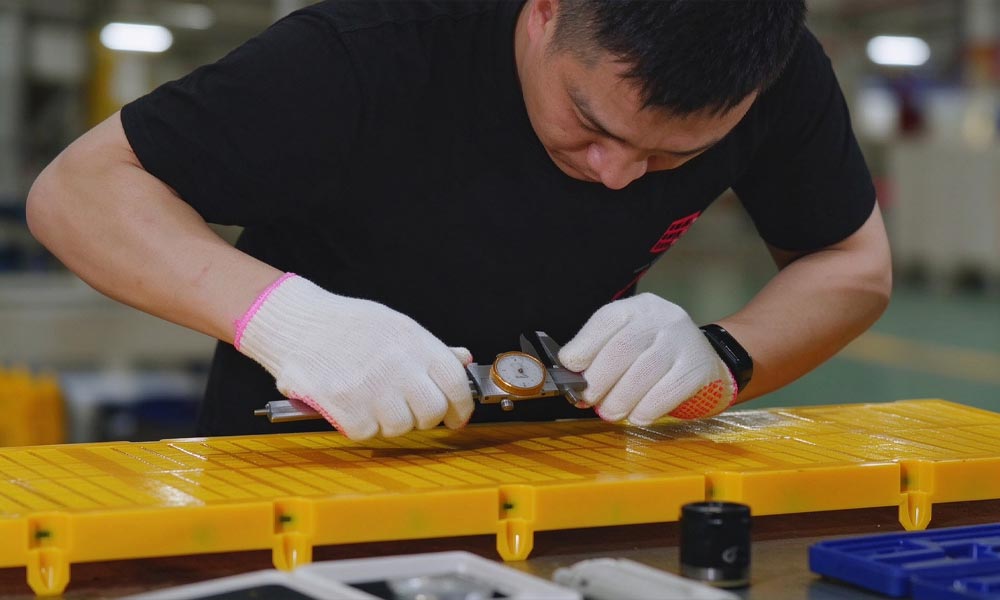
A properly tailored selection scheme for Polyurethane Dewatering Panels that matches the unique properties of potash flotation final stage processing will help your operation get far lower final product moisture, less frequent screen clogging and much longer panel service life than generic off‑the‑shelf dewatering panels. If you need a fully customized selection plan that matches your exact potash particle size distribution, our team can put together a targeted solution that delivers the exact dewatering performance your operation is looking for.