Polyurethane Desliming Screens: Boost Ore Recovery in Mineral Desliming Circuits
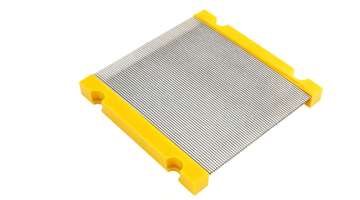
For mineral processing teams that have struggled with low recovery rates, frequent screen clogging, and unexpected downtime from traditional steel desliming decks, switching to purpose-built polyurethane desliming screens fixes most of these common pain points while boosting overall ore processing efficiency by 15% to 25% in most mid-sized operations. Unlike generic metal screens that wear out fast and fail to separate fine slime particles cleanly, these specialized polyurethane variants are engineered specifically for the harsh, high-abrasion conditions of mineral desliming workflows, improving the performance of every downstream flotation and leaching stage.
Why Slime Is Expensive Long Before It Reaches Flotation
The instinct in many plants is to treat slime as "just fine material" and worry about it later, but later is exactly when it gets costly. In flotation, ultrafines compete for reagent and create sluggish, dirty froths; in dense-medium circuits they disturb medium stability and raise magnetite or ferrosilicon losses; in leaching they consume cyanide or acid without returning value and can even increase preg-robbing behaviour where carbonaceous gangue is present. Thickeners and filters feel it too, because a few percent of colloidal slime can multiply settling time and ruin cake permeability, so the plant ends up adding flocculant, renting more thickening area, and still shipping a filter cake that drips. Desliming upstream is cheaper than compensating downstream, and the cut size — often in the 0.075 to 0.5 mm band depending on ore and process — has to be held accurately, because if the screen passes slime it has failed silently, and if it rejects too much coarse it throws payable mineral into the slimes stream. That narrow window is where a polyurethane desliming screen earns its keep.
The Physics of a Fine Cut: Probability, Bed Depth and Why Rigid Media Struggle
Below roughly half a millimetre, screening stops being "let the small stuff fall through holes" and becomes a probability game. Fines have to stratify to the deck surface, find an open aperture among millions, and drop through before the bed carries them past, and any one of those steps can fail. A woven wire cloth at that size is fragile, blinding-prone, and quick to lose aperture tolerance as crimp relaxes under tension; punched plate has too little open area to give the particle enough chances; and both rigid media sit still while paste forms across the opening. A polyurethane desliming screen changes the rules because the elastomeric surface flexes under vibration, releasing near-size and slime agglomerates instead of locking them in, and because the aperture can be cast thin-web and tapered, pushing effective open area well past what wire or plate allows. More open area means more chances per second for a slime particle to report to the underflow, which at fixed cut size usually translates directly into higher desliming efficiency without speeding the machine up until the bearings complain.
Aperture Profile: Taper, Slot Orientation and Holding the Cut Under Wear
On a desliming duty the aperture shape is not decoration. A straight-sided fine hole in any media eventually pegs, because a near-size slime floc finds a parallel land to seat against and then anchors a bridge for everything behind it. Cast polyurethane lets the panel maker form a countersunk entry narrowing to a controlled discharge face, so the governing cut lives on the underside where wear arrives last, and the opening stays near-specification for most of the panel's life rather than drifting from day one. Slot orientation matters just as much: elongated apertures aligned with material travel shear the bed across the opening, keep slime from packing, and give the deck the self-cleaning behaviour that desliming circuits live on when feed moisture climbs. The trade to manage is that a slot passes on the particle's smallest dimension, so the metallurgist has to agree the cut basis — usually a d50 or d80 slime rejection target — rather than copying a square-mesh sieve size from a laboratory screen, or the plant will hit "good tonnes" while quietly sending flaky slime downstream.
Precision Particle Separation for Better Downstream Recovery
The narrow, consistent slotted openings of polyurethane desliming screens are calibrated to separate unwanted fine slime particles from target ore fractions with far higher accuracy than standard woven steel mesh. By stripping out excess ultra-fine slime before materials move to flotation or leaching circuits, you eliminate the common issue of fine slime coating valuable mineral particles, which would otherwise block chemical reagents from making proper contact and drag your final metal recovery rate down by 10% or more. This clean pre-separation step also cuts unnecessary reagent consumption by nearly 20% for most mineral processing lines.
Extreme Wear Resistance for Far Longer Service Life
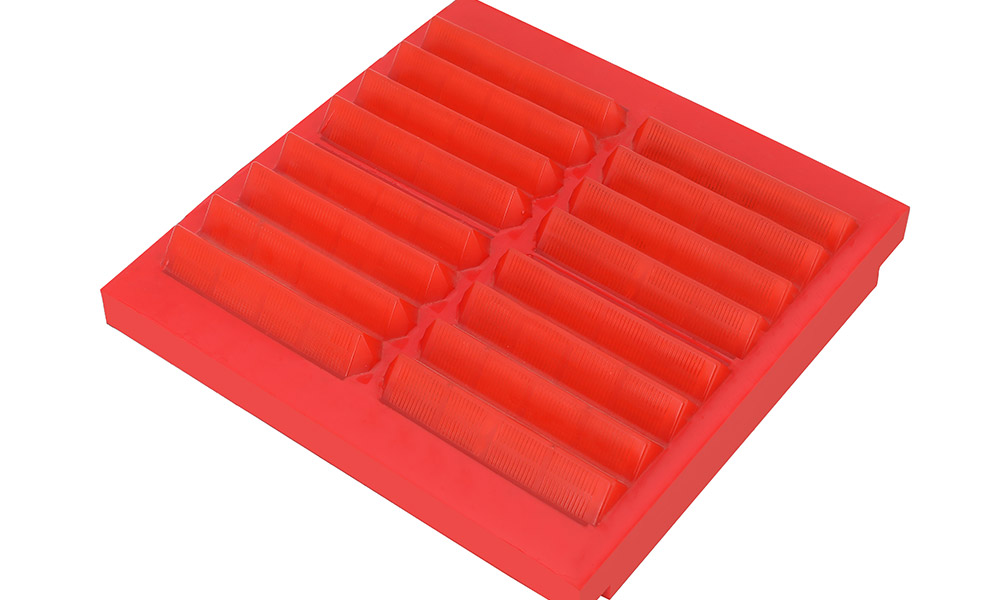
Polyurethane’s unique high-wear formulation delivers 3 to 5 times the operational lifespan of traditional steel desliming screens, even when processing highly abrasive ores like iron ore, coal, or copper tailings. The material’s natural elasticity creates subtle secondary vibration during high-frequency screening, which actively shakes loose stuck fine particles to prevent clogging without any extra manual cleaning, keeping your desliming throughput stable 24/7. The lighter weight of polyurethane decks also reduces overall load on your vibrating screen unit, cutting motor wear and extending the service life of your entire screening machine.
Lower Long-Term Operational Costs
Polyurethane desliming screens feature a modular, quick-installation design, reducing the time required to replace damaged screens and thus significantly minimizing downtime caused by screen replacements. Compared to metal screens, polyurethane desliming screens operate with lower noise, creating a safer and more comfortable working environment for workers. Actual data shows that replacing ordinary metal screens with polyurethane desliming screens in mines increases mineral recovery rates and significantly reduces overall costs due to fewer screen replacements and less downtime.
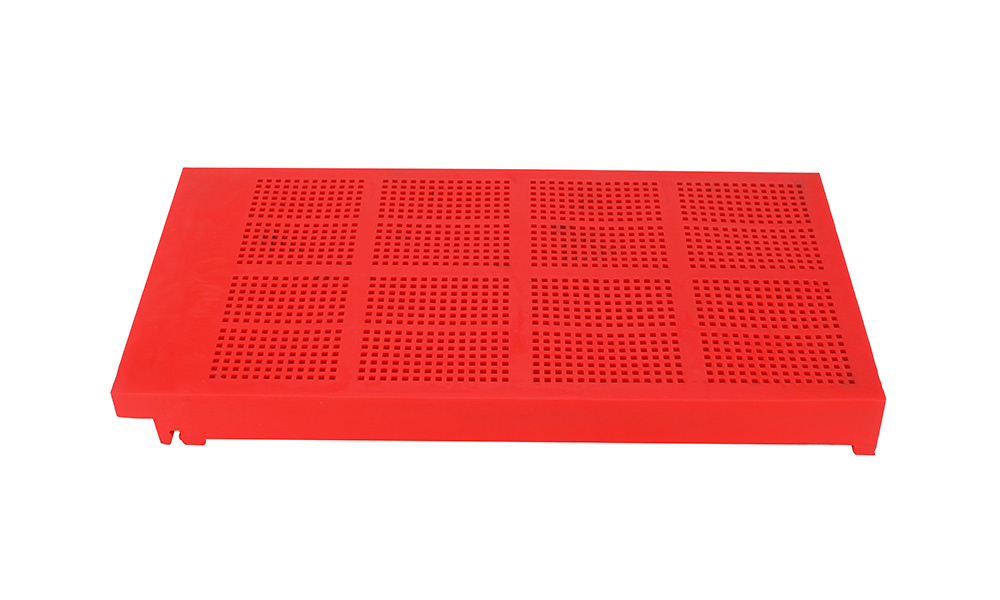
If you’re looking to upgrade your desliming circuit to hit higher recovery targets, our team can help you pick the exact polyurethane desliming screen slot size and configuration that matches your specific ore properties and processing capacity.