For mining and aggregate processing plants, accidental tearing of screens
during material handling can lead to unplanned downtime and significant cost
losses. Understanding how the elongation of polyurethane materials affects the
tear resistance of polyurethane screens helps in selecting screens suitable for
specific operating conditions, maximizing the screen's value. Too low an
elongation results in a fragile screen that is prone to breakage under heavy
impact; while too high an elongation can cause mesh deformation, reducing
sorting accuracy. Therefore, elongation is a crucial factor affecting the
long-term performance of screens.
The Sweet Spot for Balanced Elongation Performance
High-quality industrial polyurethane screens achieve a precise and optimal
elongation range, allowing the material to bend while absorbing the high impact
of heavy materials without easily breaking. When small perforations or scratches
appear on the screen surface, the appropriate elongation allows the surrounding
material to stretch slightly, evenly distributing stress and preventing crack
propagation and tearing. Leading TPU materials on the market achieve this
effect; TPU polyurethane screens also exhibit excellent tear resistance under
continuous high-frequency vibration.
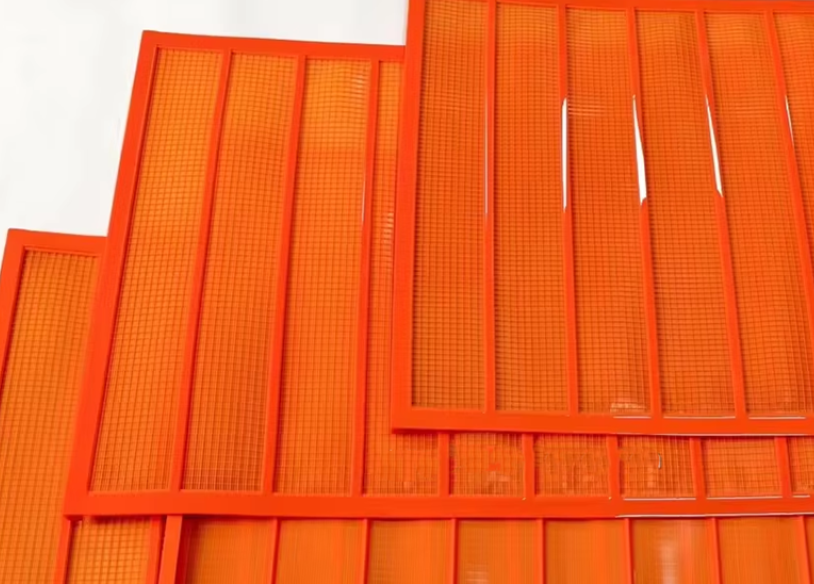
Common Missteps With Poorly Tuned Elongation
Many low-cost off-spec polyurethane screens cut corners on formulation to
save cost, landing far outside the optimal elongation range. Screens with less
than 200% elongation turn rigid and brittle in cold winter worksites, tearing
easily when hit by sharp, angular rock fragments. On the other end, screens
pushed to over 600% elongation to chase extra flexibility lose their structural
stability, stretching permanently under constant heavy load to warp mesh slots,
reduce sorting accuracy, and eventually tear along the tension anchor points far
earlier than their rated service life.
Real-World Operational Payoff
A properly calibrated polyurethane screen with 300-500% controlled elongation
will typically deliver 3 to 4 times longer tear-free service life than generic
low-grade alternatives, even in high-abrasion, heavy-impact processing lines.
This not only cuts your annual screen replacement cost by nearly 40%, but also
eliminates most of the unplanned tear-related downtime that eats into your
site’s daily production targets.
If you are looking to match the exact polyurethane elongation rating to your
specific ore type and operating conditions, we can help you pick the most
cost-effective polyurethane screen formulation that balances tear resistance,
sorting accuracy and long service life.


Leave A Reply
By using form u agree with the message sorage, you can contact us directly now