Poly Ripple Anti-Clogging Screens for Sand Washing Dewatering
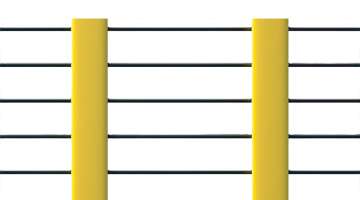
The single biggest and most persistent problem faced by sand washing operations throughout the aggregates sector is the tendency for wet sand to become firmly lodged within the square apertures of normal screening decks, causing the screen to quickly become totally blocked and requiring prolonged periods of scraping, prying and hosing to restore the screen.Poly Ripple Anti-Clogging Screens were developed to directly address this difficulty. They retain the highly effective harp screen configuration of elongated slot openings, but incorporate poly edges around each harp wire and a novel rippled screen face. Together these features ensure that wet sand will not become stuck and cake across the face of the screening medium. It's important to note that these are not 'off-the-shelf' harp screen products consisting simply of plain mild steel wires. Rather, they are engineered to cope with the prevailing conditions of a typical sand washing circuit i.e. very high levels of moisture and abrasive sand. In this article we look at the benefits provided by the rippled screen face to stop flat material becoming trapped on the screen, the role of the poly edges in preventing the slot walls from becoming blocked, the rate of drainage afforded by the open harp construction, and the consequent reductions in screen change-down times for sand washing applications.
Prevention of Flat Material Bridging on Screen
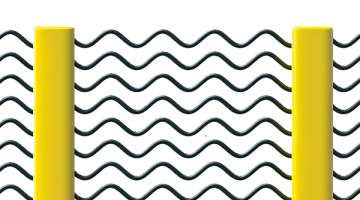
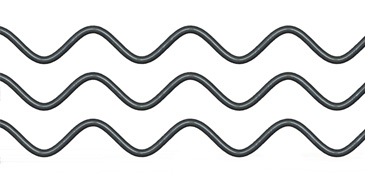
As explained above,Poly Ripple Anti-Clogging Screens differ from other harp media available in that there is no completely planar deck surface on which to receive and screen the sand feed. The deck has a contoured ripple to it, extending across its full length and acting at 90° to the longitudinal direction of the sand travel. As such, any relatively flat pieces of sand and fines are unable to settle horizontally across the face of the screen slots and form a continuous barrier that spans multiple adjacent slots. Instead, the crests and troughs of the ripples cause such material to be inclined on its side, allowing it to readily drop clear through the slot openings. This feature alone is likely to eliminate (or greatly reduce) the degree of blockage seen when operating a sand washer with significant quantities of fine flat particles tending to form a 'skin' across the screening surface, impeding the flow of wash water and associated sand through to the tail end of the screen. Users who have converted to these media frequently comment that the screen face is virtually free of this form of material build-up after initial introduction.
Poly Edge prevents slot blockage
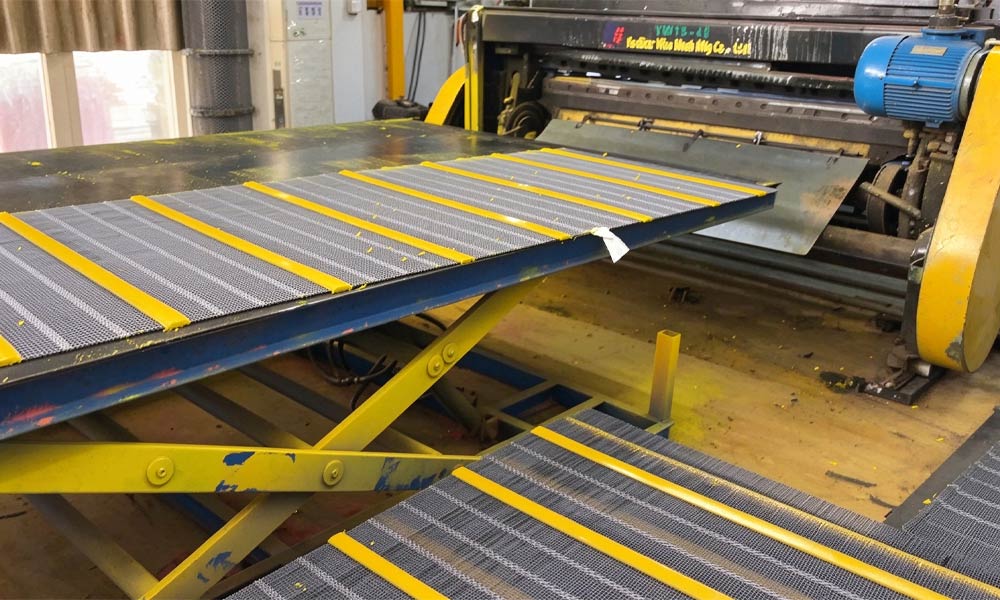
The second key aspect is the incorporation of poly edges along the face of each individual harp wire. The poly edge covers and protects both sides of the slot opening created between each pair of harp wires. On conventional all-steel harp media, the slot is bounded by two exposed, hard, acute-edged steel surfaces which readily allow wet sand to become tightly jammed and remain locked within the slot. The poly edges of Poly Ripple Anti-Clogging Screens will however give a slight degree of movement as the screen vibrates, and so any wet sand attempting to insert itself between the opposing slot walls will be progressively forced to exit the slot as the media continues to oscillate. Wet sand is therefore not able to build up within the slot and continue to accumulate until such point that it has to be removed by operatives. The net effect is that the harp slot apertures will remain largely unobstructed throughout the useful working life of the media, even if subjected to large amounts of wet, clay-laden sand. There will be minimal development of fully-blocked slots along the length of the screen and thus continued good separation of sand and process water.
Increased rate of wash water drainage
Due to the harp-style construction of Poly Ripple Anti-Clogging Screens, there is a substantially greater proportion of clear open area presented to the incoming sand slurry. With the slot openings spanning the entire transverse dimension of the screen, wash water is able to pass through the media with very little impediment and is discharged almost immediately from the top of the screen. A much reduced volume of process water will therefore need to transit the remainder of the screening face, taking the coarser sand with it towards the point of off-take. The result is a marked improvement in the dewatering characteristics of the final sand, typically reducing the residual water content by 3-5% relative to equivalent square-hole media. Consequently, the customer receives a significantly drier sand that is far less prone to tracking along conveyors and forming cohesive 'pads' on storage areas, leading to additional payload being transported. Furthermore, the increased clearance of wash water allows the user to increase the rate of sand introduced to the screen, thereby increasing the overall capacity of their sand washing installation.
Easy to install and maintain
Finally,Poly Ripple Anti-Clogging Screens can be supplied as self-contained modules suitable for direct replacement into virtually any existing sand washing screen. No additional site works or complex tensioning procedures are needed. The poly edges also protect the terminations of the harp wires, eliminating the risk of loose wire ends breaking away and cutting operatives' hands, damaging downstream equipment or becoming entrained in the final washed sand. Of course, given the substantial cross-section of high-tensile steel embedded within each poly edge, these media will have a considerably greater load-bearing capacity than competing rubber-based anti-clog alternatives, enabling them to accommodate correspondingly higher rates of sand through the system. Overall, the longevity of Poly Ripple Anti-Clogging Screens should lead to a considerable reduction in the amount of time required by the site team to assess, rectify and renew screens.
In summary, sand washers can now avoid the recurring issues of flat material settling across their harp screens, slots becoming progressively blocked, poor rates of wash water drainage and short service lives of their screening media. By adopting Poly Ripple Anti-Clogging Screens they will benefit from the elimination of flat sand bridging on the deck, automatic clearing of wet sand from the slot faces, greatly enhanced drainage of wash water to yield a lower final moisture sand, and a major reduction in future screen maintenance activity. Only in the case of removing very coarse and angular oversize sand will a suitably specified perforated plate be likely to prove superior, but for the vast majority of sand dewatering and classification tasks, these media offer an unrivalled resistance to clogging.