Custom Anti-Clogging Screen for Quarry Rock Classification
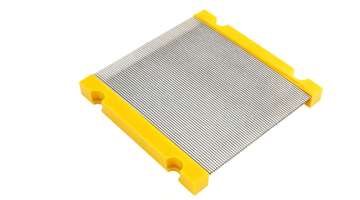
The one major headache that plagues almost every rock classification operation in a quarry, crusher or minerals plant is the build-up of 'near size' rock in the pre-fabricated screen openings, which can result in complete blockage of the screen and significant loss of production time. Typically, this disruption will cause multiple shifts to fall well behind target output levels.Anti-Clogging Mesh Screen allows the user to create a completely bespoke screening media solution with individually designed opening dimensions, profiles and arrangement. Rather than having to adapt your rock classification process around a limited selection of stock anti-clog screen designs, you can design a media solution to suit the precise characteristics of your rock, desired product cut-off and prevailing operating circumstances. Below we discuss each of the key advantages offered by designing your own fully customized anti-clogging screen openings to overcome your particular rock-related clogging challenges. We also explain how dynamic aperture action can help sustain elevated levels of free screen area throughout the operating life of the screen, and finally why using a range of varied custom aperture sizes and arrangements over the whole length of the screen can substantially increase your overall throughput and provide greater consistency of classification.
Overcome Your Specific Local Rock-Induced Clogging
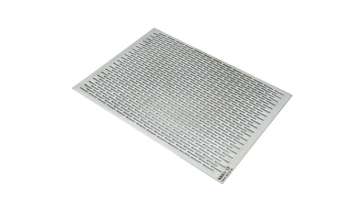
By using custom designed screen openings, you can directly address the root cause of the clogging problems you currently experience with your rock classification process, as opposed to trying to accommodate standard factory-supplied openings. Perhaps you encounter a high proportion of thin planar rock fragments in your circuit, which readily span the width of typical square openings? You can request the screen supplier to fabricate suitably elongated slot-shaped custom apertures such that the thin rock will be unable to rest across the full opening dimension. Or if your process encounters many spherical near-size rock pieces, which can become firmly lodged in conventional circular apertures, you may find it beneficial to adopt a custom self-cleaning taper profile. There is a virtually infinite variation of opening configurations and dimensions that can be adopted to resolve your local clogging difficulties, and you don't need to undertake any further modification to your existing vibratory screen to reap the rewards. Some customers have observed an immediate >60% reduction in clogging-induced lost production upon converting to a bespoke anti-clogging screen.
Sustain Greater Free Screen Area Throughout Screen Operating Life
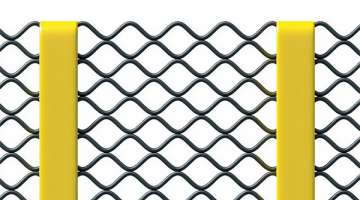
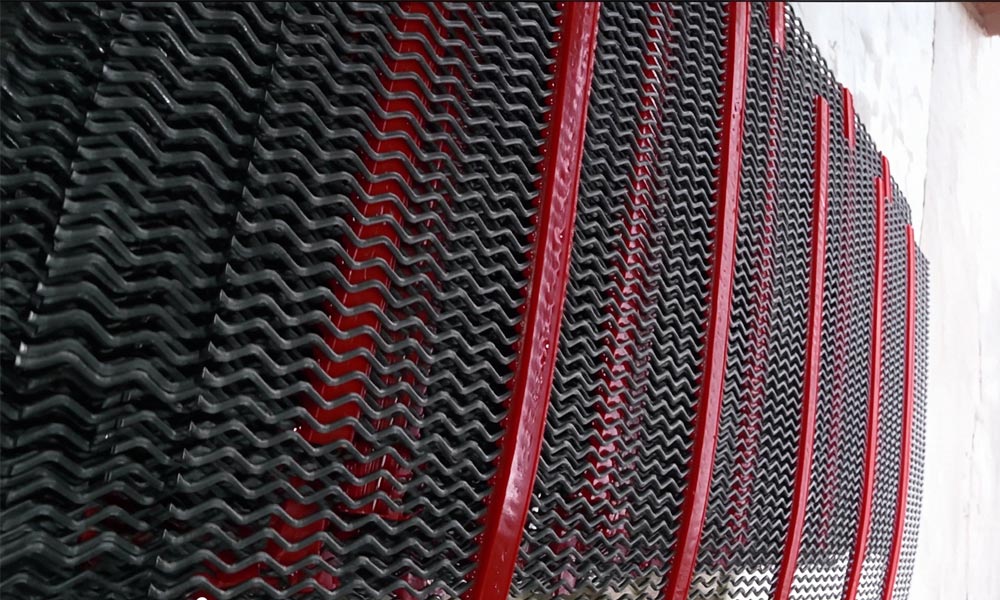
A key feature of the Anti-Clogging Mesh Screen is that it incorporates strong tensile strength base wires together with a resilient elastomeric material around the perimeter of each individual screen opening. As a result, each aperture will undergo some degree of flexing and distortion as the screen is vibrated through each pass of its operating cycle. With conventional pre-formed steel screen panels, there is absolutely no movement of the screen opening during operation, allowing rock to progressively fill and block each fixed aperture. The varying degree of deformation of each dynamic opening will therefore prevent any given near-size rock fragment from becoming securely seated in one location, helping to keep the effective free screen area much higher for longer. You can thus continue to maintain a relatively constant process input rate to your rock classification circuit without needing to reduce your throughput to account for the gradual reduction in free screen area that will inevitably occur with standard static openings.
Adopt Optimal Range of Custom Opening Sizes and Arrangements Along the Screen Length
As discussed above, you can specify a wide variety of different aperture dimensions and contours for your anti-clogging mesh screen, and take advantage of this to optimize the distribution of rock classification across the full length of the screen. For example, in the initial high-intensity wear region, you will want to maximize the number of robust large-diameter custom openings to extract the coarser fractions of 'near size' rock from the circuit as quickly as possible. From this point onwards, the screen can then progress to an array of successively reduced aperture sizes to segregate the residual rock stream into the required final product size(s). Adopting this graduated pattern of custom screen openings will remove the need for the 'one-size-fits-all' compromise that would otherwise be imposed, enabling you to realize a corresponding increase of ~20% or more in total screen output. Such an arrangement would be extremely difficult to achieve with conventional fixed rigid steel mesh.
Achieve Much Tighter Cut-offs for Classified Rock Products
Finally, the ability to manufacture highly controlled custom dimensions for your chosen screen opening will enable you to achieve a significantly tighter cut-off of rock into each of your respective product streams. There will be little to no opportunity for your product to drift from its nominated specification, such that you are compelled to over-classify large quantities of near-size material for re-crushing. Consequently, you will benefit from improved process efficiency, extended component life within your crushing circuit and a higher percentage of your rock meeting your customers' product specification. As a result of all of the foregoing, you can expect to see a substantial uplift in the profitability of your rock classification operation.
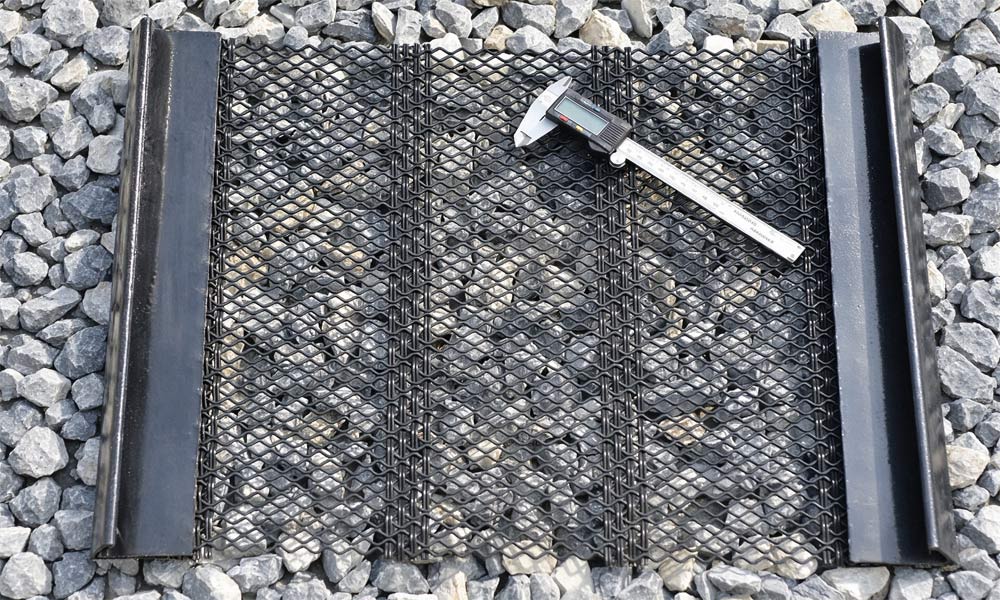
Clearly, there is a significant opportunity to improve the effectiveness of your rock classification process by moving away from conventional fixed rigid steel mesh and utilizing the capabilities of an Anti-Clogging Mesh Screen to implement a bespoke set of custom-designed openings. In summary, these will help eliminate the impact of your local rock characteristics on your screen's performance, allow the free area to remain sustained over successive operating cycles, facilitate increased volumes of rock to pass through the screen, and give you a much closer control over your cut-off to produce your desired products. Of course, for some extreme duty applications requiring the separation of very large boulders, thick manganese steel punched plate will continue to be the preferred option; however for most subsequent classification requirements, you should expect to gain considerable operational benefit from implementing an Anti-Clogging Mesh Screen.