Correct Installation for Screen Mesh: Step-by-Step Guide for Mineral Screens
For mineral processing sites that run vibrating screening equipment 24/7, improper screen installation often leads to uneven tension, premature screen tear, abnormal vibration, and hours of unplanned downtime that eats directly into daily production output. Many maintenance teams shared that they used to rush through screen replacement jobs without following a clear standardized workflow, only to find the new screen came loose or failed within a few days of heavy operation. A practical, easy-to-follow Installation Guide for Mineral Screens helps you avoid all these common mistakes, ensuring every new screen panel runs reliably for its full rated service life.
Pre-Installation Deck Surface Preparation
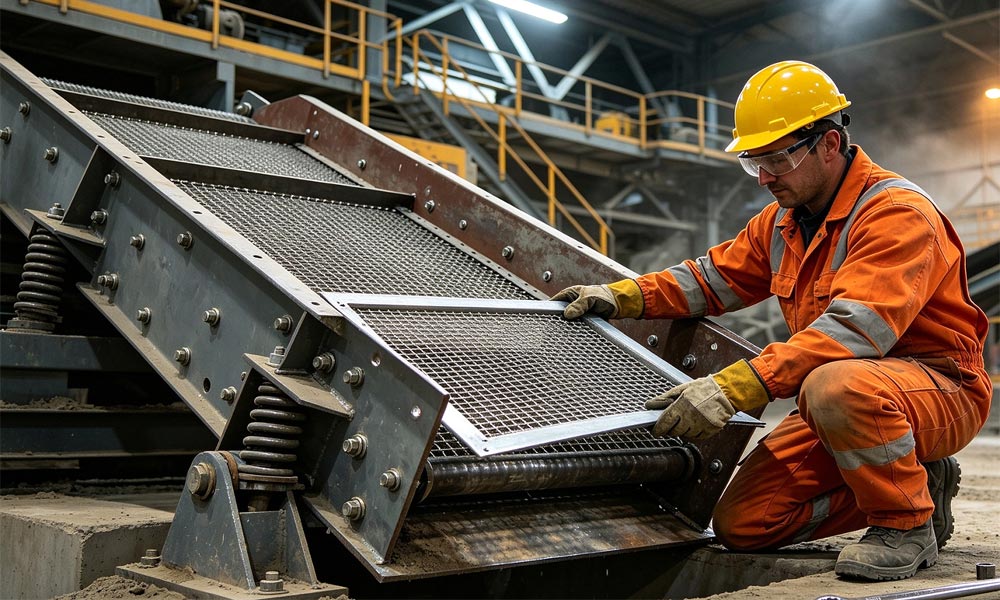
The first critical step before you even place the new screen panel onto the deck is to fully clear all leftover ore fines, rust, old adhesive residue and damaged fastener fragments from the screen support beams, and check every beam for deformation, loose mounting bolts or worn rubber damping pads that could cause uneven support for the new panel. Skipping this step almost always creates hidden stress points that tear the new screen prematurely, so this preparation phase is a non-negotiable foundational part of any proper Installation Guide for Mineral Screens.
Panel Alignment and Pre-Tensioning Calibration
The second core installation step carefully positions the new screen panel perfectly centered on the deck, making sure the edge tensioning hooks line up exactly with the mounting bolt slots without any twisting or forced prying to fit, then tighten all tensioning bolts gradually and symmetrically across both sides of the deck in a crisscross sequence, instead of cranking one side all the way tight before moving to the next. This symmetric tightening method ensures the entire screen surface gets perfectly even tension distribution with no localized over-tensioned spots, which is the most important detail that most generic Installation Guide for Mineral Screens often fails to emphasize clearly enough.
Mechanical Reprocessing: Shred, Regrind, Reuse
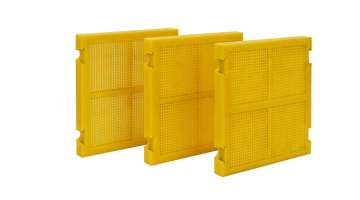
The most honest first step with a dead Polyurethane Screen Panel is not to dream about pyrolysis plants, it is to ask whether the material can come back as lower-spec product without burning anything. Mechanically, worn panels get sorted by compound family—polyether vs polyester PU, filled vs unfilled, steel-insert vs pure elastomer—because mixing chemistries is how you make regrind that cracks in the sun. Clean panels get shredded, cryo-milled or ambient-ground, sieved, and then reintroduced as filler or binder stock in applications that do not need micron-level slot accuracy: wear liners, truck-bed impact pads, conveyor skirt rubbers, floor mats, anti-abrasion tiles, even new non-critical PU components where a 10–20% regrind load barely touches performance. A mine that sends every Polyurethane Screen Panel to a granulator instead of a dumpster turns a disposal cost into a liner budget. The catch is contamination: process chemicals, magnetite slime, flotation reagents, and embedded steel hooks must be removed first, or the regrind carries the plant's entire slurry history into the next product. Done properly, mechanical recycling is boring, scalable, and far greener than shipping yellow plastic across three provinces to a hole in the ground.
Chemical Routes and Energy Recovery
When a Polyurethane Screen Panel is too contaminated, too mixed, or too degraded for regrind, the next tier opens up. Polyurethane can be depolymerized—glycolysis, aminolysis, hydrolysis—back toward polyols and intermediates that a urethane system can reuse, though in real mining regions the commercial plants doing this at scale are still patchy, and a single screening plant will not justify a reactor. More immediately available is energy recovery: a controlled cement-kiln or licensed waste-to-energy route can burn PU with a higher calorific value than coal, capturing heat while meeting emissions limits, which beats landfill but sits lower on the hierarchy than reuse. The environmentally literate buyer should pressure suppliers on this: does the OEM run a take-back scheme, do they audit the incinerator, is the kiln capturing clinker value and scrubbing HCl/NOx, or is "energy recovery" a polite word for a bonfire with paperwork? A Polyurethane Screen Panel containing mineral fillers, steel inserts, or flame-retardant packages needs sorting before either chemical or thermal recovery, because the filler that extends wear life on a zinc deck also complicates the moment you try to recycle the thing.
Design-Out the Waste Before It Exists
The greenest waste Polyurethane Screen Panel is the one that never becomes waste, and that starts at the quotation. Plants can specify mono-material panels where the PU, the edge insert, and the side seal are separable in thirty seconds, instead of buying a molded brick with steel buried so deep the recycler charges more to process it than the scrap is worth. Suppliers can mark compound type on the panel, document Shore, filler, and anti-statics right into the tag, and offer buy-back credits tied to returning worn modules in sorted totes. Zoned decks help here too: instead of scrapping the whole Polyurethane Screen Panel assembly when only the feed-end module is blind, the plant pulls three modules, returns them sorted by compound, and keeps the discharge zone running—less tonnage to dispose, less virgin PU to mold. Some screen builders now run closed-loop programs where returned polyether PU from coal-dewatering decks becomes wear strips for the same plant's chutes, so the material circles inside one flowsheet instead of crossing a continent twice. That is not tree-hugging; that is procurement logic with a smaller waste-hauling line item.
Post-Installation Test Run and Inspection
The third final step after all tensioning work is completed is to run the empty screen for 3 to 5 minutes at normal operating vibration frequency, then shut down the equipment to double-check every tensioning bolt for slippage, confirm the screen surface does not produce any abnormal local bulging or bouncing, and verify all fasteners are locked securely with lock washers. This short test run catches almost all hidden installation errors before you start feeding full volume material onto the deck, making this final verification step a high-value addition to your site’s customized Installation Guide for Mineral Screens.
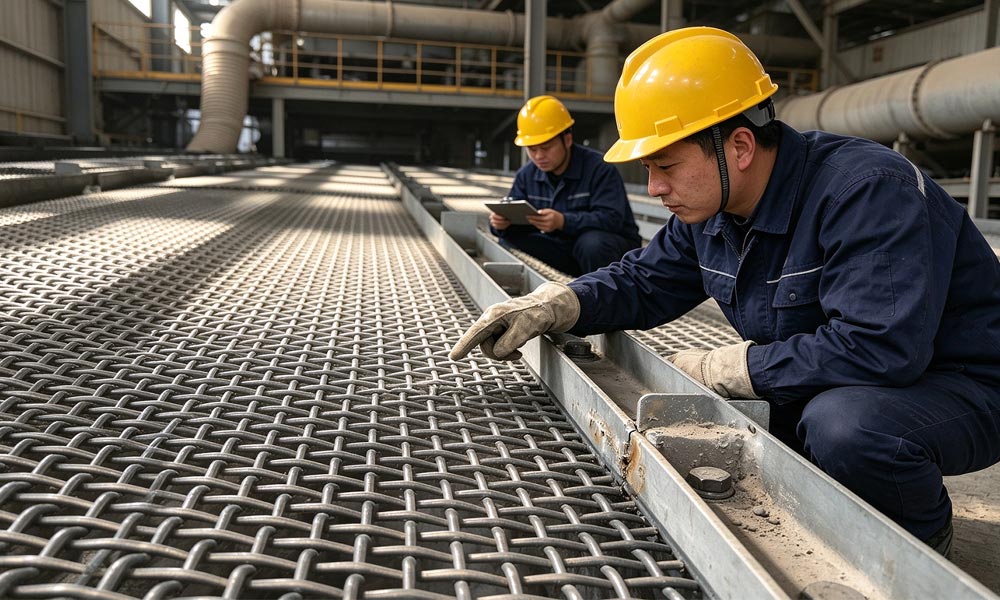
Following this full standardized installation workflow will drastically reduce post-installation screen failure rates, extend the average service life of every new screen panel you install, and keep your screening line running at stable classification efficiency for far longer. Standardized installation plus scientific recycling management helps mineral processing plants lower maintenance cost and achieve sustainable operation.