Corrosion and Wear Resistance of Metal Woven Screens in the Ore Screening Process
For mine operations processing acidic leach ore, high-sulfur coal or salt-containing mineral deposits, premature failure of metal woven screens from combined abrasive wear and chemical corrosion can cut production uptime by 40% or more. Unlike standard general-purpose mesh that only resists one of these two hazards, screens built for harsh ore screening environments need to balance both properties to deliver consistent service life even under 24/7 continuous operation. Field data from North American hard rock mines shows properly specified corrosion and wear resistant metal woven screens last 3 to 5 times longer than regular low-carbon steel alternatives, slashing annual screen replacement costs by over 60%.
Abrasive Wear Performance Against Sharp Ore Particles
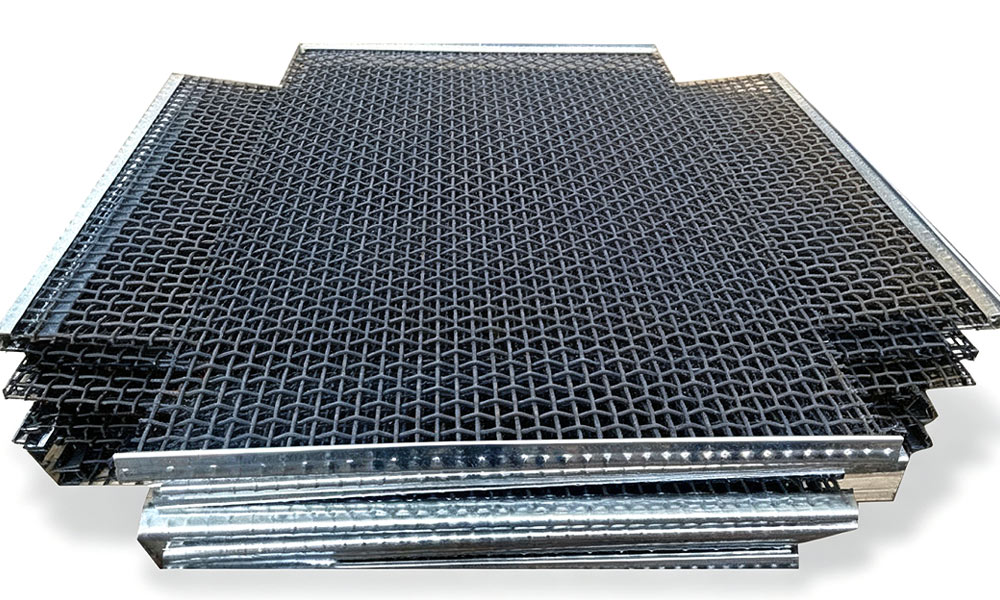
High-grade metal woven screens for ore processing use high-tensile manganese alloy steel wires that go through precision quenching treatment, reaching a surface hardness of HRC 42-48 to withstand constant scouring from sharp, angular ore fragments. The interlocked crimped weave structure distributes impact force evenly across every wire, preventing localized wear that creates thin, weak spots that tear easily under heavy load. Even when processing 50mm+ granite or iron ore chunks, these screens maintain their structural integrity for thousands of operating hours without developing unexpected holes or wire breakage.
Abrasion First: Why Wire Wears From the Outside In
The wear everyone expects is abrasive, and on a metal woven screen it shows up exactly where you would predict if you watch the bed rather than the drawing. Angular quartz, chert, and iron oxide particles travelling across the crown of a crimp remove metal by micro-cutting, so the wire does not lose diameter evenly — it develops flats on the high points, the crimp crown drops, and the aperture opens up along the direction of travel. That last part is the expensive consequence: the panel may still be structurally intact, but the cut size has drifted, and the plant is shipping oversize or sending misplaced fines to tails without anyone having changed a setting. Harder wire helps up to a point — high-carbon spring steel and work-hardened stainless resist micro-cutting better than mild steel — but hardness has a partner called ductility, and a wire that is too hard becomes brittle under the cyclic flex of the machine, which hands the failure mode over to fatigue. In dry, siliceous ore the practical answer is usually a medium-high carbon steel with a heavy gauge and a crimp pattern that spreads load across intersections; in mixed ore with hard bands it is often better to accept slightly faster abrasive wear in exchange for a wire that will not snap.
Impact Fatigue: The Failure That Looks Like Sudden Death
What operators describe as "the screen just let go" is usually impact fatigue, and a metal woven screen is more exposed to it than people expect because woven wire has no backing structure of its own. Every coarse lump that lands on the feed end bends the wire locally, and every vibration cycle straightens it again; the metal never gets to rest. Over time the crimp radius develops micro-cracks, the crack grows inward from the surface, and one morning a whole row of wires snaps near the feed lip where the energy concentration is highest. This is why impact zones on ore decks age differently from the rest of the panel, and why specifying the same wire gauge across the whole deck is a false economy. The defense is structural rather than purely material: heavier gauge and a double or intermediate crimp in the first metre, support bars or a capped grid underneath the landing zone, and — often overlooked — reducing the drop height from the chute so the wire is not being hit by the feed but by material already moving with the deck. A metal woven screen does not hate impact; it hates repeated local bending with no support, and most "impact failures" are really support-and-specification failures wearing a dramatic costume.
Corrosion Resistance for Harsh Ore Processing Conditions
For sites running wet ore screening with acidic process water, high-sulfur mineral content or coastal salt-laden ore deposits, the metal woven screens are often treated with hot-dip galvanizing or made from stainless steel grades 304/316 to block chemical oxidation. This prevents the common issue of rust forming on wire surfaces that accelerates abrasive wear, where corroded rough wire edges grind down far faster than smooth, corrosion-protected surfaces. Even in pH 3 acidic leaching environments, these specialized screens show no obvious pitting corrosion after 6 months of continuous exposure.
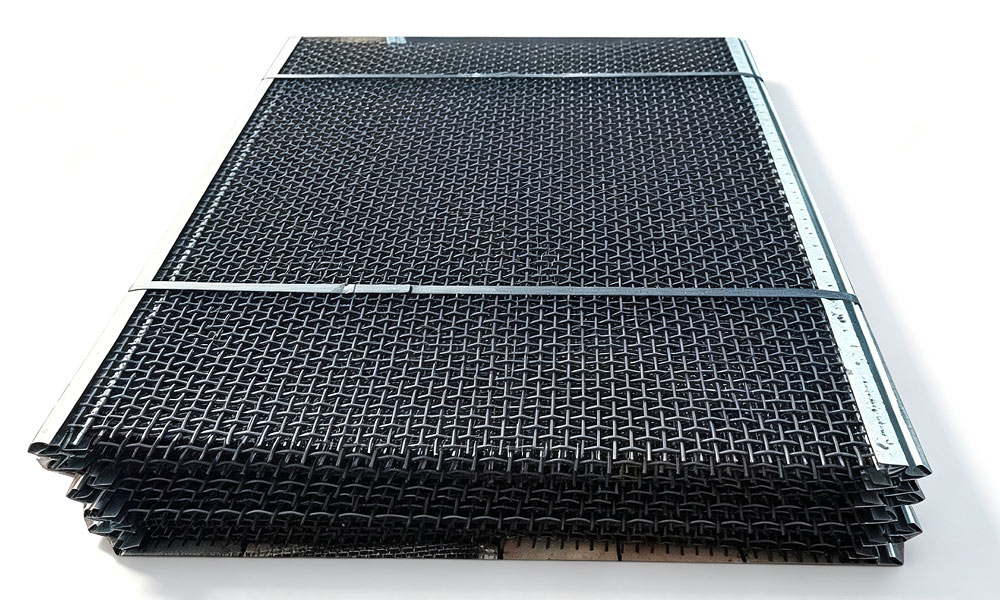
Synergistic Performance in Real-World Ore Screening Scenarios
The combined corrosion and wear resistance eliminates the hidden failure mode where minor corrosion weakens wires first, making them far more vulnerable to sudden breakage under normal ore impact. Most operations no longer need to schedule frequent mid-shift inspections for rusted or worn screen sections, and keep their ore grading accuracy consistent across the full service life of the screen.
If your plant is experiencing frequent downtime for maintenance due to material corrosion and screen wear—resulting in persistently low production efficiency and reduced output—please feel free to contact us for a free consultation. We can help you select the most suitable metal woven screens and specifications for your specific operating conditions, thereby enhancing overall screening efficiency while lowering long-term costs.