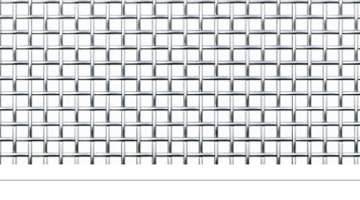
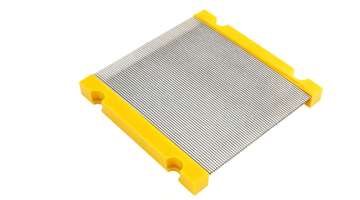
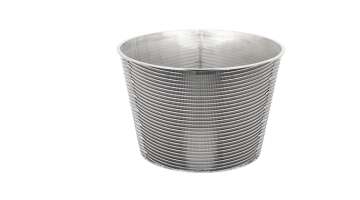
Mesh Blinding vs Particle Pegging
Do you frequently encounter issues with screen blinding and particle wedging during material screening? In fact, there is a significant difference between the two. What are the causes of these problems, and how can they be resolved?
Mesh Blinding: When the Screen Gets “Sweaty”
Here’s the thing: if your screen’s losing capacity and fine particles are just sitting on top like wet sand, you’re dealing with mesh blinding. This happens when sticky materials—think clay, wet sand, or recycled asphalt—cling to the mesh openings instead of passing through. It’s not a blockage; it’s adhesion. The fix? Start with water sprays,just a light, targeted mist can wash away the gunk without drowning the feed. Or switch to a polyurethane screen with a self-cleaning surface. And never underestimate the power of a good rubber ball cleaner mounted above the screen. It bounces, knocks loose, and keeps things moving.
Particle Pegging: The One Rock That Stops Everything
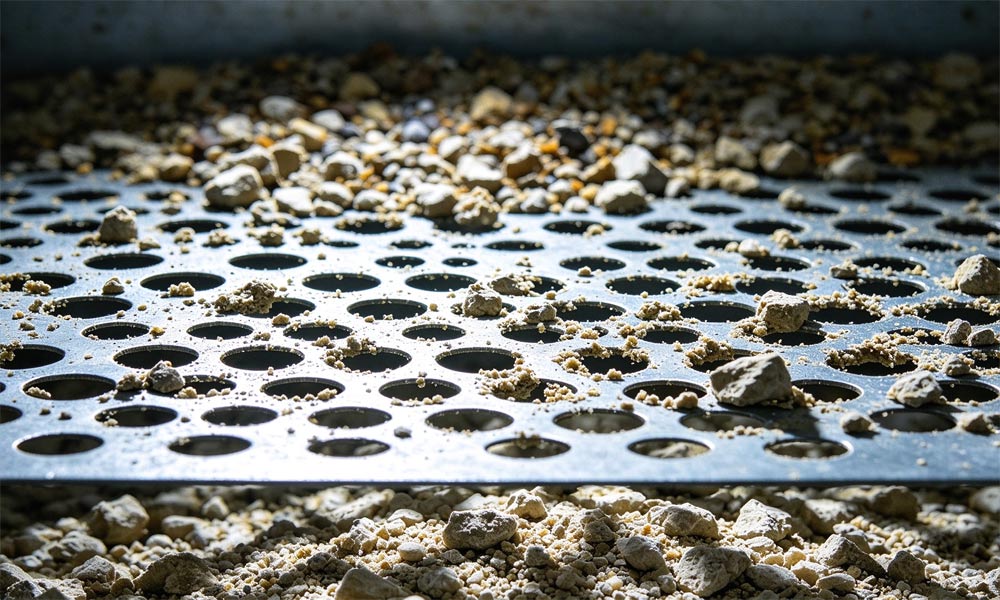
If you’re seeing individual particles—usually flat, elongated, or irregular—sticking vertically in the holes like a nail in a board, that’s particle pegging. It’s not about stickiness; it’s about geometry. Think of a long, thin piece of crushed stone jamming sideways in a round hole. This is common with recycled concrete or slag. The solution? Use a larger mesh opening than you think you need, or go for a square-hole screen instead of round. Also, tweak your feed angle,particles will slam in at the wrong angle if the angle is too steep. A gentler slope gives them time to lay flat and fall through.
Diagnosis in Five Minutes, Not Five Shifts
The fastest field test needs no lab. Lock out the deck, let it run clear if safe, and look. A continuous clay or slime layer that brushes off to reveal clean holes underneath is blinding. Openings that stay blocked after brushing, with distinct particles wedged in each hole and ends poking through the underside, is pegging. Blinding usually attacks the feed end first, where moisture and slime are freshest; pegging often builds through the mid-deck, where the near-size fraction has had time to stratify and crowd the holes. Sound tells on you too: a dull, loaded thud with short stroke suggests a deck buried in sticky fines, while a metallic rattle with otherwise normal motion suggests stones rattling in trapped positions. A useful rule of thumb is that if more than about 15 percent of the feed lands within roughly ±10 percent of the aperture, the circuit is primed for pegging no matter how pretty the mesh looks on the quotation.
Fixing the Right Problem
Blinding wants surface and stratification fixes: better spray placement, heated decks for hygroscopic fines, anti-blinding ball trays or slider rings under the mesh, PU or rubber panels whose flex breaks the adhesive bond, and sometimes simply drying the feed or splitting the duty across two decks so one panel is not asked to scalp, size, and de-slime at once. Pegging wants aperture and kinematics fixes: move from square holes to slotted, harp, diamond, or triangle self-cleaning weaves, let longitudinal wires vibrate independently so a wedged chip gets shaken loose, open the aperture a controlled amount relative to the true target cut, raise stroke amplitude inside the bearing limit, and kill the sag by re-tensioning the cloth so the deck snaps instead of swings. Polyurethane with tapered apertures is the rare media that fights both—wider underneath than on top, so near-size particles are encouraged downward, while the panel flexes sticky fines off the crown—but even PU will blind under filthy clay slurry and will peg if the slot is badly matched. The point is not “buy self-cleaning mesh”; the point is diagnose first, then match the media, the motion, the spray, and the PSD to the failure mode instead of spraying money at symptoms.
Keep a simple log: note the material you’re screening, the damp weather , and which issue showed up. After three weeks, you’ll see patterns: “Every rainy Monday, blinding spikes.”Or“Pegging always happens with recycled brick.” That’s not luck but insight. Most operators replace screens blindly. The smart ones tweak the process. And that’s how you stop wasting time and money.