The Vital Role of Lock-Crimp Woven Wire Screens in Precision Grading and Aperture Stability
Facilities involved in ore and aggregate screening are well aware that standard woven wire screens often suffer from wire displacement after a short period of use. As apertures enlarge, oversized particles contaminate the finished product, rendering the entire batch non-compliant and forcing production line rework. The advent of lock-crimp woven wire screens has resolved the issue of aperture deformation, thereby enhancing overall screening efficiency.
Lock-Crimp Structure: Securing Wire Positions at the Source
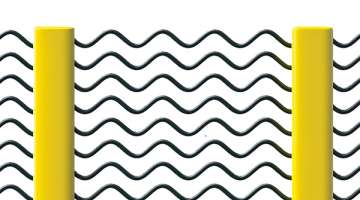
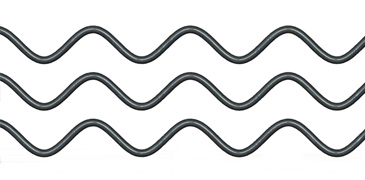
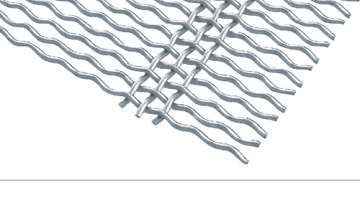
While plain-weave screens rely on the mutual pressure between wires to maintain their structure, lock-crimp screens feature warp and weft wires with pre-formed, interlocking corrugated grooves. Once woven, the wires lock securely into these corresponding grooves, virtually eliminating wire slippage or displacement. Even under the impact and vibration of heavy ore loads, the wires remain fixed and apertures retain their shape; this structural design offers aperture stability several times superior to that of standard woven screens.
Consistent Aperture Output for High-Precision Grading
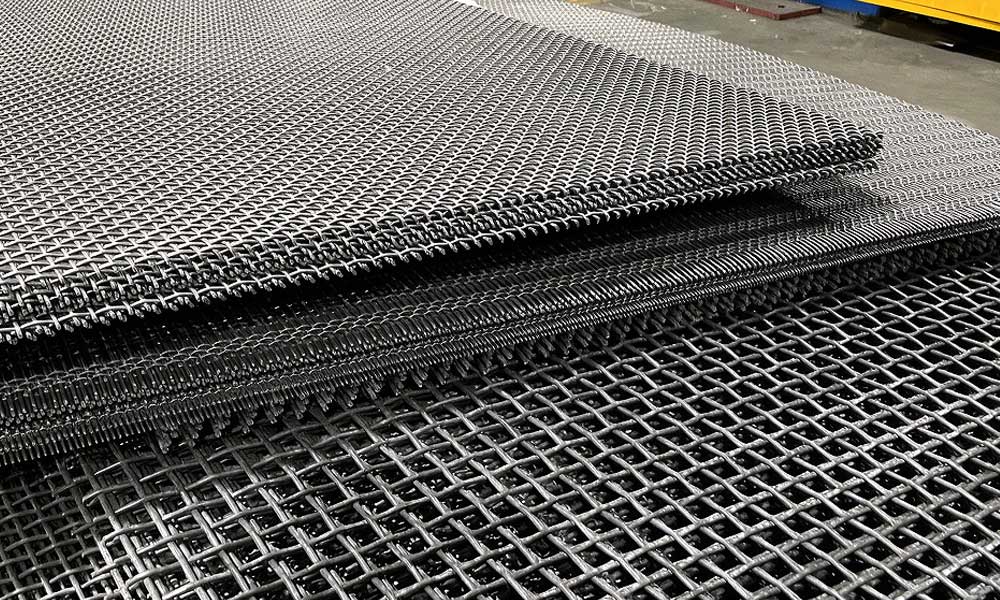
In precision grading applications, lock-crimp woven wire screens maintain aperture size tolerances within 2% throughout their service life, preventing localized aperture enlargement. Data shows that adopting these screens increases the pass rate of graded product particle sizes from 78% to 97%. This eliminates customer returns caused by oversized particle contamination and boosts throughput efficiency in the screening process.
Superior Wear Resistance and Longevity for High-Abrasion Environments
Manufactured from thickened high-manganese steel or stainless steel, lock-crimp woven wire screens offer not only exceptional aperture stability but also a wear life far exceeding that of standard screens. In high-abrasion operating conditions, their average service life is three to four times longer than that of conventional woven screens. This eliminates the need for frequent screen replacements or downtime for aperture recalibration, significantly extending the continuous operating time of the production line.
Consistent Aperture Delivers Unmatched Grading Precision
The second key performance breakthrough comes from the precise, repeatable weaving process that ensures every single aperture across the entire mesh panel maintains the exact same designed dimensions, with aperture tolerance strictly controlled within ±3%, far more accurate than the ±15% tolerance of ordinary plain woven wire screens. Unlike standard woven screens where shifting wires create random oversized or undersized gaps that let oversize particles slip into the fine product or block qualified fine particles from passing through, the fully locked aperture geometry of a properly manufactured Lock-Crimp Woven Mesh stays completely consistent even after thousands of hours of continuous operation, maintaining classification accuracy above 95% for far longer. Field test data from multiple mineral processing and industrial material plants shows that this specialized screen reduces mis-screening rates by 60% compared to ordinary plain woven wire screens, delivering far more uniform final product quality that meets strict industrial grade specifications without extra reprocessing steps.
High-Strength Material Adapt to Diverse Heavy-Duty Operating Scenarios
The third critical operational advantage is the wide range of customizable high-strength material options that can be adapted to fit almost any heavy-duty precision grading scenario, from high-abrasion hard rock quarry screening to corrosion-resistant fine chemical material classification. You can select high-carbon steel or 65Mn manganese steel formulations for high-wear mining and quarry applications, where the high tensile strength and excellent abrasion resistance drastically extend screen service life under continuous sharp particle scouring, or choose T304 or T316 stainless steel for food processing, pharmaceutical or corrosive industrial material scenarios where rust resistance and chemical compatibility are top priorities. This flexible material selection, combined with the rigid interlocking structure, makes a well-configured Lock-Crimp Woven Mesh deliver 3 to 5 times longer total service life than ordinary plain woven wire screens of the same wire diameter and aperture size, drastically cutting screen replacement frequency and unplanned downtime for your entire operations team.
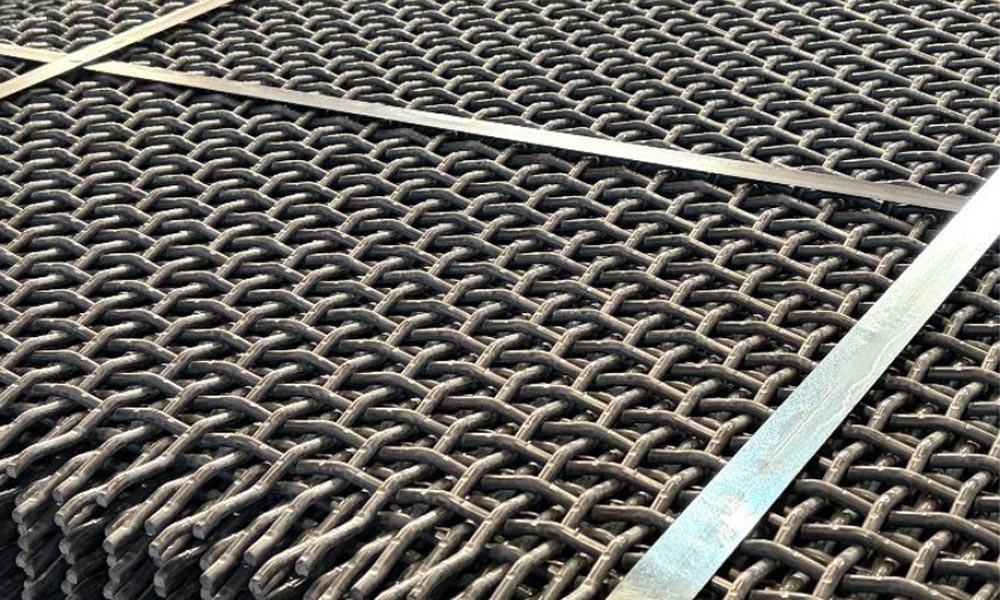
The design of lock-crimp woven metal screens fundamentally resolves the issues of shifting and aperture deformation common in traditional woven screens, making them a cost-effective choice for achieving high-precision, stable screening in applications such as mining and aggregate processing.