Flat-Top Wire Woven Screen
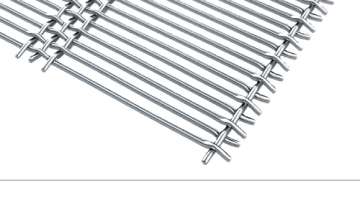
Anyone who has stood next to a running screen deck knows the difference between a panel that fights the material and one that lets it flow, and flat-top construction is one of those quiet design choices that changes the whole personality of a screening line. A Flat-Top Wire Woven Screen is not just a regular mesh with the smooth side turned upward; it is a deliberate weave where the exposed surface is made of flattened crown wires so material sees a near-level plane instead of a row of rounded bumps that toss granules around. For plants handling aggregates, recycled materials, fertilizers, or fine industrial powders, that single geometric change pays back through cleaner separation, less blinding, and noticeably lower wear on the active face.
Flat-Top Woven Mesh Can Reduce Material Friction During the Screening
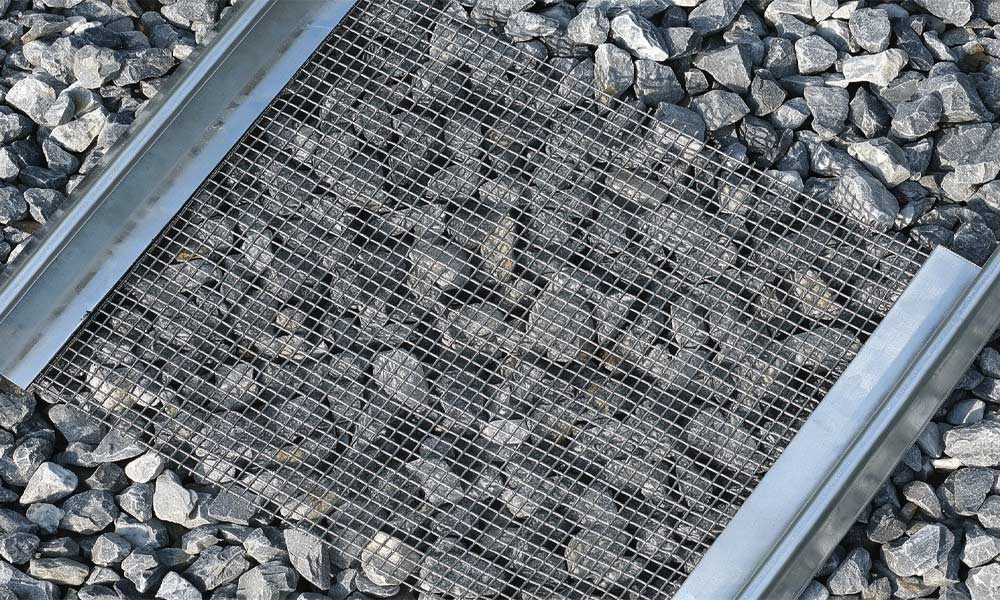
Standard mesh usually has round wires, which can easily trap wet or sticky material. Once particles get stuck in the weave, they build up until the screen is completely blocked. Flat top mesh handles this by using wires that are crimped flat on the surface. This creates a smooth, low-friction area where material can slide across instead of getting caught.
Cleaner Material Passage Without the Bouncing Effect
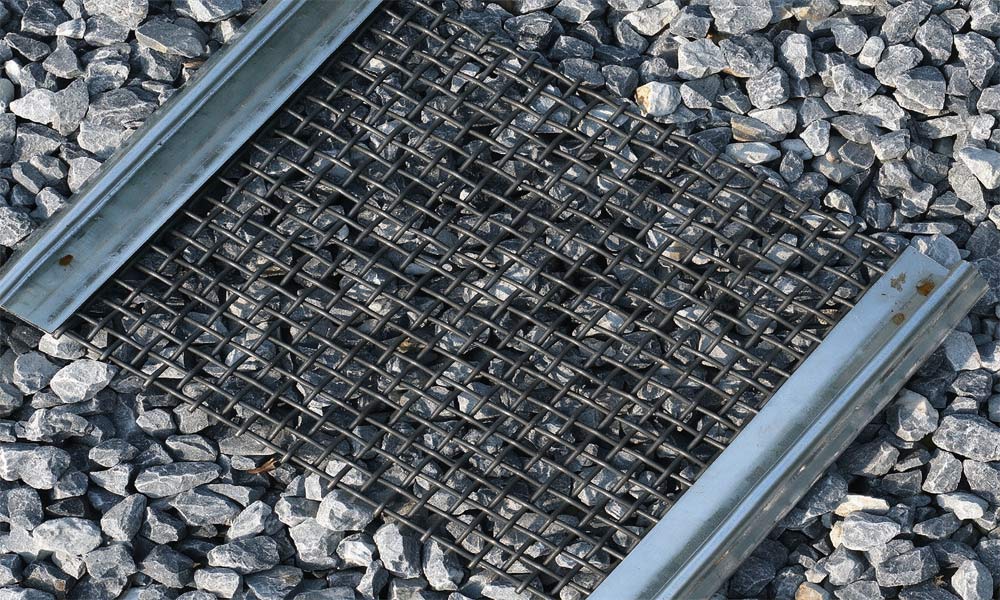
The first thing operators notice with a Flat-Top Wire Woven Screen is that the feed stops behaving like it is being juggled, because the flattened top wires remove the little ramps that ordinary round-wire weaves leave across the surface. Round wires act like miniature rollers: particles strike the crown, get launched a few millimeters, land again, and by the time they cross the deck the effective screening time has shrunk while the misclassification rate climbs. With the flat crown, the material layer stays in closer contact with the opening, so on-spec particles drop through faster and oversize rides forward instead of dancing in place, which is exactly what you want when the product grade has to stay inside a tight envelope. In dry screening of crushed stone or dried sand, this alone can tighten the gradation curve without touching vibrator settings or adding another deck.
Reduced Blinding and Pegging on Sticky Feeds
A less obvious but far more costly problem in real plants is blinding, where fine material wedges into the opening and turns a precise sieve into a semi-solid plate, and this is where a Flat-Top Wire Woven Screen earns its keep on difficult feeds. Because the upper profile is flatter, the throat of the aperture is more consistent and there are fewer tiny ledges for damp fines, clay coatings, or fibrous debris to hook onto and start building a bridge. On humid days or when screening washed but not fully dried aggregate, round-wire decks often clog from the top down, forcing crews to hammer the panel or shut the line for manual cleaning, while a flat-top surface lets vibration carry the near-size particles across instead of letting them nestle and lock. Plants running municipal compost, moist coal, or sticky bauxite-like mixes usually see fewer stoppages simply because the mesh stops inviting the material to stay.
Lower Wear on the Working Face and Longer Panel Life
People expect a smoother screen to be gentler on the product, but what surprises them is how much kinder a Flat-Top Wire Woven Screen is to itself, since the flat crown spreads contact pressure over a wider strip of wire rather than concentrating it on a narrow rounded peak. In abrasive duties like iron ore fines, silica sand, or recycled concrete grit, that redistribution matters: the top of the wire no longer gets shaved into a knife edge that soon snaps, and the crimp region underneath stays protected because the impact energy is absorbed across a broader band. Over a campaign, this shows up as slower loss of aperture tolerance, fewer broken crossings near the feed end, and a panel that still screens accurately in week ten instead of looking like it survived a sandblast competition by week three.
Better Product Presentation for Graded and Premium Materials
Beyond the mechanics of sieving, a Flat-Top Wire Woven Screen quietly improves how the final product looks and sells, which is a point purchasing departments underestimate until a customer complains about oddly shaped fractions. Round-wire decks can tip elongated or slabby particles upright and let them slip through apertures they should never have passed, whereas the level top surface keeps particle orientation more honest and produces a cleaner cut between sizes. For decorative gravel, filter media, animal bedding pellets, or any screened product where uniformity is part of the brand, that visual consistency translates into fewer rejects, steadier pricing, and fewer arguments at the loading bay about whether the pile meets spec.
Choosing a Flat-Top Wire Woven Screen is really a decision to design the deck around material behavior instead of around a line on a data sheet, and once operators feel the difference they rarely want to go back to fighting round-wire bounce and clogging. The advantages are not theoretical: better passage, fewer blockages, slower self-wear, and a cleaner graded product all stack up into lower cost per ton screened and fewer panicked weekend changeouts. If your current screens blind too fast, chew through wire at the feed end, or keep shipping material that sits just outside the spec band, send us your feed description, target aperture, and deck dimensions, and we will propose a flat-top specification built for your process rather than a generic roll off the shelf.