Safety Standards and Certification Requirements for Underground Flame-Retardant Rubber Screen
For underground mining and tunneling operations, non-compliant screening media that lacks proper flame-retardant properties poses a serious hidden safety risk, as even a small spark from equipment friction or electrical faults can ignite ordinary rubber panels and trigger a major underground fire that puts personnel and entire operation workflows in extreme danger. Many operations that cut corners by using uncertified generic rubber screens found themselves facing costly regulatory penalties, unplanned work stoppages and unnecessary safety hazards that could have been easily avoided by following established industry safety rules. Clear, strictly enforced safety standards and formal certification requirements for Flame-Retardant Rubber Screen are designed to eliminate this avoidable risk completely, protecting both your on-site crew and your long-term operational compliance status.
Material Composition and Flame Spread Performance Standards
The first core set of safety standards focuses strictly on the base material formulation, requiring that the rubber blend used in every Flame-Retardant Rubber Screen contains no easily flammable low-molecular-weight additives, and will self-extinguish within a specified short time frame once the external ignition source is fully removed. Most major global underground mining regulatory bodies require that test samples of the material show zero sustained flame spread over a fixed test distance, and do not produce large volumes of toxic dense smoke that would block underground escape routes during a fire event.
Anti-Static and Friction Spark Resistance Requirements
The second mandatory certification requirement mandates that every qualified Flame-Retardant Rubber Screen must pass full surface resistance and friction spark testing, to ensure the panel cannot build up dangerous static charge during continuous high-volume ore screening operation, and will not produce any hot sparks even when scraped or struck hard by sharp metal ore fragments or falling steel equipment parts. This rule is especially critical for underground coal mines and other sites with flammable gas or fine combustible dust present in the working atmosphere, where even a tiny spark could trigger a major explosion.
Flame Resistance Is More Than “Self-Extinguish”
The first certificate buyers ask for is usually “flame retardant,” but that phrase means different things in a surface quarry and a 300-metre coal shaft. International references such as ISO 340 govern small-flame behaviour for conveyor belts and are widely borrowed by suppliers of mining rubber: the specimen is exposed to a calibrated flame, the ignition source is removed, and the material must stop burning within a defined after-flame window instead of propagating fire along the panel. In the United States, underground coal conveyors fall under MSHA 30 CFR Part 14 with gallery-scale flame-propagation testing, while Europe uses EN 14973 categories such as C1/C2 for underground conveyor belts, and Australia references AS 4606 / MDG 3608 for non-metallic materials in underground coal mines. A Flame-Retardant Rubber Screen supplied into those environments should be tested on the same logic even if the product family differs: after-flame time, afterglow time, flame spread length, flaming droplets, and re-ignition under airflow all matter. A panel that self-extinguishes in still air but drips burning rubber onto a conveyor belt below it is not safe—it is just slow to start the fire.
Anti-Static Performance Saves the First Spark
Fire starts after ignition; static creates the ignition. A vibrating screen in a dry coal or potash circuit generates charge continuously: ore slides, rubber flexes, dust films form, and the deck surface can build thousands of volts with nowhere to go. In a methane–coal-dust atmosphere, that discharge is the accident, not the burning panel afterwards. That is why anti-static testing belongs in the same certificate as flame resistance. ISO 284 sets the conceptual bar for conductive/static-dissipative rubber products, and Chinese underground polymer products reference MT 113 / AQ rules where surface resistance is commonly required at or below 3×10⁸ Ω so charge bleeds to the steel deck and the structure instead of arcing into the airway. A Flame-Retardant Rubber Screen that passes the burn test but insulates like a household eraser is a hidden detonator: it will not catch easily, then it will light the gas with a blue spark nobody heard. Specifiers should ask for surface resistance, volume resistance, and tested condition after ageing—because a panel that is anti-static on day one and insulating after 90 °C deck heat has lied its way past the inspector.
Smoke, Toxicity, and What Kills Miners
Underground fires rarely kill by flame first. They kill by smoke density, carbon monoxide, hydrogen chloride, and loss of visibility in a roadway where the only exit is several hundred metres downwind. A proper Flame-Retardant Rubber Screen specification therefore goes past “does it burn” and asks what it emits while burning. Halogenated systems using chloroprene, chlorinated paraffin, and antimony trioxide can suppress flame well but may release acid gases; non-halogen systems using aluminium hydroxide or magnesium hydroxide endothermically release water vapour, cool the surface, and tend to produce less corrosive smoke, though often at higher filler loadings that change wear and rebound. Potash, coal, salt, and sulfide ores each have different fire-risk stories, so the screen compound should be matched to the gas/dust environment, not to a generic “mining rubber” label. If the supplier cannot show smoke-density and toxicity data, the panel may be flame-retardant on paper and lethal in a gallery fire where the crew dies before the flames arrive.
Third-Party Independent Audit and On-Site Verification
The final non-negotiable certification step requires that all production batches of Flame-Retardant Rubber Screen must be inspected and certified by a fully independent, regulatory-approved third-party testing body, rather than only relying on manufacturer self-reported test data. Most major mining safety authorities also require regular random on-site sampling audits, to confirm that the panels being installed in underground sites fully match the performance specifications laid out in the original certification documentation.
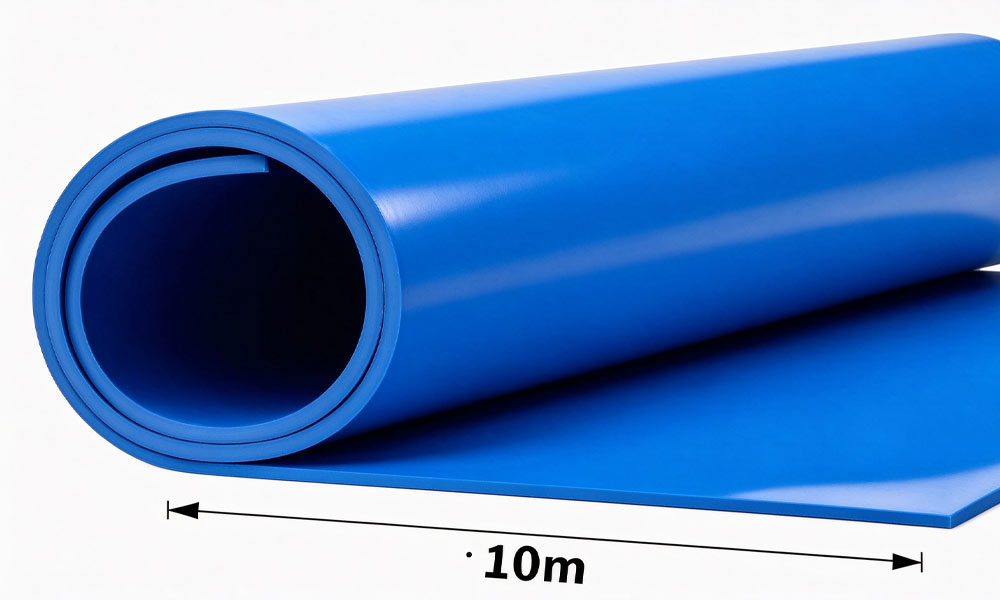
Following these full set of safety standards and working only with fully certified Flame-Retardant Rubber Screen suppliers will help your underground operation eliminate this avoidable fire risk, stay fully compliant with all local mining safety regulations, and avoid costly unplanned shutdowns and penalties from safety inspections. If you need help verifying the full certification documentation for your existing screening media or want a full list of regional safety requirements that apply to your specific underground mine site, our technical team can put together a free customized compliance reference guide for your operation.