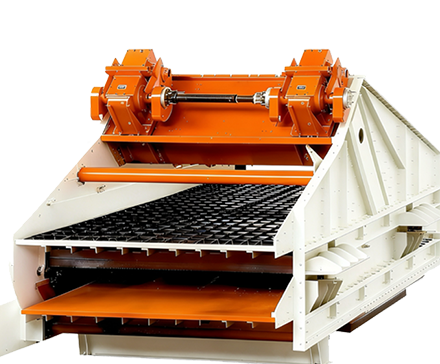
For potash mine processing operations that handle high-salinity brine mixed with fine crystalline potash particles, standard rubber screening decks quickly face two overlapping persistent issues: dissolved salt in the brine crystallizes rapidly on the cool deck surface, while fine sticky salt crystals adhere tightly to the panel and gradually seal off all screen apertures. Many operations that used generic rubber screens found themselves stopping production every 3 to 4 hours for manual scraping, losing thousands of dollars in lost throughput and overtime labor every single week. This targeted, field-validated design scheme built specifically for Rubber Screen in Potash Mines completely eliminates both crystallization and adhesion pain points, delivering stable uninterrupted screening performance across long continuous operation cycles.
Low-Surface-Energy Custom Rubber Formulation
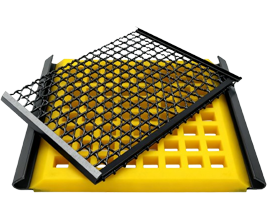
The first core part of the design scheme uses a custom blended, mineral-filled rubber formulation engineered to have an extremely low surface energy, so dissolved potash brine cannot easily spread and form a continuous film across the deck surface that leads to rapid salt crystal nucleation. This specialized material for Rubber Screen in Potash Mines prevents fine salt crystals from forming a strong adhesive bond with the panel surface, so any small crystals that do form can be easily washed away by the normal flow of process brine instead of sticking and building up thick compacted layers.
Micro-Textured Non-Flat Deck Surface Structure
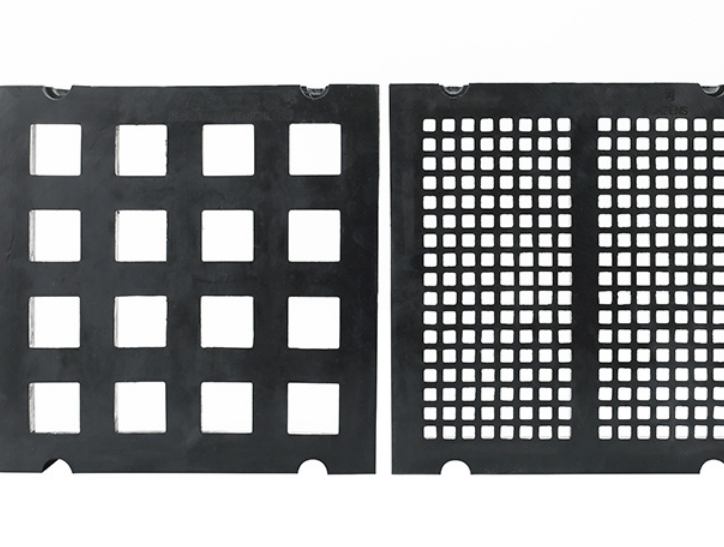
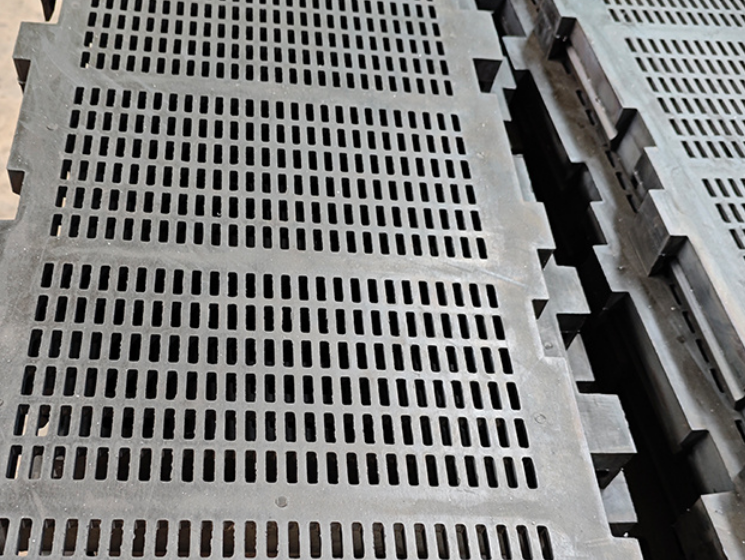
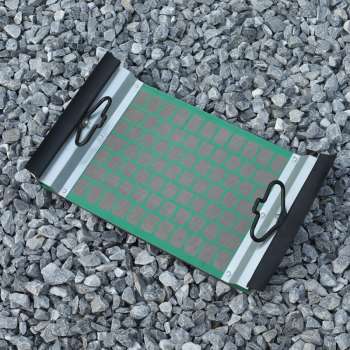
The second key design feature replaces the standard completely smooth rubber panel surface with a precision molded, uniform micro-textured pattern made up of tiny, evenly distributed raised peaks and narrow drainage channels. This structure ensures continuous free brine flows through the small channels instead of forming stagnant thin films on the deck, drastically reducing the chance of localized salt crystallization that causes large caking patches on Rubber Screen in Potash Mines, while still retaining full effective open area for normal classification and dewatering performance.
Integrated Sub-Panel Low-Frequency Vibration System
The third critical component adds a set of small, low-power vibration modules mounted directly beneath each individual screen panel, which run at a gentle, low-frequency pulse pattern at regular 10-minute intervals during normal operation. This tiny, consistent flexing motion of the rubber deck breaks any weak initial salt crystal bonds that do form on the surface, shaking loose any newly formed tiny crystals before they can grow and stick together into large thick caking layers that block apertures on Rubber Screen in Potash Mines.
This fully integrated design scheme has helped potash processing operations cut manual deck cleaning frequency by over 85%, boost uninterrupted daily throughput by more than 20%, and drastically extend the usable service life of their screening media. If you share details of your site’s typical brine salinity, operating temperature range and existing screening deck layout, our engineering team can put together a fully customized design proposal tailored perfectly to your unique potash processing workflow.


Leave A Reply
By using form u agree with the message sorage, you can contact us directly now