Color-Coding Management for Woven Screens: Improving On-Site Specification Identification Efficiency
For busy mineral processing, quarrying and aggregate production sites that stock 5 to 10 different Woven Metal Screens specifications for different screening stages, the old way of marking every screen panel with paper labels or handwritten tags often leads to costly mistakes: workers pick the wrong aperture size during shift changes, install screens that do not match the process requirements, and end up producing off‑spec finished material that has to be reprocessed or discarded. This kind of human error does not just waste labor hours and material, but also creates unnecessary safety risks when maintenance teams spend extra time climbing up and down the screening deck to replace mismatched screens. Implementing a standardized, easy‑to‑follow Color‑Coding for Woven Metal Screens system solves this long‑standing on‑site management problem completely, with almost zero extra cost and very little training required for frontline teams.
Standardized Color Marking Rules for Woven Metal Screens
The most practical version of Color‑Coding for Woven Metal Screens uses a durable high‑temperature resistant paint applied to the edge banding area of each finished screen panel, assigning one unique solid color to each specific aperture size, wire diameter and material grade that the site uses, so every specification has a distinct visual marker that never fades away under dusty, high‑vibration working conditions. Unlike printed paper tags that fall off after a few weeks of storage, this permanent marking method makes every Color‑Coding for Woven Metal Screens panel instantly recognizable from a distance, even when the screens are stacked in a dim warehouse or mounted on a high vibrating screen deck, and workers do not need to stop and check tiny printed text to confirm the exact specification.
Why Grey-on-Grey Keeps Failing
Woven metal screens are honest materials with dishonest appearances. A 304 and a 316L panel can both shine like jewelry; a 10-mesh and a 12-mesh roll can fool anyone who is not counting wires in raking light; a food-grade passivated screen and a raw phosphated screen can sit side by side and only the paperwork knows the difference. On a busy site, the bottleneck is never “does the factory know the spec”—it is “does the person holding the panel know the spec before the bolt goes in.” Color-Coding for Woven Screen attacks the failure at the last meter: the roll, the crate edge, the panel end-cap, the hook strip, or the frame gasket gets a coded marker that maps to a single source of truth on the storeroom wall. The fitter does not have to remember that 0.85 mm equals 20 mesh; he has to remember that blue means 20 mesh 316L top-deck, and the system does the rest. Plants that skip this pay for it in changeout labor, cross-contamination, grade dilution, and the special kind of silence that follows a supervisor saying “nobody told me that was the flotation feed guard screen.”
Building a Code That Survives the Storeroom
The mistake is letting marketing pick the colors. Red is “urgent” in one plant and “fire-rated” in another; yellow means caution in safety language and “coarse scalping” in a mesh system nobody wrote down. A durable Color-Coding for Woven Screen standard separates the dimensions instead of cramming them into one stripe: one band for alloy, one for aperture/mesh class, one for weave or duty, one for deck position, and a separate tag color for quarantine, incoming, approved, or rejected. A 316L 48-mesh dewatering panel might carry a green alloy band, a white mesh-class dot, a blue duty stripe, and a black “position 3” cap; a 65Mn 8-mesh scalping panel might carry an orange alloy band, a red mesh-class dot, a grey duty stripe, and a yellow “position 1” cap. The rule is boring on purpose: max five cues, never more than three on one object, always backed by a laminated legend near the crib, and never reused for two meanings even if the supplier “already had the ribbon in stock.” Color-Coding for Woven Screen is a control system, not a craft project.
Marking Methods That Do Not Lie After Week Two
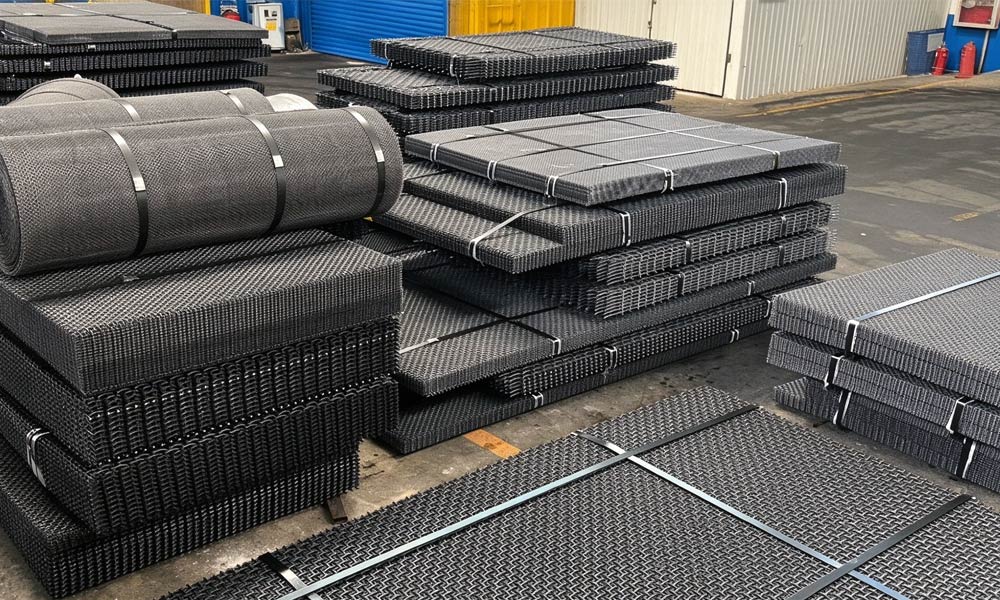
Paint that flakes, tape that curls, and ink that washes off in spray-down are the reasons engineers distrust color systems. The marker has to outlive the duty: UV-stable painted end-bars on the panel, molded color caps on hook strips, colored edge-binding on framed screens, colored zip ties or tamper seals on rolls, and RFID or QR paired with the visible color so the human sees blue and the scanner sees the full cert. A credible Color-Coding for Woven Screen program also puts the code on the crate face, the inner wrapper, the coil core, and the replenishment order, so the identity survives the journey from Qingdao to the changeout trolley. For food, pharma, or potable-water sites, the pigment or tape has to be non-toxic, non-shedding, and resistant to the CIP chemical set; for mining, it has to survive brine, diesel handling, UV, and a boot. If the color fades faster than the mesh wears, the system is decoration; if it survives longer than the panel, the next crew inherits sanity instead of a guessing game.
From Storeroom Tidy to Closed-Loop Traceability
The plants that get real value do not stop at “pretty rolls.” They close the loop: every Color-Coding for Woven Screen cue maps to a lot number, a mill cert, an inspection report, and a deck position in the CMMS. Incoming inspection accepts the lot, applies the approved color markers, photographs the panel with the legend card, and logs it; issue desk scans or reads the color, confirms deck position, and the work order records which coded panel went where. Quarantine gets its own color—usually a striped red/white or a bright magenta nobody else is allowed to use—so a rejected 200-mesh lot can never quietly migrate to the dewatering deck during a rush. Auditors love this because the storeroom answers questions without opening a spreadsheet: blue rows are 316L fine screens, grey rows are carbon scalping mesh, magenta is “do not touch,” and the legend is dated, signed, and version-controlled. Color-Coding for Woven Screen turns inventory from a memory test into a visual procedure that even the new hire, the night shift, and the contractor from the other site can read without translation.
On‑site Management Workflow Optimization
After rolling out the standardized Color‑Coding for Woven Metal Screens system, site teams can also paint corresponding color blocks on warehouse storage racks, spare parts inventory lists and the screen deck mounting positions on each vibrating screen, creating a fully connected visual management system that eliminates almost all specification mismatch risks. Many operations that have adopted this system report that their screen installation time drops by more than 40%, and the number of incidents where wrong screens are accidentally installed falls to nearly zero, as every team member can quickly identify the correct Color‑Coding for Woven Metal Screens panel they need without cross‑checking complicated specification documents.
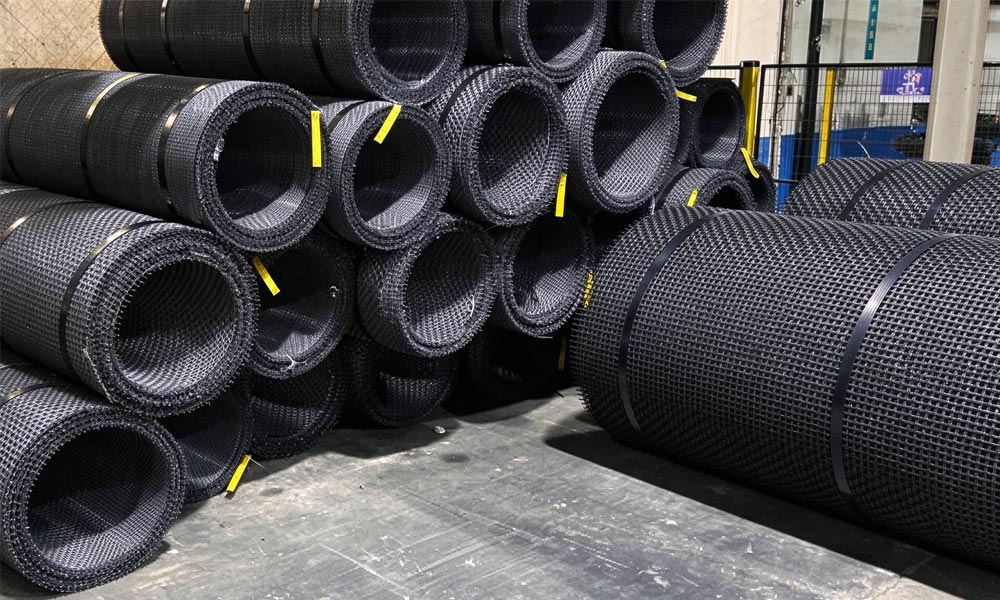
A well‑designed Color‑Coding for Woven Metal Screens system is one of the lowest‑cost, highest‑return on‑site management improvements a processing plant can implement, drastically reducing installation errors and cutting the time teams spend on spare parts identification and maintenance work. If you want to set up a customized color coding system that fully matches your existing screen specifications and on‑site process layout, our team can provide you with a complete pre‑marked color coding solution and supporting management guide tailored to your operation.