Quality Inspection Standards and Custom Sourcing Guide
If you’ve ever imported a batch of tensioned PU screen panels that looked perfect in product photos, only to find 30% of them have uneven hardness, misaligned mounting hooks or tiny hidden cracks that tear apart in less than two weeks on your deck, you know exactly how much a lack of clear quality inspection standards and reliable custom support can derail your whole site’s production schedule and waste thousands of dollars in unexpected downtime. After years of chatting with procurement teams across global mineral processing sites, aggregate quarries and coal washing plants that source screening components from northern China’s industrial clusters, nearly every single one shared that they learned this lesson the hard way, after wasting money on unvetted low-quality batches that never met their real on-site performance requirements. This no-fluff field-tested guide breaks down the real practical quality inspection standards and custom service details you should look for when sourcing a China Polyurethane Tensioned Screen Panel, no empty marketing buzzwords, just insights pulled straight from hundreds of real cross-border procurement experiences.
Raw Material Incoming Inspection Guarantees Consistent PU Formulation
The first most critical quality control checkpoint that separates reliable suppliers from cheap unvetted traders is the strict incoming raw material inspection process that a reputable China Polyurethane Tensioned Screen Panel provider runs on every batch of base PU resin, curing agents and reinforcing components before any casting work even starts. Many low-cost unvetted suppliers cut corners by mixing recycled PU scrap into new raw material batches, which makes the final finished panels stiffen up, lose elasticity and crack far earlier than their rated service life, even if they look identical to high-quality panels on the surface. A dependable supplier will test every incoming raw material batch for Shore A hardness, elongation at break and abrasion resistance, and share full test reports with you before production starts, so you never get panels built with diluted low-quality recycled material. Multiple global mining procurement teams shared that this single pre-production inspection step helped them avoid 90% of the common premature panel failure issues they used to run into.

Finished Panel 100% Full Inspection Eliminates Hidden Factory Defects
The second non-negotiable quality checkpoint that no serious supplier should skip is a full 100% dimensional and performance inspection on every single finished China Polyurethane Tensioned Screen Panel before it gets packed for shipping, not just random spot checks on 5% of the batch. When suppliers only do random sampling, small defects like misaligned tension hooks, slightly warped panel bodies or tiny unnoticeable micro-cracks near the mounting points can slip through and end up on your site, causing sudden unexpected tear-out failures hours after you install the panel on your deck. A reliable full inspection process checks every panel’s exact dimensions, hook alignment, surface finish, hardness and tear resistance, marking and rejecting any unit that falls even slightly outside your specified tolerance. Multiple aggregate quarry operations reported that after switching to suppliers that offer 100% finished panel inspection, their batch defect rate dropped from over 20% to less than 1%.
Custom Aperture Tuning Matches Your Unique Local Material Properties
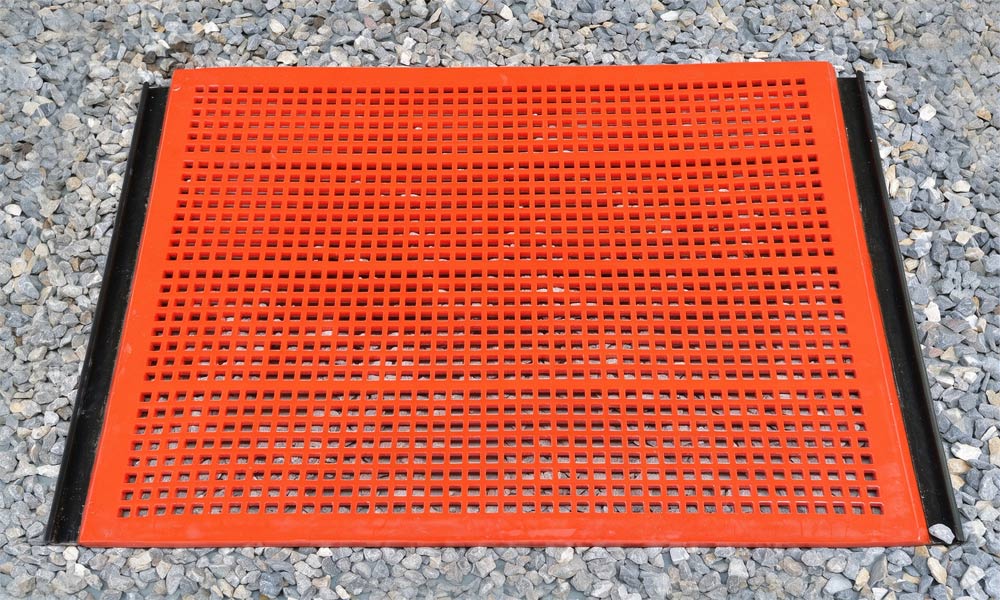
The first most valuable custom service that top-tier Chinese suppliers offer is fully customized aperture design tuning for your exact local material properties, a service that a standard off-the-shelf China Polyurethane Tensioned Screen Panel can never deliver. If you are processing a unique local material like high-moisture lateritic clay, sharp flaky granite fines or high-silica weathered coal, standard generic square apertures will blind over or wear out far faster than you expect, no matter how high the PU material quality is. A dependable custom service team will ask for your material sample photos, moisture data, required product size and deck parameters, then adjust aperture shape, size, taper angle and open area to perfectly match your specific working conditions, instead of forcing you to use a generic one-size-fits-all design. Multiple overseas mineral processing sites shared that this custom aperture tuning boosted their total screening throughput by more than 25% compared to using standard off-the-shelf panels.
Full Custom Dimension and Mounting Adaptation for Old Deck Retrofits
The second extremely practical custom service that solves a huge real-world pain point is full custom dimension and mounting hook adaptation for old legacy vibrating screen decks, a service that lets you retrofit PU tensioned panels onto your existing imported screen deck without any expensive frame modification work. Many operations running older imported European or American vibrating screens can’t find affordable local replacement panels, and buying original brand spare parts costs 3 to 4 times more than sourcing locally, forcing them to either pay exorbitant prices or modify their whole existing deck at huge extra cost. A skilled China Polyurethane Tensioned Screen Panel custom service team can reverse-engineer your old legacy panel from a single sample or dimension drawing, perfectly matching your existing deck’s exact hook spacing, panel size and tension requirements, so new panels clip straight onto your old deck with zero modification. Multiple global processing sites reported that this custom adaptation service cut their total spare parts cost for old imported decks by more than 70%.
By working with a supplier that runs strict incoming raw material inspection, 100% finished panel full checks, and offers custom aperture tuning and legacy deck adaptation services, you can source high-performance tensioned PU screen panels that perfectly match your site’s unique working conditions, while avoiding the common low-quality batch pitfalls that plague unvetted cross-border procurement.