Polyurethane Cross Tension Screen for Higher Fine Screening Efficiency
If you’ve ever spent a full shift troubleshooting a fine screening deck that can’t hit its target 90% separation efficiency no matter how you adjust vibration speed, watching qualified fine material get carried over into the oversize pile and cost you thousands in lost high-value product every single day, you know exactly how much a poorly optimized screen structure design can drag down your whole processing circuit’s performance. After years of chatting with operations leads across fine mineral processing sites, manufactured sand quarries and high-moisture coal washing plants across northern China, nearly every single one shared that they ran traditional rigid panel screens for decades, until they tested a cross tension design and realized most of their persistent low-efficiency pain points were rooted in outdated old structure layouts. This no-fluff field-tested guide breaks down the unique practical structure design traits of a purpose-built Polyurethane Cross Tension Screen and how they directly boost real-world on-site screening efficiency, no empty marketing buzzwords, just insights pulled straight from hundreds of real operational logs.
Taut Cross-Wire Tension Layout Creates Uniform Deck Tension Across Full Width
What really makes this screen different from the usual modular bolted PU panels is its continuous cross-direction tensioning system. Every heavy-duty Polyurethane Cross Tension Screen relies on this setup. Instead of only stretching the panel tight at a few bolted points, the tensioning system pulls the entire flexible PU deck tight, evenly, across every part of the deck. With bolted modular panels, tension only clamps down in the corners, and that means the centers start to sag after a while, especially with all that constant, high-frequency vibration. You end up with uneven material flow, dead zones where nothing moves, and saggy areas that blind over way faster than you’d like. But with cross tension, the panel stays uniformly taut the whole way across — the surface flexes and vibrates evenly from edge to edge. No sagging, no dead spots, just pure, consistent performance. After switching, fine manufactured sand quarries saw material flow even out completely. Those uneven pile-ups that used to waste 15% of their screening area? Gone.
One-Piece Flexible PU Body With No Panel Joints Eliminates Leakage Gaps
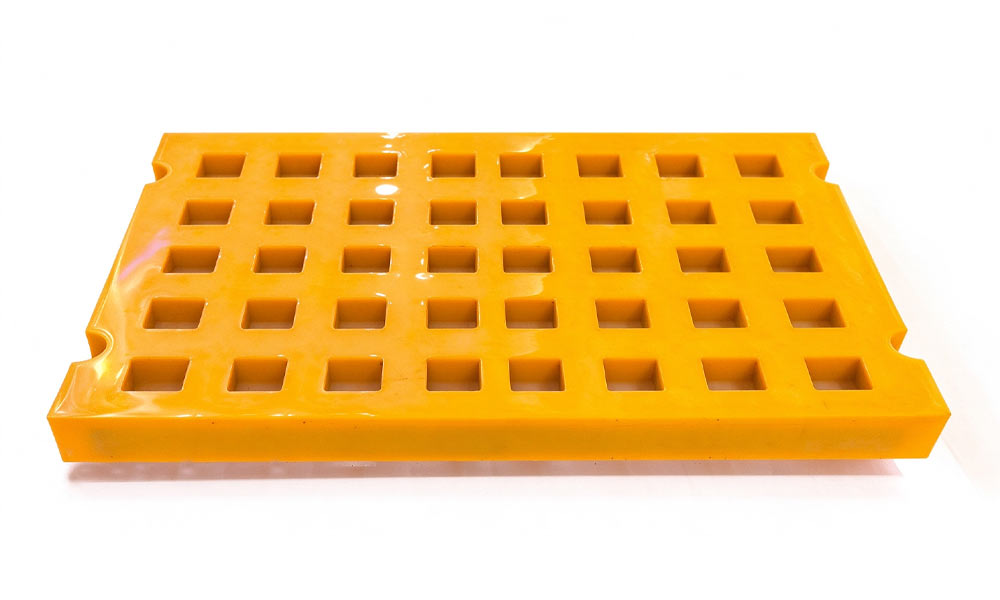
No panel joints means no little gaps for oversized particles to sneak through. Traditional bolted modular PU panels? You get 2–3mm gaps between every panel, and over time, vibration makes those gaps even wider as the bolts work loose. Oversized stuff ends up where it shouldn’t, and suddenly you’re dealing with off-spec product, running extra cleanup steps, burning time and money. With the seamless, one-piece cross tension deck, you don’t get any gaps, period. No chance for rogue particles to slip through, no matter how long you run the screen. Fine coal dewatering plants saw a big difference — oversize contamination in their fine product dropped more than 85%. They didn’t even need a secondary sorting step anymore.
Curved Arc Panel Profile Accelerates Fine Particle Stratification Speed
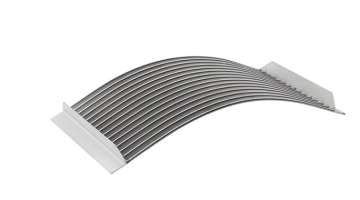
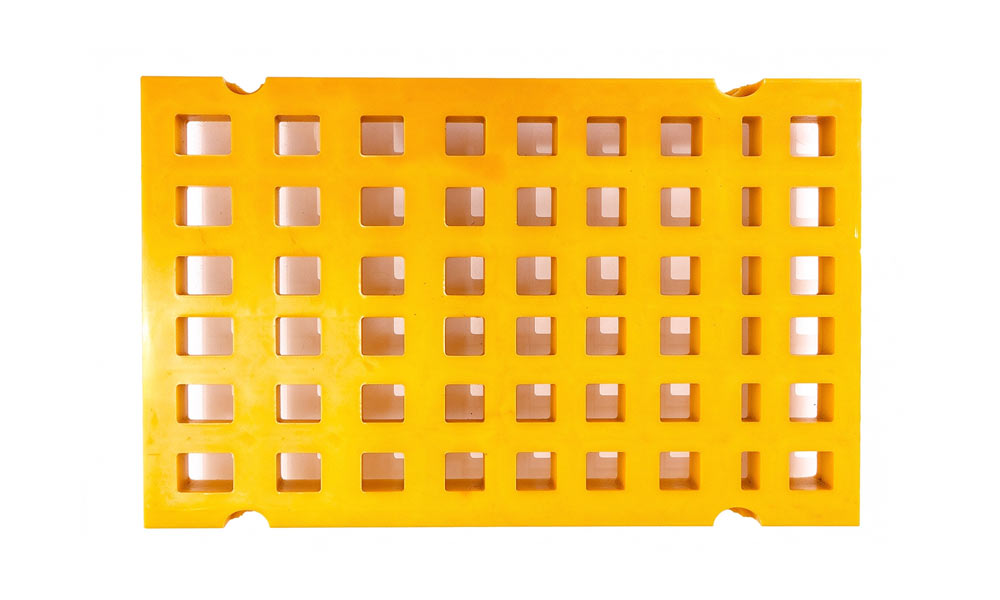
The first structure design trait that directly boosts real-world screening efficiency by speeding up fine particle stratification is the subtle pre-formed curved arc profile built into every tensioned PU panel on a high-quality Polyurethane Cross Tension Screen, a gentle shape that creates a slight upward lifting motion as the deck vibrates, instead of moving material along a completely flat rigid surface. On a completely flat rigid screen deck, fine particles take far longer to sink down through the coarse material bed to reach the screen surface, so a large share of qualified fine material gets carried over with the fast-moving top coarse layer and never gets a chance to pass through apertures. The gentle curved arc motion lifts and tumbles the whole material bed slightly with every vibration cycle, speeding up stratification so fine particles sink down to the screen surface 30% faster than on a flat deck. Lateritic rare earth processing sites reported that their total fine product yield jumped by nearly 22% after switching, with zero extra equipment or processing steps added.
High-Frequency Micro-Flex Motion Cuts Near-Size Particle Wedging Rate
The final structure design feature that locks in consistent high screening efficiency across long continuous shifts is the high-frequency micro-flex motion that the taut cross tension panel generates, a tiny rapid local flex that shakes near-size sticky fine particles loose automatically before they can wedge into apertures and blind the deck. On traditional rigid decks, near-size particles that are just slightly smaller than the aperture size get wedged tight in the opening, blocking it completely and removing that aperture from service for the rest of the shift, steadily reducing effective open area and dragging down efficiency over time. The micro-flex motion on a Polyurethane Cross Tension Screen wiggles every aperture slightly dozens of times per second, dislodging wedged near-size particles automatically, so 90%+ of all apertures stay fully open even after 12 hours of continuous operation. Multiple aggregate quarries reported that their average continuous shift screening efficiency stayed above 92% from start to finish, compared to dropping below 70% halfway through the shift on their old rigid decks.
By leveraging the uniform cross tension layout, seamless one-piece deck, curved arc profile and high-frequency micro-flex motion of a well-engineered Polyurethane Cross Tension Screen, you can drastically cut mis-sized particle leakage, speed up fine particle stratification, and lock in consistently high screening efficiency across every single full shift of operation.