China Anti-Clogging Screens for High-Moisture
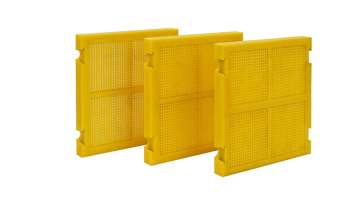
Dealing with screening wet, high moisture minerals has always been one of the most difficult and least-recognized aspects of running a contemporary mineral processing operation. Damp clays, silts, wet near-sizes etc. will lodge firmly within fixed aperture sizes and cause significant clogging of the deck, resulting in major periods of unscheduled shutdown during each shift. China Anti-Clogging Screens were developed to overcome this pervasive problem faced by the majority of mineral processing circuits, utilizing innovative advanced materials and dynamic apertures to allow them to operate effectively in high moisture environments which would typically render a conventional steel mesh screen virtually useless within a few hours. It should be noted that these are not cheap 'off the shelf' screening products, but carefully selected and trialled products for the specific application of wet, high-moisture mineral processing. Here we look at: the way their dynamic apertures prevent wet material becoming lodged, the non-stick quality of the screen surface, their increased durability for the harsh mineral processing environment and the reduced period of unscheduled downtime experienced.
Dynamic Self-Cleaning Apertures Prevent Wet Ore Lodging
The apertures on China Anti-Clogging Screens will prevent wet ore lodging on the screen deck due to their unique split aperture configuration. As discussed previously, each aperture comprises 2 distinct flexible components that vibrate independently of one another on each screen cycle. With conventional fixed apertures, if a wet near-size becomes lodged it will remain in situ for as long as it takes a site operative to physically remove it. However, on these anti-clogging screens, the 2 component apertures will vibrate against each other on each cycle and cause the lodged wet material to be shaken out of the screen deck. Therefore, the anti-clogging effect is constant and ongoing around the clock and requires no auxiliary inputs. The effective open area of the screen will consequently be maintained throughout processing of high-clay-content wet feeds at peak circuit rates. Users who have implemented these products on their existing high moisture decks have seen >70% reductions in unscheduled downtime attributed to clogging.
Anti-Clogging Screen Surface Reduces Wet Feed Cake Formation
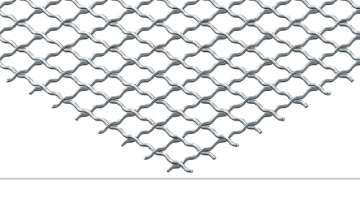
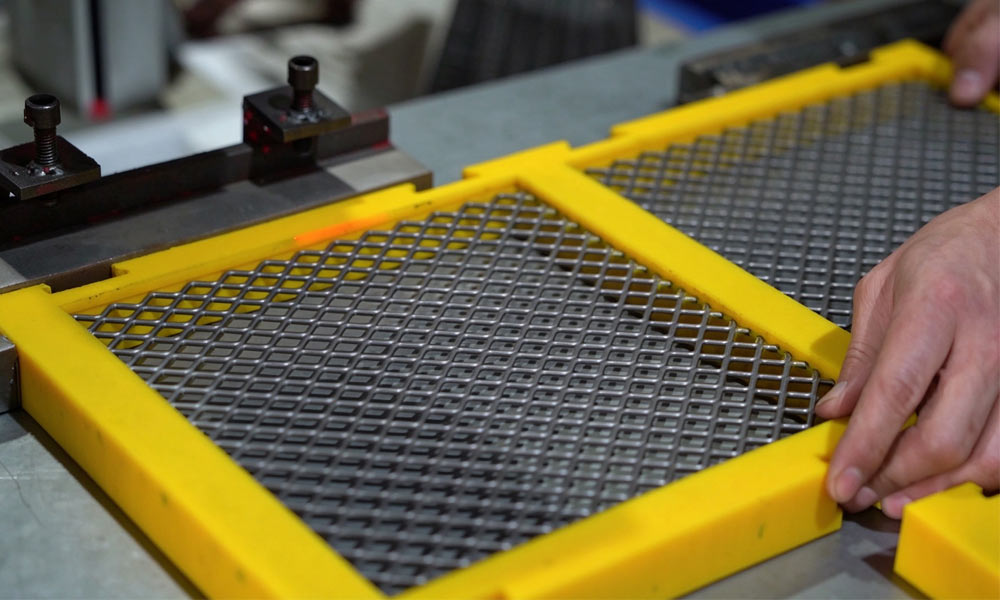
A further benefit of using China Anti-Clogging Screens for wet feeds is that the specially developed mineral grade PU does not encourage wet feeds to cake onto the screen. Steel mesh has an inherently high affinity for absorbing and retaining wet clay, mud and silt, providing a high degree of 'grip' for the wet feed and allowing it to cake heavily across the screen surface, effectively blocking the deck within a couple of shifts. In contrast, the smooth unbroken PU surface will see wet mud simply wash off the deck under the routine vibration of the screen, with no tendency to form a substantial cake. Operators will find that they are not required to cease circuit operation and undertake the laborious task of scraping and hosing down their screens to remove a thick cake of wet material, despite processing highly wet feeds over multiple days.
Prolonged Service Life Due To Superior Strength And Resistance To Degradation
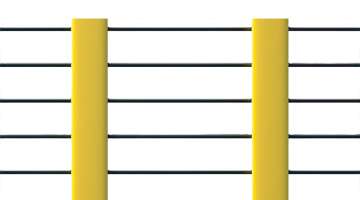
As outlined above, China Anti-Clogging Screens are impregnated with a dense array of steel cords running longitudinally through the depth of the product. This significantly increases the robustness of the screen panels compared to cheaper alternative rubber and PU based anti-clogging solutions. Wet, sharp mineral feeds will aggressively degrade any softer, inferior quality screening material as they pass across the screen face. Conversely, the robust high-grade PU will exhibit a much slower rate of attrition across the whole area of the screen. Users can therefore expect the China Anti-Clogging Screens to provide 3-4x the life of comparable steel mesh on similar high moisture applications. Additionally, since the product is inert to acid waters, leached metal ions and other solutions encountered at most mining operations, the screens will not become pitted and corroded. As such, there is no progressive deterioration of the screen surface over its extended working life that could lead to increased susceptibility to clogging.
Rapid Turnaround For Screen Deck Media Changes
The China Anti-Clogging Screens are fabricated in a number of discrete, compact modules which can be readily fitted to virtually any common style of vibrating screen utilized in the minerals industry, eliminating the need for additional plant and equipment or hazardous activities such as on-site welding. An average screen deck media change that may require a crew of operators and 4+ hours to effect using a standard size steel mesh, can now be completed in less than 90mins by only 2 personnel. Consequently, a material reduction in circuit downtime will be realized each time the customer needs to effect a media change, translating directly to improved monthly P&L figures at many of our customer's sites. Finally, the modular nature of the screen will reduce the quantity and associated cost of spares required, freeing up further funds within the customer's balance sheet.
With the above, high moisture mineral screening processes are no longer obliged to suffer from persistent clogging, rapid loss of useful screen life and subsequent unscheduled circuit downtime. All of the above issues can be readily addressed by switching to China Anti-Clogging Screens, whose range of benefits include: removal of wet ore from the screen surface; prevention of wet cake formation; prolonged abrasion and corrosion resistant screen life; and shortened deck media change duration. Only for the heaviest scale primary wet scalping duty involving very coarse oversizes will customers continue to require manganese steel perforations. Elsewhere, these anti-clog products offer an unrivaled performance to date available from steel mesh.